A lot of friends with a central air conditioner around them, talking about retrofitting and choosing air conditioning, tend to persuade people around them not to follow the suit, not that the central air conditioner is uncomfortable, but that it is not home-friendly, that it was installed in the previous period to be used later, that it contains a lot of different details, that it would cost them little, and that it would result in an undesirable outcome. In 2026, the central air-conditioning technology in the market became more mature, with no regard for its face and comfort, but it was well known to all those who had installed it that it had a fit threshold, cost input and usage habits that were far higher than the hangers, windpipes, and that it was easy for those who saw only the advantages of the central air-conditioning aesthetic space while neglecting the families who actually used the scene to step on the pit。
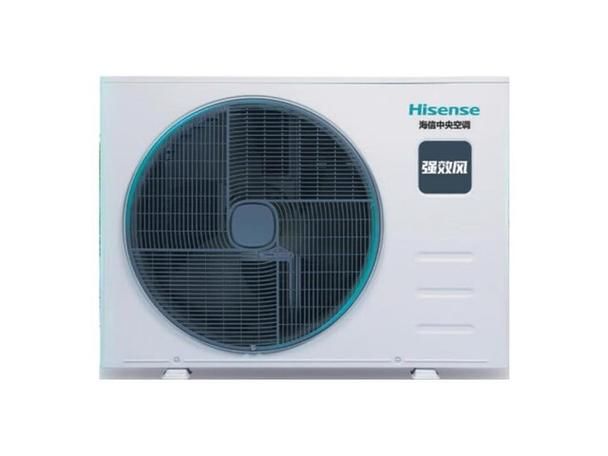
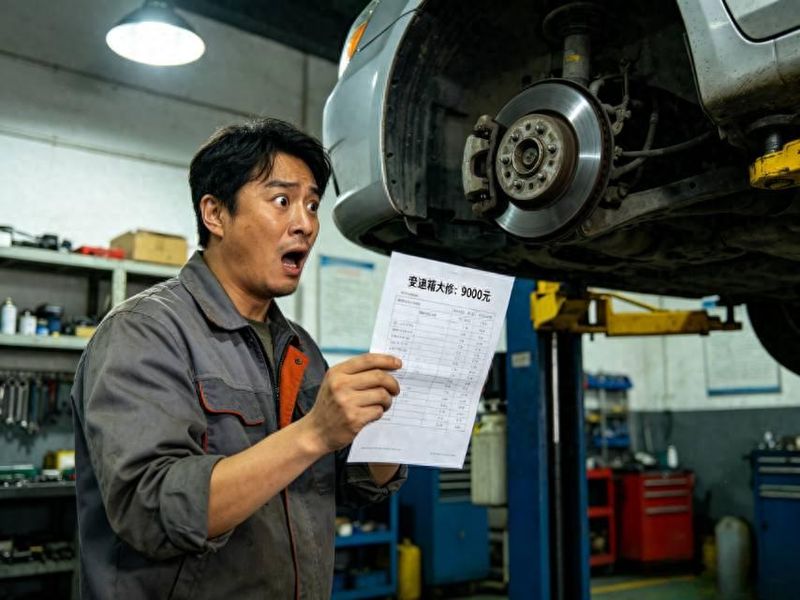
To begin with, the most intuitive point is that the pre-commitment cost of the central air conditioner is significantly higher than that of the regular air conditioner, not just for the equipment itself, but for the total cost of equipment, installation, support materials combined, with many counting only the cost of the equipment, which was not found to be significant until the final settlement. In 2026, the price of national air-conditioning, which was the dominant market-driven central air conditioner, was at a minimum of $17. 9 million after subsidies for machine-type equipment, which was only the basis, and the cost of installation and support materials often accounted for about 40 per cent of total expenditure. A four-to-four set of central air conditioners, which require 15-20 metres of copper pipes, would cost 1,200-2,400 dollars alone, and would require an additional 80-120 dollars per metre of additional pipes if the house size were to be extended; plus a little bit of better materials, such as a warmer cotton, a different pipe, a cooler, and a little less expensive。
There are also labour costs, and the installation of central air conditioners is standard technical work, requiring professional certified team operations, from plumbing layout to system commissioning, a set of processes, which cost approximately $5,000-$8,000 in labour, and additional money for special items such as high-altitude operations and concrete wall piercing. On the basis of this calculation, a set of four central air conditioners with a total cost of approximately 30,000 to 50,000 for domestic production, the same household type, a combination of a living room windpipe and a bedroom hanger, could be completed by 15 to 20,000, with a lower value for money. More critically, the installation of central air conditioners is a “hidden project”, the quality of the support materials, the welding process of the pipes, and it is not apparent to the naked eye that if an irregular installation team is chosen, with the use of poor-quality heat-conservation cotton, there may be cold consumption at a later stage, with a direct increase of more than 30 per cent in energy consumption, which appears to save installation costs and a long-term deficit。
In addition to being expensive, central air conditioning has rigid requirements for the size and height of houses, not all houses can be fitted, which is an important reason for those who have done so. The central air-conditioning inner unit needs to be hidden in the ceiling, which alone is 25 to 35 centimetres high, which means that the original floor of the house is at least 2. 7 metres high and does not appear depressed until the ceiling is filled. Living in the old sub-districts, with floors below 2. 6 metres and hard-equipped central air conditioners, the living room and bedrooms would appear to be particularly stressful, with a sense of oppression on their heads. Moreover, the central air conditioner is suitable for large household sizes, with large floors and villas in order to be cost-effective. If the household size was below 80 m2, each room would be small, air conditioning would be open on its own at a high frequency and the advantages of the central air conditioner would not be realized at all。
There is also the problem of household layout, where the central air-conditioning pipeline requires top layout. If the house is heavily walled and the household-type is irregular, the circuits increase the distance of the chiller cycle, not only reducing the speed of cooling, but also increasing energy consumption, which in the end is less efficient than normal air-conditioning. The reverse windpipe, which requires only a local ceiling, requires only 2. 6 metres of high floors, has a high degree of flexibility to be installed, can also be installed in small households, and has little difference between paint and central air conditioning, with more than half of the cost saved. This is why many small households with a central air conditioner regret having to spend a lot of money without enjoying the experience。
Moreover, the energy consumption is of the greatest concern, and many people feel that the central air conditioner is more frequent and less electric than the hanger, which is an area of error, and that the power-saving advantage of the central air conditioner is only demonstrated when multiple rooms are opened at the same time, and that it is more energy-consuming when one or two rooms are normally opened. The cac is an external-driven multiple inner unit, even with one bedroom interior, which requires low-power operation, while the hanger is a stand-alone external unit, which operates only, and the primary energy-efficient hanger has a minimum start power of 70 w, which is much less than a single cac。
In particular, for working people, when there is no one in the house during the day and only the living room and the main bedroom at night, the energy consumption of the central air conditioner is 20-30 per cent higher than the combination of hanger + windpipes. While the central air conditioners in 2026 were optimized for energy efficiency, such as the japanese machine apf, which could reach 4. 15, and the two-stage variant technology, the energy-saving technologies were based on multiple room openings. In short, if there is a large household population, and if there are usually more air-conditioning rooms, the central air-conditioning unit saves electricity; if there are fewer, mostly only one or two rooms, the central air-conditioning unit is the “electric tiger”。
In addition to the cost of prior input and use, the later maintenance and maintenance of the central air conditioner is more difficult and expensive than normal air conditioner, which is the most easily overlooked point and is a place where people have experienced it. Central air conditioners hide inside the ceiling, wind vents, filters, evaporation cleaners need to be operated by professionals and cannot clean themselves completely. A set of central air-conditioning units, which are required at least once a year to perform deep cleaning, including vent removal, piping, evaporation maintenance, at a single cost of approximately $500-800, if they are not clean for long periods of time, filters are blocked and evaporaters ash are accumulated, which not only affects wind effects but also breeds bacteria and affects indoor air quality。
The cleaning of hangers and windpipes is much simpler, with the cleaning of the filters and the cleaning of the wind vents by itself, at no cost, and 100-200 dollars a time. There is also the issue of maintenance, where the central air conditioner is an integrated system, with external, internal and pipe connections, which may be affected in the event of a component problem, and maintenance requires the removal of the crane, which is costly to repair and can also damage the renovation. Retrospect normal air conditioners, interior and exterior machines are independent, and where there are problems with repair, repairs are simple and cheap, and if broken, replacement costs are lower than repairing central air conditioners。
Another point is the use of flexibility, where when the central air conditioner is installed, it is largely fixed, and later attempts to change the household model and move furniture are limited, while the general air conditioning is much more flexible. The location of the central air-conditioning vents and the direction of the pipes are fixed at the time of their renovation. If it is later to transform the living room into a study room or to move the bedroom beds, the location of the vents would be inappropriate, the effect of the wind would be significantly reduced, and it would be particularly expensive to change the pipes, not only to remove the cranes. For hangers and windpipes to move at a later stage, it is only necessary to re-hole, take over, operate with simplicity and low cost. Moreover, if the central air conditioner were removed from the house in the future, it would be largely obsolete and could not be removed, while hangers and windpipes could continue to be removed or sold in hand, with some cost recovery。
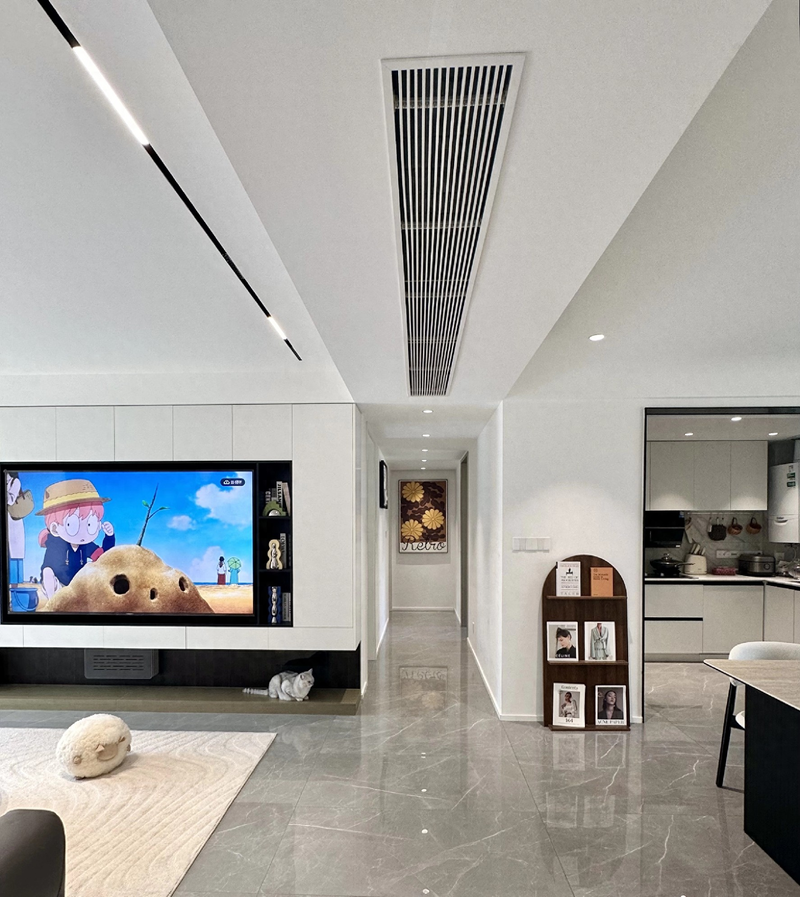
This, of course, is not to say that the central air conditioner is bad and that people have been persuaded not because of its poor experience, but because it is too narrow and suitable for a given family and use. For families with large floors and villas, there is a high standard of residence, and air conditioning is usually required for multiple rooms in the family, with adequate flooring and budget, and central air conditioning is absolutely the best option. Central air conditioners have a softer wind, 360 degrees of rounding without a direct blowout, low temperature fluctuations, no comfy comparison between the hanger and the wind pipe, and the inner machine is hidden in the ceiling, with no naked pipe or body, which allows for a more uniform home style and a full face。
Central air-conditioning technology was also upgraded in 2026, with air purification modules mounted on japanese-type aircraft, and the uvc-type with deep uvc ecstasy, which can also be warmed and purified, especially for families with older persons and children. Large brands of central air conditioners are also well-solded, and the windpipe series, like haile, provides a 10-year overhaul and later use is more secure. In short, central air conditioning is “good, but not good for all”, and people who pretend to talk to others because they see too many people looking at their merits, ignoring their own situation, and then spending a lot of money without being comfortable。
In fact, the core of choosing air conditioners was never the most expensive, but the best for itself. The air-conditioning market in 2026, with the exception of the central air conditioners, the windpipes and hangers, were well developed, with different combinations, suitable for different household types and budgets. Large floors, villas, adequate budgets, large resident population, correct selection of central air conditioners; small and medium-sized households, with a level below 2. 6 metres, with a limited budget, selection of the living room windpipe + a combination of bedroom hangers, with a balance of face value and value; if a rental or small-house transition takes place, the whole house is installed, the economy works, and the move can be carried away later。
It should also be recalled that, regardless of the type of air conditioner chosen, installation is as important as the equipment itself, particularly the central air conditioner and windpipe, and that a seven-point installation of three-minute equipment must be carried out by a formal, manufacturer-certified installation team, and that the cost of equipment, support materials and labour should be clearly stated when signing the contract, so as to avoid an increase in charges at a later stage. And it's important that you pick something that's thicker than a copper tube or a hot-tip-retarded, which seems to cost a little more to avoid a lot of trouble later。
In summary, families with a central air conditioner encouraged others not to dress, not because the central air conditioner was not working well, but because of its high level of pre-investment, demanding housing, and later maintenance problems, which were suitable only for specific household types and use scenarios. Many people, with their air conditioners in the air, see only its beauty and comfort, while ignoring their high household size, permanent population, usage habits, which ultimately cost a lot of money, but did not achieve the desired results, but felt worthless. In fact, it is the blindness and the obscenity of the choice of household electricity that is the most taboo, the suitability of others does not necessarily fit themselves, and it is the wiser to choose according to their actual circumstances。
So, did you get involved with the central air conditioner, the windpipe and the hanger when you did the air conditioning? What type of air conditioning mix do you think is best suited to the current household model and usage habits? It would be useful to talk about your ideas and options in the comment area, to share your ideas and options and to make it easier for the renovations to select home electricity。