How do you maintain the boiler
1. Inspection of routine maintenance 1 and daily work level 1 water level adjuster function: automatic water loading, suspension of pumps。
(2) fire monitoring inspections。
(3) turn, slide, add lubricant to the part of the cam and wipe。
(4) the rinsing of water levels is 1-2 times (classes) and must be carried out in the correct manner until the rinsing of water levels is clean。
(5) sewage 1-2 times (each class)。
Regular work (1) project 1 to be inspected weekly) super-low-water level suspense is to be tested (by pressing the button above b3 plate, which should simulate the water shortage suspense) or discharged to check the performance of the ultra-low-water level suspense suspense。
2) the safety valve is manually activated once and reset quickly。
3) the burner control system and the electric eye shall be inspected, and the pv of the eye shall be removed by hand and shall be shut down in 1s; and the eye shall be wiped。
4) valve roots are filled or replaced; run-off drops are eliminated。
5) stabilization of bolts, especially gas pipeline systems, where necessary。
(2) the filter on the gas pipeline road is cleaned once a month。
(3) semi-annually maintain the following areas 1)) verify the pressure sheet and clean the surface tube, adding distillation water when repositioning。
2) maintenance of water level electrodes, after extraction and grinding with fine sandpaper。
3) clearing of the pipe, which generally determines whether cleaning is required based on the temperature of the smoke. In general, smoke discharge temperatures do not exceed 350°c (measured at the entrance to the pipe at the exit of the boiler) and are too high to represent an increase in the amount of clay and a decrease in the efficiency of the boiler, which must be cleaned up. The purpose of cleaning the pipe is, on the one hand, economic and, on the other hand, safety considerations (smoke heat differential, prone to local burning). In the clean-up of replacements of asbestos cushions, graphite coating is used using the wrong interlocking method (smoke-proofing) and no lubricants。
4) after a boiler is repaired or an annual check, human holes, head holes, handholes are not loose, and electric circuits are checked (from the fan's end, in reverse clockwise)。
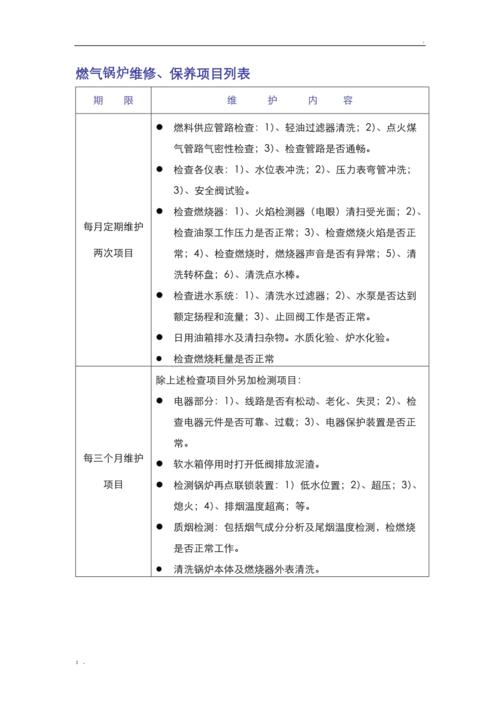
(4) valves are verified once a year. A full overhaul of the boiler was performed。
Normal shutdown (1) stops the fire: first, spin the small and large knobs to the small fire position and then turn off the burner。
(2) depressure steam。
(3) up to high water levels。
(4) close the main steam valve。
(5) closing of the water festival。
(vi) close the gas throttle。
(7) check whether the sewage valve is closed and tight。
(8) the total power switch is closed。
For hot-water boilers, recycle pumps cannot be stopped immediately after the burner has been shut down。
Treatment of temporary power outages (1) disables the main steam valve。
(2) turning off the total power supply。
4. In order for the boiler to operate safely and economically in a sustainable manner, the maintenance of the boiler must be enhanced in its daily use. It is also an important measure to prevent a decrease in heat efficiency and to avoid deterioration in use and boiler accidents。
1. Regular maintenance in use, with the internal surface of the boiler generating water and sludge, and the external surface of the pyrotechnic pipe containing combustion products. This would corrosive the boiler itself, reduce the heat efficiency and endanger the safe operation of the boiler. To that end, it is necessary to strengthen the maintenance of boilers, develop inspection plans and implement them。
2. A full cleaning of the boiler, both inside and outside, should be carried out prior to the shutdown inspection。
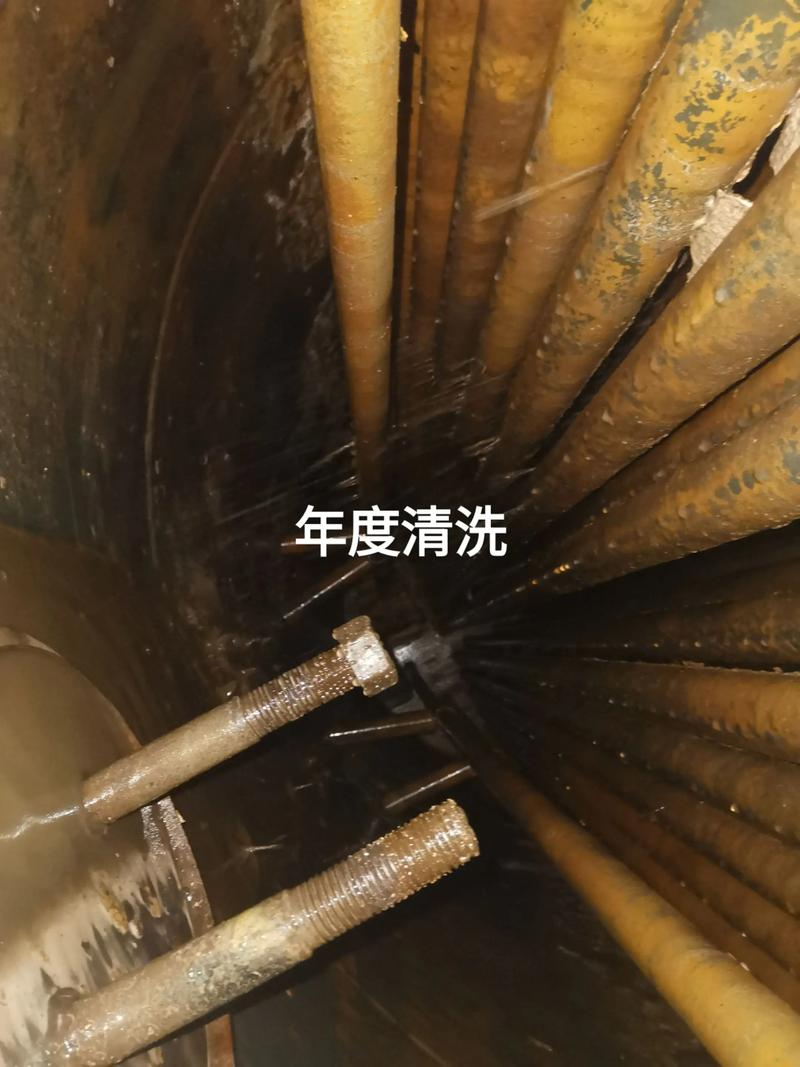
(1) internal cleaning operations using mechanical or chemical cleaning. When the water is thicker or hard, chemical cleaning is used before mechanical cleaning. When applying chemical cleaning methods, it is necessary to strictly comply with national regulations to prevent corrosive damage to boilers caused by rags. Chemical cleansing shall be carried out by specialized units authorized by the competent authorities. Mechanical clean-up is the use of tools such as hand hammers to root out water. Inspection after the boiler has been cleaned is an important exercise. It is important to take this work seriously by ignoring it, which could lead to operational accidents。
The following internal clean-up checks were performed:
1. Whether the clean-up is complete and, in particular, whether there are water residues at high temperatures。
Check whether the water table, pressure table and automatically controlled interfaces and each taken-over entry/exit point have been cleaned and blocked by miscellaneous items。
3. Whether tools, bolts, etc. Were left in the boiler。
4. Check the slabs of the drums, the soda separation unit, etc., for correct location。
5. Check that the parts are corrosive and damaged and, if so, record the extent of the damage。
(2) external cleaning is divided into manual and mechanical cleaning. When manual cleaning is performed, ash is used for the non-attractive pyrotechnic cluster and narrow sutures. In addition, the following special methods may be used for boilers of different structures, but not for the wetting of brick walls and fire-resistant materials。
1) vapour draught. Wet with steam, remove the ash。
2) water immersion. When water spray is wet, the ash is removed。
3) water washing. Water washing using a large quantity of ph = 8-9. This approach must be based on a structure suitable for water washing without contact with a fire-resistant brick wall。
4) other special cleaning methods, such as sand-spraying, steel-jelling etc。
After external cleaning, the following checks should be carried out:
Whether the cleaning outside of the hot surface is complete and whether there is still ash moss in the flue。
2. Whether the broken and loose parts of the brick wall were repaired。
3. Whether barriers or barriers have been damaged so as to cause short-circuit smoke。
4. Fills between the boiler itself and the brick wall, and fills in the heat expansion gap, are fully filled。
5. Thermal insulation protection measures for flue pipes, beam bars, etc. Are adequate。
6. Whether the boiler matrix is installed or not and whether thermal expansion is correctly processed。
7. Whether the jet direction and placement of the ash blower are correct。
8. Flammation and deformation of blast-proof doors, active panels and pressurized springs. The function of the plate is normal。
9. Whether or not the pyrotechnic switch is flexible。
10. Whether the fire-resistant materials of the brick wall are humid。
11. There are no leaks in the main boiler's main tube, the pipes and support。
3. During the shutdown, the boiler is prepared to form a water membrane by absorbing water from the air from the hot surface. Oxygen and iron in the water membranes are chemically used to produce rust, which corrosives the boiler. When a corroded boiler is operational, rust increases the depth of and expands the area of corrosion at high temperatures, and iron oxides continue to be stripped down to reduce the life of the boiler and even to severely reduce the steel plate strength. Therefore, the maintenance of the furnace is an essential measure to ensure the safe and economical operation of the boiler. The usual methods of moisture maintenance include pressure maintenance, dry maintenance, wet maintenance and inflating maintenance。
(1) pressure maintenance is generally applied to boilers with a shutdown period not exceeding one week. Maintaining 0. 5 mpa-0. 1 mpa from the boiler at a temperature slightly above 100°c, which does not contain oxygen in the boiler but prevents air from entering the boiler. In order to maintain the temperature of the boiler, it is possible to create regular microfires in the furnace or to heat the boiler with the steam of the adjacent boiler。
(2) wet maintenance generally applies to boilers for a period not exceeding one month. After the boiler has been shut down, the boiler is drained, the water and ash are removed, all human holes, hand holes, valves, etc. Are closed and completely isolated from the running boiler. Soft water is then added to the minimum water level, and the prepared alkaline protected solution is injected into the boiler with a dedicated pump. The components of the protection solution are: sodium hydroxide (also known as pyres) plus 8-10 kg per ton of boiler water, or sodium carbonate (also known as pure alkalis) plus 20 kg per ton of boiler water, or sodium phosphate plus 20 kg. Per ton of water, when all of the protective solution is injected, to open the water valve and fill the boiler with soft water (including heaters and fuelers) until the water is released from the air valve, then the air valve and the water valve are shut down, the dedicated pump is opened for the water cycle and the solution is evenly mixed. The protection of the solution is the gradual formation of a alkaline water membrane in the boiler, thus protecting it from oxidation. During the whole maintenance period, micro-creasers are produced periodically to maintain external drying of thermal surface; water cycles are pumped periodically to achieve consistent levels of solution at all locations; and solution tests are carried out periodically, which should be supplemented if the base level is reduced. Freeze-proof measures are taken during the winter。
(3) dry maintenance applies to the longer period of drying, particularly the hot and hot boilers for the summer. After the boiler has been shut down, the boiler is discharged, the water and ash are removed, the steam pipe, the heating pipe of the hot boiler, the valves on the water pipe and the sewage pipe are closed, or the other operating boilers are completely isolated from the other boilers. Then open the human hole and dry the boiler naturally. If the boiler room is damp, it is advisable to dry the boiler itself with a microfire, as well as with the stove wall and the flue, and then to absorb the tide by adding dry agents, such as calcium oxidation in block form, or lime per cubic metre to the boiler capacity of 2-3 kg, or calcium non-aqueous chloride to the boiler capacity of 2 kg per cubic metre to the boiler, and by placing them in the boiler with sacks and bags. Finally, all holes and hand holes are closed to prevent wet air from entering the boiler. The corrosion of thermal surface is checked every half month or so thereafter, and the non-functional drying agent is replaced in a timely manner。
(4) inflated maintenance is applicable to long-term decommissioned boilers. In general, nitrogen or ammonia from the cylinder is used to fill and maintain the pressure of 0. 05-0. 1 mpa from the top of the boiler, forcing heavier air to ejected from the lowest of the boiler so that metals are not exposed to oxygen. When the nitrogen is filled in the boiler, oxygen can be removed and, as a result of its alkaline reaction, it is more conducive to preventing oxygen corrosion。
For long-term defunct boilers, stain-proof paint shall be painted after the ash has been removed from the external heat surface and, after the faucet has been removed from the internal surface, the decomposition paint of the boiler shall be painted. The attachments to the boiler should also be fully cleaned. Smooth metal surfaces should be oilproof. The lubricant in the wind transmitters and wind transmitters should be fully discharged. All activity segments should be rotated once a week to prevent rust。
All electrical equipment shall be maintained as required。
These are organized for information purposes on issues encountered in the practical work of the participants, and should be communicated and corrected in a timely manner。