Automobile air-conditioning refrigeration is based on compressed refrigeration, motor-driven compressor-driven refrigerant cycles, evaporating and cooling inside the vehicle, and excreting outside the vehicle by condensers。
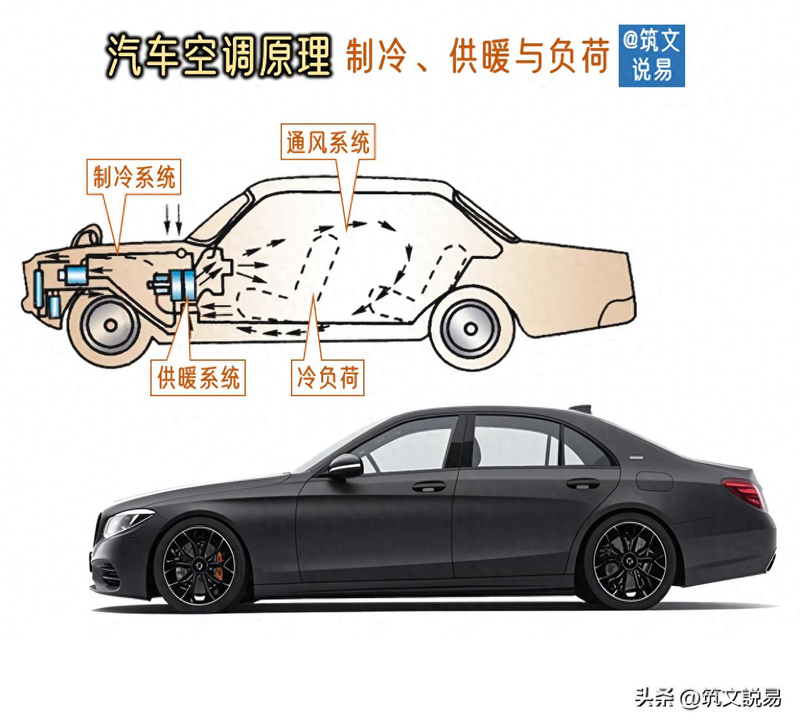
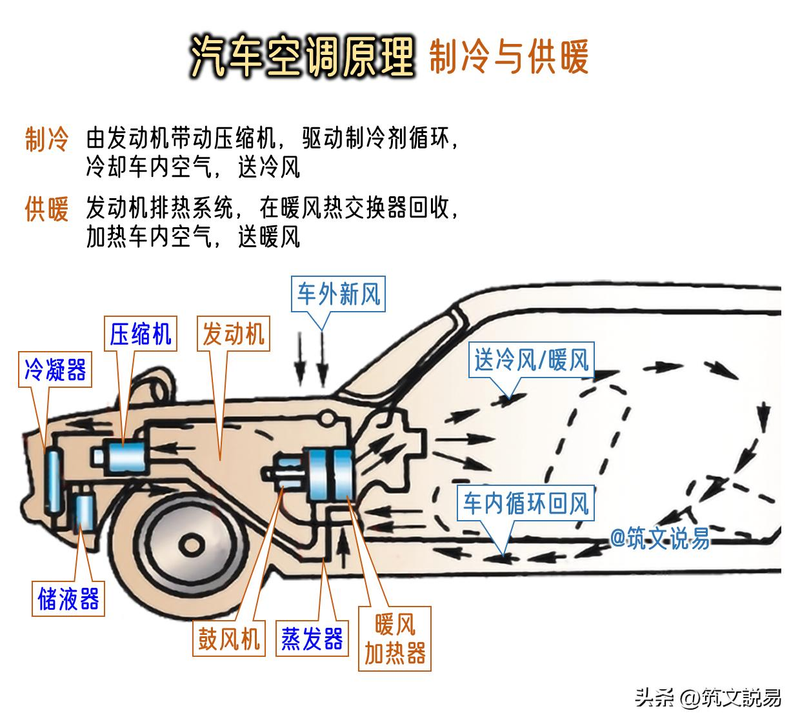
When motor air conditioning is cooled, the refrigerant (e. G. R134a) is compressed by compressor into high-temperature high-pressure gas, which is released into the condenser and released into the liquid state; the liquid refrigerant is cooled by an inflating valve decompression, into the vapour inhaler and absorbs the heat from the vehicle to cool the air; and the vapourized refrigerant returns to the compressor and completes the cycle. The process is taking advantage of changes in refrigerants to move heat outside the vehicle to achieve cooling。
Automobile air conditioning is mainly based on the use of engine residual heat, recovery of heat from the engine cooling system by heat-for-heaters, and heating of air and heating of wind inside the vehicle。
When car air conditioning is used to heat, the cooling fluid is warmed by the engine, the heat is released through a warm wind water tank (thermal exchanger), which blows the air through the warm wind water tank and heats it into the vehicle. Some of the high-end vehicles are equipped with electric heaters (ptcs), which heat the air directly with electric energy when the water temperature of the engine is below the standard, so that the temperature inside the vehicle is rapidly increased to meet the heating needs。
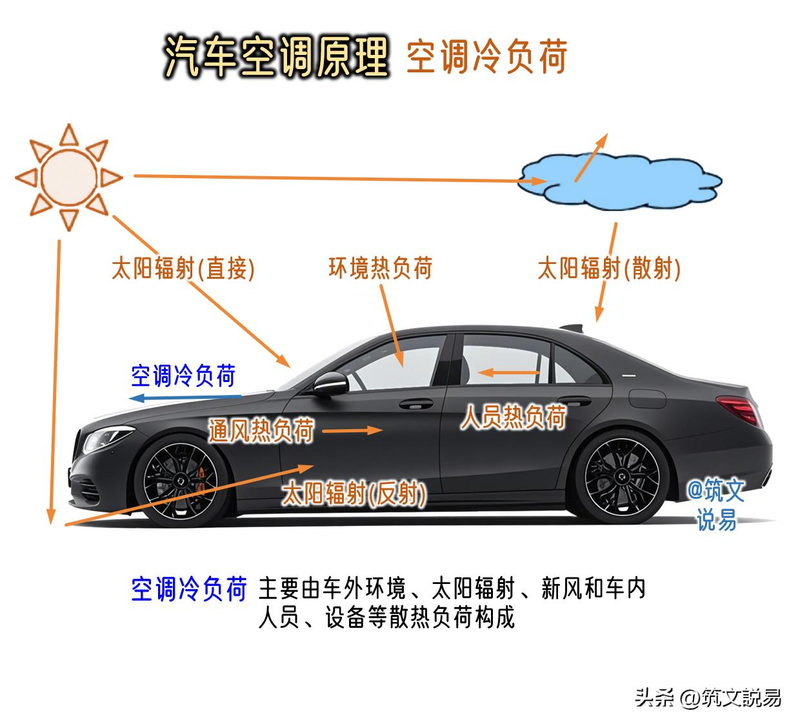
The cooling load of car air conditioning consists mainly of solar radiation outside the vehicle, the air environment, heat loads imported by new winds, and bulk loads of personnel and equipment inside the vehicle。
Solar radiation heat: the sun is exposed directly into the car through the window, heating the interior and releasing the heat。
Periphery structure heat transfer: car body surfaces, windows, etc., are transported into the vehicle by transvestite to absorb external heat。
New winds permeate heat: thermal air outside the vehicle penetrates the heat from inside the vehicle through the gap between doors and windows。
(b) mass heat: the amount of heat released into the vehicle by the internal breathing of the person in the vehicle and the surface heat。
Equivalent heat: the amount of heat generated while running, such as dashboards, seats, audio and video equipment。
# car # # air conditioner # # cooler # # heater # # i get air conditioner cooler # # i get heating air conditioner #