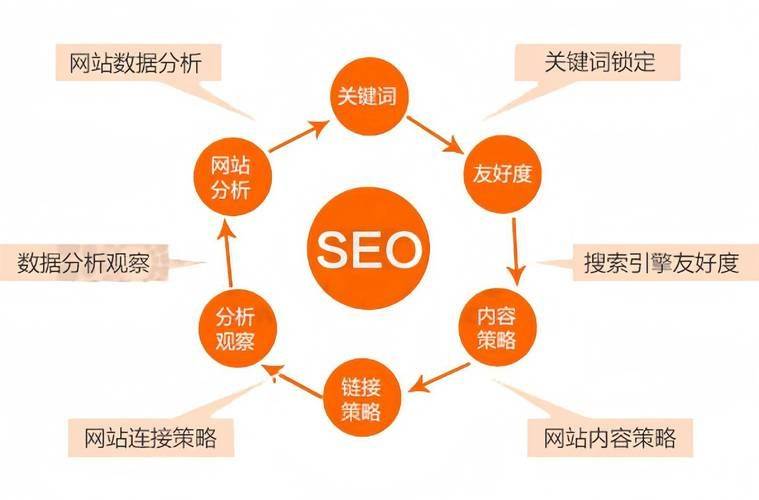
Resource summary information: “how to strengthen the seo technology and strategy analysis template in website design” is a professional document with theoretical depth and practical guidance value, which describes the need, feasibility and practical implementation path for the development of the search engine optimization (seo) from late remediation to the design of a core strategy for the website in the full process of modern web development. The document makes it clear that contemporary website design has moved beyond the traditional “second generation thinking” centred on the user interface (ui) and user experience (ux) to the “third generation web design thinking” phase, characterized by “search engine friendliness + double user value”. Its core argument is that seo is not a back-to-back operational auxiliary to the website, but a technological gene that cuts across the full life cycle of needs analysis, information architecture, prototype design, front-end development, content planning, back-end deployment and transport. From the bottom logic, the document provides an in-depth analysis of the symbiotic relationship between seo and website design: in essence, the search engine is an automated information-processing system through the reptile program (crawler) that captures, interprets, indexes and sequences web pages, and its core determination of the quality of the site is based on the technical attributes directly determined by the design phase, such as the degree of semanticization of the website's own structure, the legitimacy of links, the intensity of content relevance, the stability of loading performance and the adequacy of the mobile end. For example, a page that does not use semantic HTML5 labels (e. G., , ) would significantly weaken the ability of the search engine to understand content levels and thematic weights; a website structure that lacks clear url norms (e. G., a proliferation of dynamic parameters, mixing of size and meaningless id replacement keywords), a lack of a rational breadcrumb navigation and a network structure of internal links would lead to a death chain trap or a missed key page, seriously undermining index coverage; and the neglect of the principle of responsive layout at the visual design stage, the absence of a graphic latency-linking mechanism with key css, would necessarily trigger several failures by core web vitals (core web indicators), which would be directly factored into google's ranking downright consideration. The document further emphasizes that the keyword strategy is by no means a simple stacking of the hot words in the title and description, but rather a multi-dimensional keyword study at the top design stage of the site — including search intent classification (information, navigation, trade, business survey type), long-tailed terminology network modelling, key word gap analysis, localized search word geomodifier configuration, which is based on a reverse drive system (e. G., blog channels are organized by thematic cluster rather than time backwards), page type definition (product pages/guideline pages/comparison pages/evaluation pages need to match different intentions), h1-h3 header embedding logic, and emotional cta specifications for meta descriptions. Linking strategies have also been elevated to structural heights: not only requires external linkage building to be based on e-a-t (professional, authoritative, credible) principles, but also emphasizes the need for internal links to form a pyramid-based weight transfer model - - the first page is a top-level hub, with a high-weight navigation link to the core column page, then a precision guide to the content page via the context-related anchor text, with xml sitemap and robots. Txt being used to guide the reptile path and lower value pages. Particularly critical is the fact that the document reveals a blending mechanism between content optimization and website design: quality content without structured data tags (schema. Org json-ld) will not activate high-visibility displays such as rich snippet, knowledge graph, etc.; and a more sophisticated visual design without the open graph protocol and twitter card tags will lose control of critical preview information in social media dissemination. In addition, the document indicates forward-lookingly that as google continues to strengthen page exchange update, helpful coAlgorithms such as entent update are upgraded and website design must be synchronized into privacy compliance (GDPr/cpa c)The hard technical baselines, such as the wttps mandatory jump, htttp/2 or http/3 protocol adaptation, are no longer optional, but the search engine determines a rigid threshold for the “health” and “user-centre” of the website. Ultimately, the template constructed a closed-ring seo design assessment system covering four dimensions: technical audit (lighthouse rating, screaming frog crawling report), structural diagnosis (url level depth 3, internal link width 5 and depth 4), content health (tf-idf keyword distribution balance, entity co-density, paragraph readability flesch-kincaid index), conversion path site (incident tracking and target completion factor analysis), ensuring that each design decision is quantified and continuously optimized. This is not only an upgrade in methodology, but also a fundamental remodelling of the digital asset construction paradigm — the evolution of the website from a static information container to a self-evolutionary, data-driven decision-making, algorithm-friendly, user-calculable digital hub。