The sudden decline in the ranking of websites is a problem that many website managers and seo practitioners often face. Suddenly, there were sharp fluctuations in the otherwise stable flow and search rankings, which could lead to loss of users and even impact on the overall brand performance。
However, site ranking fluctuations are common and the key is to identify the reasons for the decline in rankings in a timely manner and to take targeted responses. This paper will discuss in detail five reasons that could lead to a sudden decline in the ranking of the website and provide concrete solutions to help the site quickly recover its ranking and restore traffic。

I. Algorithmic update of the search engine
Search engines, especially google, regularly update search algorithms to ensure relevance and quality of search results. Each time the algorithm is updated, changes in the ranking of the website may cause panic among station chiefs, especially when the ranking of a site has suddenly and dramatically decreased. In practice, however, algorithm updates are usually an optimised measure by search engines to improve the quality of search results and to counter garbage information, and they reassess websites based on new ranking signals。
The fluctuations in rankings after each algorithm update are often caused by changes in algorithms. If your ranking is affected, it may be because some elements of the website are not adapted to the requirements of the new algorithm in a timely manner, especially in terms of content quality, user experience, and external chain quality。
How to respond to:
• closely follow the algorithm update: the station director can keep abreast of the developments of the algorithm update through the google official blog, the seo news site, etc. Understanding the core changes in algorithms helps station chiefs respond quickly。
• using google search console: through a search and analysis report in search console, check whether the ranking of the website has been affected and find out the specific reasons for the fluctuations in ranking。
• optimizing content quality: ensuring that the content of the website is original, in-depth and responsive to the needs of users. Avoid excessive multiplicity of keywords or duplicate content。
• upgrading user experience: improving the speed at which the site is loaded, the suitability of the mobile end and the interactive nature of these are ranking factors that google has been increasingly focusing on in recent years。

Ii. Website technical issues
Technical problems are another common cause of the decline in ranking. Whether the back-office system of the website fails or the front-end page loading problem, it may result in the search engine not successfully capturing the page, thereby affecting ranking. The following are common technical problems:
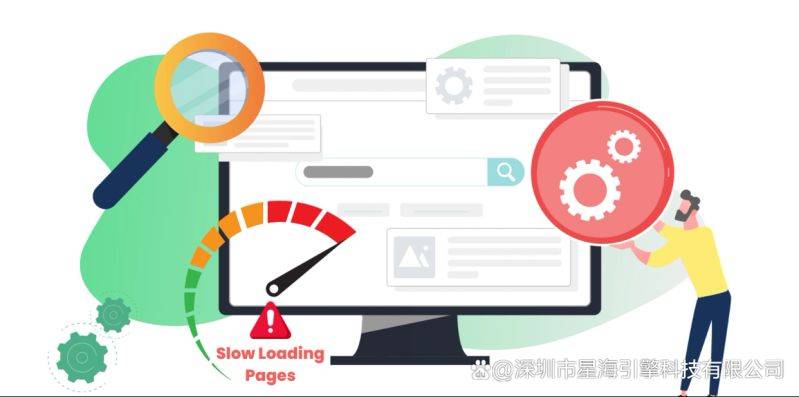
1. Slowness of page loading: the speed of page loading directly affects user experience and is an important factor in google's ranking. Studies have shown that slow-loading sites are easy to eject by users, which has a direct negative impact on seos。
Dead chain or wrong page of 404: when there are a large number of dead links or 404 pages on the site, the search engine does not capture the correct page, which may result in pages not being recorded or ranking down。
3. Duplicate content: if there is a duplication of content on the website, it may result in the search engine not correctly judging which page is the main page, thereby affecting the ranking of the site。
4. Reptiles prevent: sometimes the robots. Txt files of the website may be misset, leading to search engine reptiles not being able to access important pages, thus affecting the entry and ranking of the site。
How to respond to:
• periodic technical audits: use of seo audit tools, such as google seach console, screaming frog, ahrefs, etc., to regularly check whether there are technical problems with the website。
• upgrading load speed: optimization through pictures, cache mechanisms, reduction of unnecessary javasCript, etc., increases the speed of page loading。
• checking the dead chain and 404 errors: using tools such as google search console to monitor the dead chain of the website and repair the links in a timely manner。
• duplication of content: ensure that each page has unique content and avoids duplication of content. You can use the rel = "canonical" label to tell the search engine the priority version of the page。
Iii. Optimal strategies of competitors
In the seo industry, the optimal behaviour of competitors is often a major factor in the decline in ranking of their websites. And if your competitors do an effective seo optimization and go beyond your ranking, then your website could get a downgrade。
How to respond to:
• competing analysis: use tools such as semrush, ahrefs and others to regularly analyse competitors' websites and understand their keyword use, content optimization and outward-linking strategies。
• continuous optimization of their content: ensuring that they do not lag behind competitors in depth and breadth. The quality of content could be enhanced through the addition of graphics, videos and studies。
• enhancement of the external chain: access to high-quality external chains through white hat seo strategies (e. G., content marketing, cooperative exchange, social media outreach, etc.)。
Iv. Exchange issues
The role of the outer chain in seo is self-evident and is an important factor in enhancing the authority and ranking of the website. The quality and quantity of external chains directly affect the performance of seos on websites. If you have a problem with your outer chain, it could lead to a drop in ranking. The problem of the outer chain is usually manifested in the following:
1. Decline in the quality of the outer chain: if the external chain to your website is derived from a low-quality or unrelated site, the value of these links may be reduced or even penalized by a search engine。
2. Loss of the outer chain: if the external chain source of the website fails or is removed, it may also result in a decline in ranking。
3. Negative seo attacks: competing parties may use malicious negative seos to attack your ranking through a large number of low-quality external chains, leading to a decline in ranking。
How to respond to:
• surveillance of external links: use of tools such as ahrefs, majestic, etc., to regularly check the quality of the external links of the website and to detect and remove poor links in a timely manner。
• access to high-quality external links: work with industry-related websites, blogs or news outlets to obtain high-quality external links。
:: dealing with negative seos: if a malicious outer chain is found, the google disavow tool can be used to reject its effects。

Quality of content and timeliness of updates
The content is always at the heart of the seo. If the quality of your content falls or is not updated in a timely manner, the search engine may assume that your website no longer meets user needs, leading to a decline in ranking. The following are common content questions:
1. Low-quality content: pages that are too short, without depth, without originality, or that do not satisfy the user's search intentions, can lead to a decline in ranking。
2. Obsolete content: if your website content is not updated for a long time and no longer corresponds to current user needs and search trends, it may lead to a decline in ranking。
3. Repetition of content: repeating content will spread the weight of the page and the search engine may not be able to determine what is more important and affect the ranking of the page。
How to respond to:
• regular updates of content: ensure that website content is up to date and synchronized with industry trends. Add new articles, blog posts, update old content and keep it fresh。
• improving the quality of content: ensuring that content is in-depth, valuable and original and that the problems of users are truly addressed. Multimedia (e. G. Pictures, videos, graphics, etc.) is used to enhance the readability and interaction of content。
:: avoiding duplication of content: ensuring that each page has its only value and information and avoiding duplication of content。
Summary
The sudden decline in the ranking of the website does not necessarily mean that it is not doing well; it may be the result of a combination of factors. Understanding these underlying reasons and adopting targeted measures will not only help you to regain your ranking, but also further enhance the overall performance of the website. Seo is a long-term and systematic undertaking that requires continuous learning, monitoring and adaptation. Be patient and responsive, and trust that you will eventually regain or even surpass your ranking。
The star and sea engine has been concerned with the long-term value growth of foreign trade enterprises, from market strategy development, cross-border marketing enforcement, stand-alone station construction to multilingual seo and localization, and we are committed to providing a more definitive path to globalization for brands。