The following features of damaged and damaged urban roads:
1. ** rapid rehabilitation**: many restoration materials are designed for rapid drying and solidification in order to allow for the restoration of road access within a short period of time and reduce the impact on traffic。
2. ** durability**: restorations are usually of a high resistance and stress intensity, able to withstand repeated crushing of vehicles and prolong the useful life of roads。
3. ** temperature adaptability**: some restoration materials can adapt to different climatic conditions, such as high temperatures, low temperatures, etc., to ensure effective restoration in the environment。
4. ** glueability**: good viscosity allows restoration materials to be closely linked to the original surface to prevent re-stripping or tortoise fragmentation。
5. **environmental**: modern restoration materials are increasingly environmentally friendly, using low-voc or renewable materials to reduce environmental pollution。
6. ** construction convenience**: many restoration materials can be operated using simple construction tools, reducing the difficulty and cost of construction and improving repair efficiency。
7. ** economic**: the use of local restoration materials can be effective in reducing maintenance costs and extending the life cycle of roads compared to full resurfacing。
These characteristics make urban road damage restorations of significant application value in urban infrastructure maintenance。
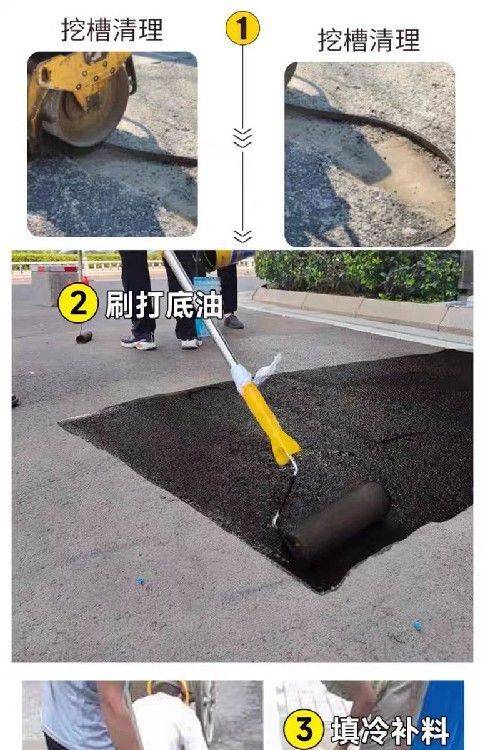
The asphalt cooler is a frequently used material for road maintenance, the characteristics of which include:
The cold patches need not be heated, can be used directly, easily and quickly, and are suitable for emergency repair。
2. The cold patches are good viscosity and can be strongly integrated with old surfaces, helping to extend the useful life of the patches。
Refrigerated refills are usually relatively resilient, capable of absorbing a certain amount of traffic load and suitable for use in high-volume areas such as driveways。
4. Cold supplements have good water resistance and can be used in wet environments and are not vulnerable to water erosion。
Cold patches can be used in climate conditions, including low-temperature and wet environments, and are more adaptive。
Refrigerated refills are usually easily packaged and are used only to clear surfaces and fill them, without complex equipment and processes。
Many formulations of cold supplements have taken into account environmental considerations and reduced environmental impacts。
8.: the cost of cold patches is usually lower than that of heat asphalt or other repair materials, and the short duration of construction helps to reduce maintenance costs。
In general, the cooler asphalt patches are widely used in road maintenance and repair with their convenient, economic and durable characteristics。
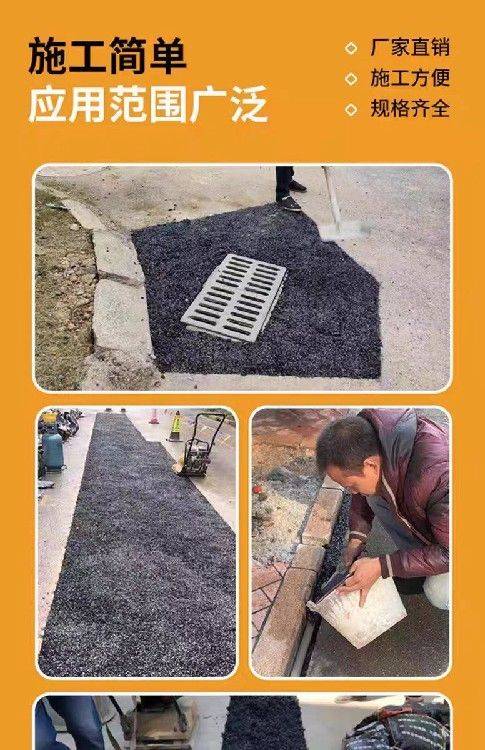
The main purpose of the asphalt road cold mix is to maintain and repair the asphalt surface, whose functions include:
The cold mix can effectively fill cracks and pit holes on the road, prevent further deterioration and extend the life of the road。
2. The cold mixer is constructed at a lower temperature than the heat-blended asphalt and applies to cases where climatic conditions are not suitable for thermal construction, avoiding damage to the surface of the road at high temperatures。
3. The construction of cold mixers, which do not require special equipment, can be carried out directly by hand, reducing labour costs and construction time to facilitate rapid repair。
Refrigerated mixers usually use recycled materials, which have less environmental impact and are consistent with sustainable development requirements。
5. The additives in the cold mixer formulations can improve the binding force of the original road to ensure the persistence and stability of the patch。
6. There is greater adaptability to the types of asphalt that can be used, including urban roads, rural roads and parking lots。
The performance of asphalt surfaces can be effectively maintained through the use of cold blends to improve the comfort and safety of the vehicle。