Spring break is over
It's about to start
After the holidays
It's the peak of business recovery
Security precautions cannot be ignored
Let's see
What needs to be noted for returning to work after the festival
Six major security risks are common after the festival
1. Unstable personnel mentality
From holiday to stressful working conditions, increased staff workloads, emotional instability, low concentration and high vulnerability to irregular operations。
2. Production organizational difficulties
Failure to return on time to key positions in enterprises has led to disruption of production organization。
3. Inadequate human capacity
New inductions, rotations and reassignments are likely to increase, with no familiarity with equipment protocols and no security codes。
4. Equipment failure
Special equipment, such as special equipment, has been out of service for long periods of time, maintenance is not in place, and there may be problems with damaged or malfunctioned safety attachments, irregular monitoring of alarm equipment, and, at the same time, some of the facilities at the production facility, which are under closed-ring management, have not been repaired and repaired in a timely manner owing to the heavy workload of the facility, which would otherwise have been overhauled and overhauled。
5. Changes in the operating environment
The business has been shut down on leave and conditions in the operating environment may change, such as the breakdown of equipment facilities。
6. Blind schedule and schedule
Work is resumed after the festival and the production tasks of the enterprise are heavy, and there may be delays and delays. Overloading of production personnel and special equipment facilities can cause disruption in the organization of production sites, over-intensity of personnel, compression of normal process time and increased safety risks。
In addition to the above-mentioned security risks, the units involved in the special equipment should, in conjunction with their own actual security precautions, implement the post-mortem safe return to work
Common measures
"six ones" for resumption
1. In order to carry out a programme of security liability, the principal duty-bearers of the unit are required to present themselves, deploy them, and personally supervise the resumption of work. They are also required to develop and improve the programme for the resumption of work. The responsibility for the safety of the head of the enterprise, the head of security, the head of the department, the chief of operations, the head of the class and the staff is clearly defined. The organization is committed to the responsibility for job safety and to the concept that “responsibility is the greatest danger” and is consciously integrated into daily production, in strict compliance with safety regulations。
2. A well-organized re-entry into the security education enterprise is required to prepare the corresponding risk points according to the type and characteristics of the special equipment and to provide pre-employment safety education for the operator in accordance with the requirements of safety technical regulations and in connection with the security responsibilities of the individual posts. Managers and operators are expected to learn about security laws and regulations, to be aware of the security of equipment, to be familiar with the working conditions of the equipment, the operating procedures and the maintenance requirements and care required for its use, and to be aware of emergency disposal methods. Induction of new recruits and transferred staff who do not have a special equipment operator certificate is prohibited。
3. A case-by-case education campaign on special equipment has been carried out in recent years, where individual users have experienced special equipment safety incidents during the resumption of work after 5-1 days due to a low level of awareness of safe production. When returning to work before the birth, each user must organize an awareness-raising campaign on typical cases of accidents involving special equipment, taking into account his or her actual situation and job characteristics, with a warning and a warning of the case, bearing in mind the lessons of blood, and with a view to effectively strengthening the safe return to work and preventing accidents。
A pre-session security course is a basic module of enterprise security management and a “frontier position” for security management, and securing the security of the team is essential. Each user shall organize, direct and supervise a pre-session safety workshop for the production team. In conjunction with the actual position, the team leaders should give priority to clarifying the production tasks, hazard screening, risk identification and response measures to the members of the team, including through the micro-intelligence group and the qqq group。
5. A comprehensive equipment security check is to be carried out by the units using the equipment to develop and implement the resumption work programme, the emergency disposal programme and the security check list. The management of hazard screening is central to the resumption of the pre-natal period. A comprehensive systematic inspection of the special equipment used, the security protection facilities, the emergency rescue facilities and the sites, links and locations where there is a significant security risk is carried out, so as to ensure that the dead corners of the blind zone are not left unattended and that the forms of passage are not removed. Emphasis is placed on the registration of equipment use, periodic inspections and the presence of damage, the verification of various safety attachments and security protection devices, and the normal functioning. Security risks are addressed in a manner that is accountable, funded, time-bound, pre-planned, “five-track” and closed-ring management. Special equipment, which is indissoluble and insecure, is not used。
6. The unit that has carefully designed a set of safety measures for the resumption of work is required to carefully analyse the risk factors during the resumption of work, to develop safety features, to develop risk alerts, to equip it with safety protection and emergency security equipment, to improve emergency disposal plans and to conduct an emergency response drill, taking into account the use of special equipment in the unit. In particular, the debugging programme for the operation of the new input equipment is subject to rigorous review, and the equipment is subject to the removal of unrelated personnel from the site prior to start-up and commissioning, without conditions, safety precautions and hasty debugging。
Personal measures
Focused inspections based on equipment characteristics
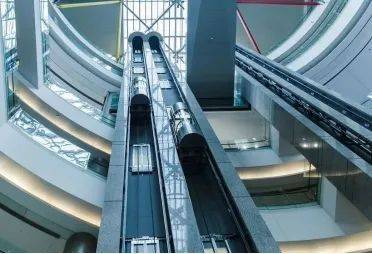
1. Elevator
The elevators (automated escalators) are certified, the warning signs, safety requirements, etc. Are complete; the emergency alarms and walk-throughs in the cars are normal, the door alarms are effective; the control panels, the stairwell buttons, etc., are effective and the elevator floors are normal; the rooms, corridors (channel doors), emergency rescue units and rescue procedures are in compliance with requirements; the parts of the elevator brakes, etc., are normal; the automatic escalators and automatic pedestrian walkways are effective and clearly marked。
Emphasis is placed on strengthening elevator screening and protection at public gathering sites and on preparing contingency plans for potential influxes following the resumption of work. Elevators in residential areas, hospitals, hotels and office buildings focus on the failure of old elevator brakes and malfunctions caused by improper use。
Lifting machinery
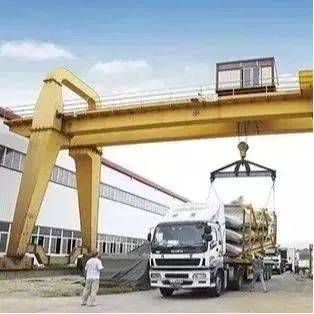
Emphasis is placed on checking whether the lifting machinery is qualified, warning signs, safety marks or statements are complete; whether there are significant abnormalities such as corrosives, cracks, plastic deformations, etc., in the main affected components; and whether safety protections such as the emergency stop-off switch, wrong-entry detection devices, itinerary limits, leak protections, etc., are functioning。
3. Specialized motor vehicles on site (plant)
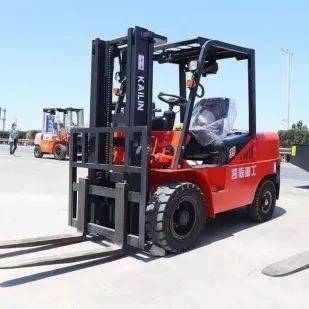
Emphasis is placed on checking the wear and tear of tyres, forks, fences, doors and doors to ensure that there is no fracture, deformation and serious wear and tear, and that the safety belt is intact; checking the validity of vehicle brakes; and the long absence of operators from their posts, a reduced security awareness and irregular operations。
4. Large play facilities and passenger access routes
Focused screening of passenger restraint devices, speed limits and brakes, such as security bars, seat belts, etc. Strict implementation of security checks and security protection device functional tests prior to daily shift, with an appropriate increase in the number of full-way closed-air operating tests prior to daily shift. Mental health guidance and job education training for operators should be strengthened. Emergency preparedness and security alerts for passengers。

5. Boilers
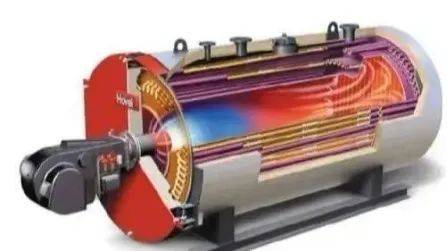
Whether the boiler has been tested for conformity, whether the boiler environment and warning signs, etc., are in conformity with the requirements; whether the look of the boiler itself, the attachment to the auxiliary unit, the attached pipe, etc., is normal; whether safety attachments such as safety valves, pressure gauges, liquid gauges, etc. Have been tested/inspected for the duration of their validity; whether the deactivated boiler has been debugged, inspected, and gradually increased its load after start-up in accordance with the operational protocols; whether the co-lock protection device for the boiler is normal; whether the water level, pressure, temperature, etc. Has been shown to be normal and within the rated parameters, etc。
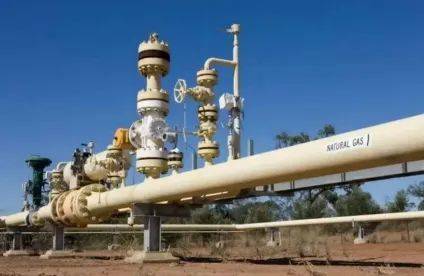
6. Pressure pipelines
Pressure pipes are tested and annual reporting of industrial pipelines is performed as required; inspection of the integrity of the temperature layer along the pipeline, and of the strength of the flange, tricom, connection etc.; whether safety attachments, such as safety valves, pressure sheets, etc., are in school/validation of validity; pressure, temperature, etc. Indicate normality, within rated parameters, etc。
7. Pressure packagings
(c) whether pressure packagings are tested, whether inter-equipment environment and warning signs, etc. Are met; whether safety attachments such as safety valves, pressure sheets, etc., are in school/validation for the duration of their validity, whether the blasting chip is in service as indicated in the placard; whether the safe locking mechanism of the fast-opening pressure vessel is effective; whether pressure, temperature, etc. Indicates normality, is within the rated parameters, etc。