We have to fix the mess
It's the price。
Yang
Editor comrade:
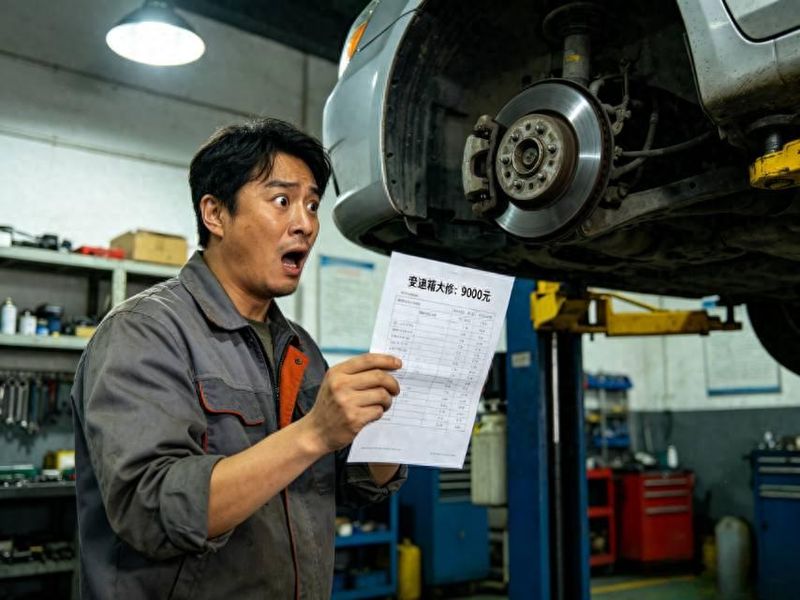
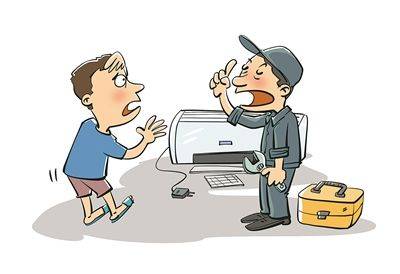
Last month, my water valve broke and i found a concessionary water valve maintenance service on my mobile phone at $35. After calling for an appointment, the maintenance master came to the house and finished his work, and told me: “35 is just a coupon, and i need extra money”, and i paid 220. I can't help but pay for it, but it's a bad experience. It was to be hoped that the media would pay attention to such phenomena and that the authorities would be encouraged to address the phenomenon。
Chongqing's north district, ray hong
In everyday life, home-to-door maintenance is an easy way to solve home maintenance problems, facilitating the lives of the population. However, readers also indicated that there were irregularities in door-to-door maintenance. As stated in the reader's letter, maintenance offers are inconsistent, and some consumers encounter problems with maintenance materials being filled, sales difficult and rights difficult. In this regard, journalists interviewed the persons concerned and made recommendations on the repair and repair of the market mess。
It's perfected, it's priced, and it's a big problem
Reader lui hong's experience is not an example. A number of door-to-door repairers attract customers on the platform at low prices, and the actual price may double when the repairs are completed. Prior to the repairs, the merchant offered a vague offer for “how much material to charge” on the basis of “check first” and then found various reasons to increase the price. The maintenance of circuits, pipes, home appliances, etc. Is relatively specialized, and it is difficult for ordinary consumers to judge the specific causes of the failure and to discern whether maintenance prices are reasonable。
Zhejiang hangzhou's reader chen kai (alias) met with a maintenance worker who had “lions opening up” because consumers did not know what to do. On 13 january of this year, as a result of the return of his family to the wall, he made an appointment with the hangzhou amnesia water protection company to provide water protection against leaks。
The company sent two masters who, without any leak detection, determined that the exterior wall of the house was permeable and advised that the leak would amount to $90 per pound。
Chen kei felt that the 90-pound price was too high, but the master claimed that the material was the import of high-tech nanomolecular material, “at high cost and with little use.” chen kei believed and agreed to repair it. However, 44 pounds of glue were shared throughout the project at a price of $3960。
Chen kai had previously heard that illegal merchants used “three-nil” glue, which was not suitable for use in homes, to impersonate high-quality materials. As a result, he asked the company to provide a quality report on the glue, which was apparently modified and refused to produce a certificate of entry。
In the area of door-to-door maintenance, the use of poor-quality spare parts by household electricians as part of the original plant made it difficult for consumers to discern the authenticity and quality of materials, resulting in short-term repairs and repeated repairs。
“not only did the original problem remain unresolved, but it also made a big problem.” on the evening of 3 january this year, the repairer came to the house to repair the services of the yoo yi, an alias reader of the city of nakayama. It was not expected that the repaired water purification unit leaked again the following morning. In the early morning morning, yoo ying found out that his family was “a sea of water”。
He cleaned it up all morning and finally contacted the maintenance master, who said that the repair site was understaffed and that it would take 3 p. M. To send someone over. By 3 p. M., the net is still short, saying it's late。
“there's no other way, so we have to ask the property to come back and re-engineer.” willow was then called to the renovation company to assess the damage to household electricity, and the loss of household clothing caused by the leak amounted to between $40,000 and $50,000。
Consumer advocacy is difficult, evidence is difficult to establish, and “playing ball” is frequent
“many family maintenance problems are sudden and need to be addressed quickly, and consumers have been rushing to choose services, often with little price or qualification. According to liu peng, a professor at the public administration school of the people's university of china, maintenance projects vary widely, such as leaks in water taps, simple replacement of taps, complicated and even re-painting of pipes. Different households find it difficult for consumers to identify whether maintenance workers are “seeing offers” or good faith services. In such cases, many consumers, even if they suspect that they have been “slaughtered”, pay for lack of evidence and rush to repair. Unlawful traders also take advantage of this consumer mentality by misrepresenting prices。
A number of consumers have indicated that “maintenance is difficult and rights are more difficult” in the event of price fraud, double filling or worse。
On the one hand, consumer advocacy faces problems of proof. Some of the service providers resorted to offering concessions to induce consumers to leave the platform for trading, leaving the platform unsold with no record of being able to defend their rights; others found maintenance masters from small advertising, and were unable to find people to defend their rights, only to eat and lose。
Journalists found that a number of mailboxes and sews in small residential areas had been plugged into small maintenance advertisements, some in the name of community property or service centres。
“these small ads are untrustworthy. Property will not be used in this way, even in publicity.” master zhang is a mechanic on 8 miles street in beijing, and all his work comes from the community property bill. “the property can't run, the repairs are out, and the residents find me. In my experience, most of the maintenance services offered in small advertising are higher. There are many false addresses that are not available at all, and no one can be found if there are problems.”
On the other hand, even when the facts are clear and the evidence is complete, consumers encounter multiple “players”. Willow has a similar experience. When he claimed from the maintenance network with telephone recordings, payment certificates, and live video maintenance, the site refused on the grounds that the master was neither a platform employee nor a certified teacher, “why was he sent to my home for maintenance without platform authentication? The head office, the sub-contractor, pushed each other, later said it was not a problem during the maintenance, and the insurance company did not pay for it; later said it was a problem of the network, and i lost consciousness.”
Without a choice, yoo yan complained to 12315. After more than two months of difficult advocacy, the final service provider's headquarters paid him $10,000 in compensation for a water purification unit without a production date and certification. The water purification unit was also identified as an unqualified product by the jiangsu provincial quality monitoring unit。
Liu yiu had sought a lawyer, who responded that he could be helped to win the case, but that the cost of the proceedings would not be low. In addition to the fees of lawyers, the fees are not too low, and it is necessary to find specialized institutions in the first-line cities. “although the final compensation is much lower than my actual loss, it cannot be accepted. The other party had a special legal department to deal with the complaint, and i had to go to work. Willows have shown that most consumers face similar problems。
It is recommended that the authorities publish a “white list” of household electricity maintenance to the public and that the platform introduce measures such as “a single price” services to regulate home-based maintenance services
As early as august 2012, the ministry of commerce published and implemented the measures for the management of services in home electrical maintenance, which explicitly forbids household electric maintenance operators and practitioners to engage in the following acts: misrepresentation, exaggeration, forgery of maintenance services or content; concealment or disguise of the fact that the maintenance services caused damage to the user's products; misrepresentation of faulty parts and the intentional replacement of normal performance components; and fraudulent use of the manufacturer's trademark or special maintenance logo. However, problems persisted, not only to the detriment of consumers but also to disrupt the market order。
“maintenance seems to be a small matter, but it is about the well-being of every resident.” according to wang il, secretary-general of the china national electrical services maintenance association。
Currently, most of the mainstream up-to-door maintenance platforms on the market are in the form of online user attraction and off-line service users. What is the role of the platform as an intermediary in this process? What should be the responsibility
“consumers are often subjected to decoupling because the platform under this model does not provide services directly to consumers, who act only as information hubs. If something goes wrong, they'll feel wrong about going down the shop online, not themselves." the president of the beijing city association of the internet finance industry, xu zeqi, believes that platform players are not simple information-sharing. They should work to standardize service processes through the entire process of billing, door-to-door services, after-sales services, etc. “the platform establishes standardized service processes by digital means, by categorizing items, each element of the service is subject to rules and corresponding management monitoring indicators.”
In the standardization of service processes, price standardization is directly related to consumer interests. According to xu, the first is that prices are transparent to consumers, that pricing information is published through official channels and is readily available; the second is that the standard pricing system is constantly refined to provide consumers with a clear picture of the process of the maintenance, how much each of the process projects should cost, and the hours, materials, etc., that affect the pricing; and the third is the price assessment of maintenance projects in a complex and non-standard system, with an assessment of the price in advance, and after full communication with consumers, with a view to avoiding subsequent disputes。
In addition to regulating the management of the platform, liu peng believes that sectors such as market regulation should also increase day-to-day regulation, build a credit evaluation system for service providers, impose a platform ban on non-compliant vendors whose complaints exceed the standards, and impose penalties in accordance with the law for some maintenance companies and maintenance personnel suspected of violations such as false propaganda, fraud, forced trading, etc。
Under the measures for the management of services for the maintenance of domestic electric power, the competent authority may warn and order the correction of an operator for the maintenance of domestic electrical appliances in violation of this scheme, and may impose a fine of up to $30,000 in serious cases. “the authorities concerned should improve the channels for reporting complaints so that consumers can defend their rights. It's not just about being able to defend, it's about making it easier for consumers to do so.” liu pen said。
Consumer associations could do more. For example, in recent years, the shanghai market protection commission has published a “white list” of household electricity maintenance to the public, calling on consumers to make every effort to select the services listed。
In addition, home-to-door maintenance should strengthen self-regulation and provide practical advice on market disruptions. “common governance systems involving consumers, platforms, shops, regulators can be established.” wang il, for example, could set up a mechanism for independent third party intervention in the event of a dispute; the door shop could explain the maintenance process to consumers to make the whole process more transparent by “working together to make sure that `small things' are done for thousands of families”
Ko guo-yeon was involved in writing