All those who blow through the fan know that if you add a couple of steers to the fan motor, you can get a fan welder. Because electrical and welding machines are essentially based on electromagnetic sensors, welding can be effective by dividing the home-mounted conductors into primary circuits, which allow them to create magnetic fields and secondary circuits responsible for detecting large currents. But how do we split it? We'll look at it。
• first, remove the fixed screws of the electric power and cut the start-up contours of the electrical power. As this single-phase electric arcade is made up of main and sub-tangular circuits, which are supported by the activation of the capacitor. When converted to welders, however, only the primary circuit of the main circuit of the generator as a transformer is required. Activation of the capacitor and activation of the circuitry became redundant parts, so there was no fear that cutting it would affect the normal operation of the electric power, or even, if not, it would interfere with electromagnetic sensors。
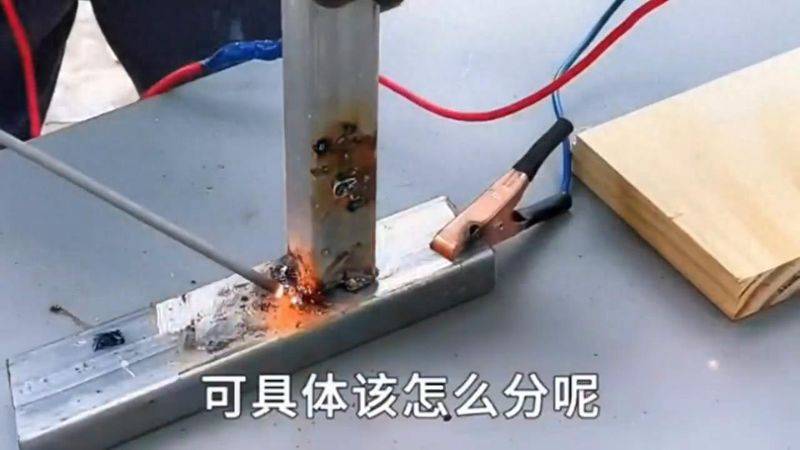
When it's removed, the black one is the activated capacitors, and the wire just cut off is used to connect it, so it's now completely separated from the power。
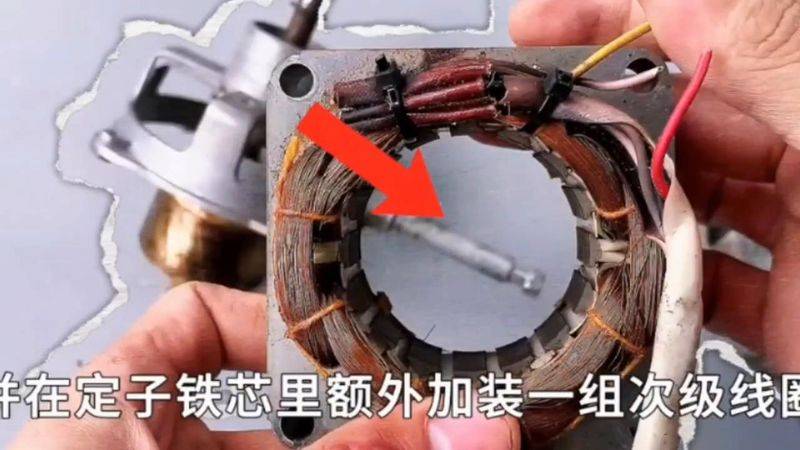
The end cap of the power plant is then removed and the bolt is fixed, with the aim of separating the back and back end cap of the power plant from the fixed iron core. Because it is only by removing the fixed steel core in its entirety that it can be fitted with an additional initial stage guidance, which can be divided into the initial stage circuit。
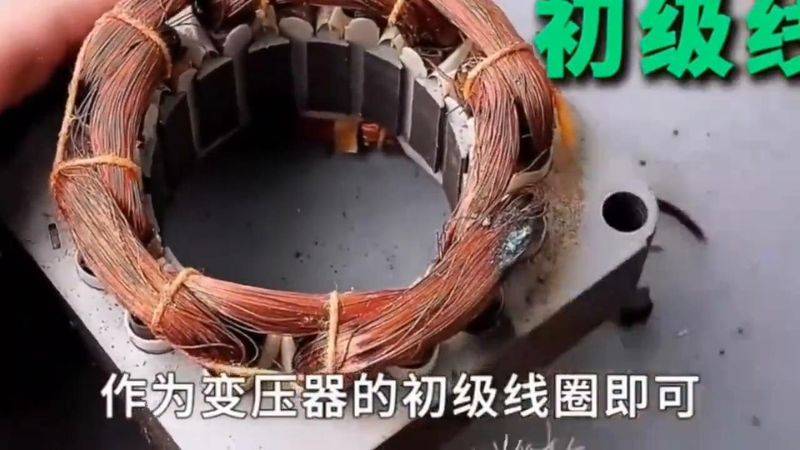
• this brass coil is the fixed composition of the electric power, consisting of the fixed iron core and the main circuit. The main circle is then used as the primary loop and an additional set of secondary loops is added to the fixed iron core. Because the two circuits in the same steel core form the core of the electric to the welder, the welder。
• but what is needed now is to remove the rotor, but there is a metal button on the rotor axis, which is difficult to remove without it. Because welders are static transformers, they don't have to turn. And the rotor consists of silicon steel and casting aluminium bars, which generate vortex and unnecessary wear and tear in electromagnetic sensors, so its retention only affects efficiency and heat. Get rid of the exit line left on the main bypass group and make it a clean piece of sure。
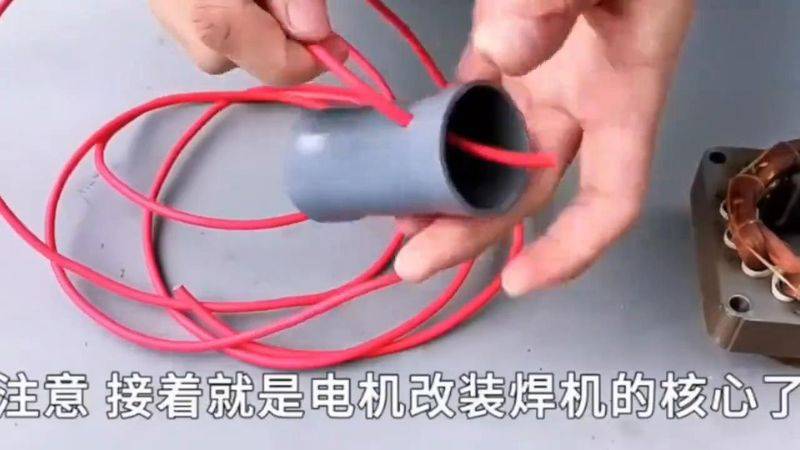
• then prepare a thick pvc pipe, bearing in mind that the length should close the back and back end of the beam. Heated the pvc pipes with a hot wind rifle, both of which expand the connections with the same tubes, so that the pipes become a smoother wiring fixed mold。
• the opening of a small hole on both sides of the pipe to fix the two ends of the wire。
• attention is then given to the core of the electric retrofitting welder, with a red coarse guide entangled around the pvc pipe as a secondary bypass of the welder. Although it's only around seven or eight laps, according to the principle of electromagnetic induction, the smaller the coil, the lower the voltage. So it can reduce 220v to the 30-60 v required for welding, while magnifying the currents dozens of times, so that the 3000°c arc melts the metal。
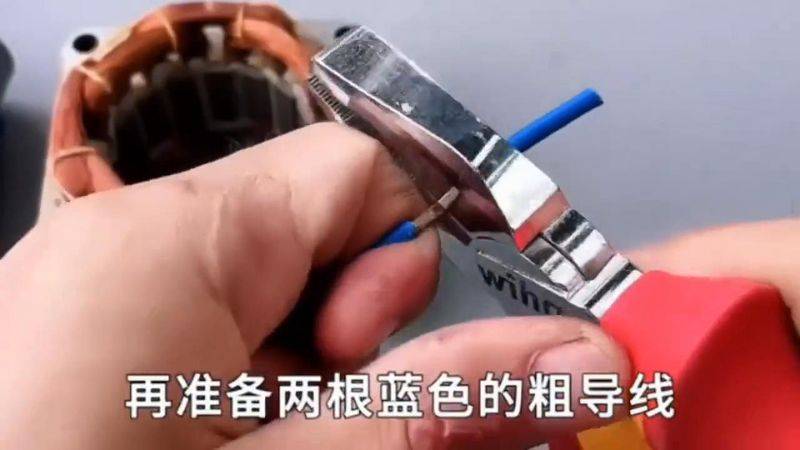
• preparation of two additional blue lines to connect to the copper wire ring in the main circuit group as a primary bypass group. Because of the multi-wire size of the coil on the main circuit group, 220 v of electricity was taken to create the magnetic field. However, the main circuit of the blue line, the end of the line, is exposed metal, and if the skin is not wrapped, the metal is directly exposed to the steel core, creating short power supply circuits。
• the remaining blue line can be linked to the other side of the copper wire circle. Now that the blue line is 220v high voltage but small currents, the smaller the red line, the smaller the voltage, the lower the voltage, the greater the current。
• then put the red line in the end cap and try to get it stuck on the axis of the end cap because of the expansion of the pvc pipe. The two blue lines, on the other hand, do not distinguish between the two, except to put one out of each of them outside the end cover and secure the end bolt。
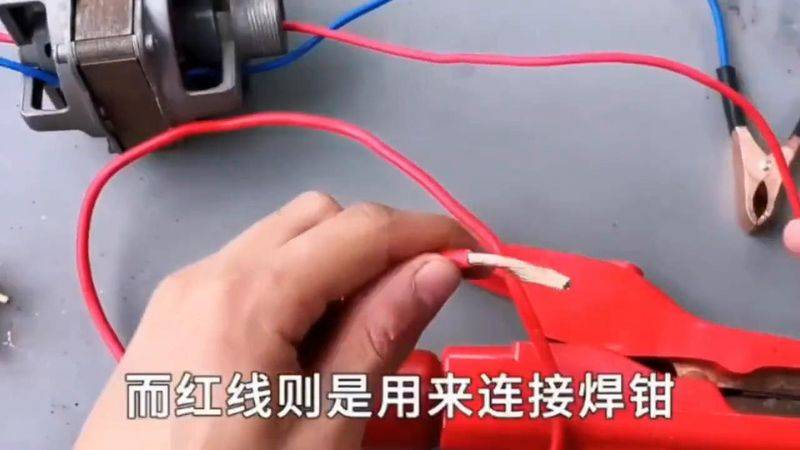
• then a red blue line plug-in, which is specifically designed to feed high-pressure e-mails, and red wires are responsible for exporting large currents. The other side of the blue line is connected to the iron trap, as it is connected to the main circuit of the electric power, which is the energy entry for the entire device and the circuit for the electrical current. The red line is used to connect weld clamp, because it's in the sub-circle of the dot, and it senses the low-pressure current required for welding。
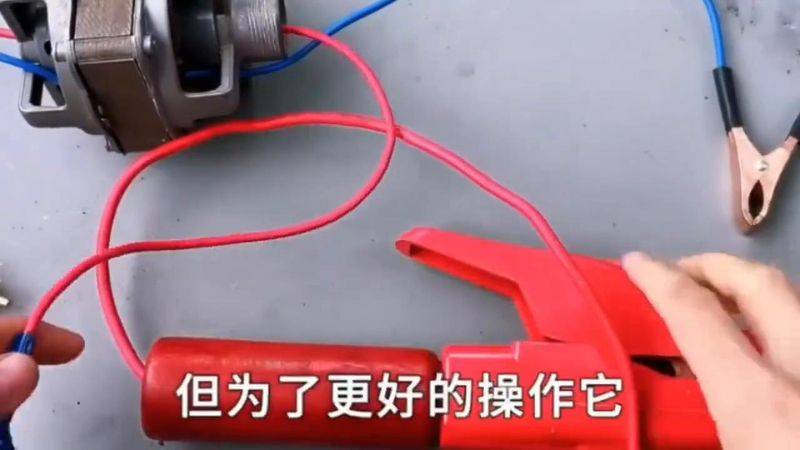
• a simple fan welder is now almost ready, but in order to better operate it can drill a hole in the centre of a piece of plank and then insert a rotor axle of the engine to fix it and avoid a welding of the electric machine。
• the test now is that when the plug is plugged into the plug, the current of 220 v flows through the blue line into the main circuit and produces a high-speed change in the metallite magnetic field. When the main circuits produce a magnetic field, the secondary loop is exposed to a large electrical current, which goes through the red wire, exits from another copper ring at the plug and then flows to the welding clamp, when the iron is placed on work that requires welding, as it is intended to form a complete welding circuit。
What happened in the instant welding? Why can welders form sparks when they touch the work? That was because the red line and the blue line formed a closed circuit through the work at that time and were in short supply. However, the currents are squeezing at this time because of the minimal resistance of the red wire. When you raise the welds a little bit, this huge current blows through the air to form an arc, which is more than 3,000 degrees high enough to melt the metal to weld。
In short, the blue line transforms electricity into a magnetic field, while the red line transforms the magnetic field into a large current, and the electric machine becomes a welder with a magnetic feeling。