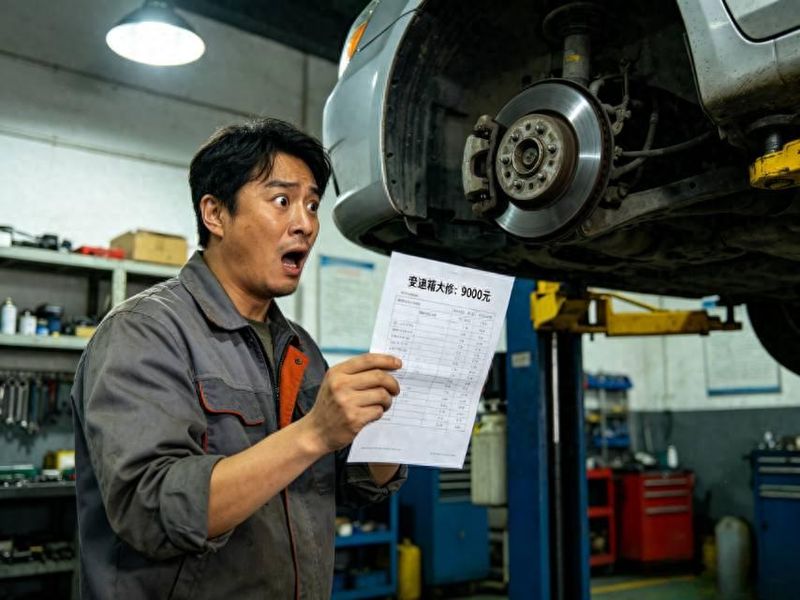
Zhang's hair has been white lately. His eight-year-old retrofitting workshop, and last month's equipment failure rate skyrocketed, resulted in over 200,000 losses in the maintenance alone. Even more painful is the fact that a few maintenance companies have been approached, either offering an abnormally high price or having problems after two days of repair。
“now that the business, the profits, the equipment, it's too much to hold on.” zhang and i were pouring bitter water, one by one。
It's not really an example of an old man's dilemma. I visited more than 30 manufacturing firms in the pearl triangle and found that over 60 per cent of smes were “disguising” for equipment maintenance — either by unprofessional service providers or by disruption of production due to delays in maintenance。
Today, let's talk about how it's going to be cheaper and cheaper to choose a service provider for industrial equipment repair and renovation。
How deep is the maintenance market? Three real cases to show you
Case 1: an electronic plant that was buried by the newspaper minor repairer in a $80,000 plant failed a sticker in a local maintenance company last year. After testing, the other party stated that the main plate was broken and that the entire control system had to be replaced at a price of $120,000. Later, the factory technical supervisor was unsure and found a second test, which found that only two sensors had been in poor contact, and that only $800 of material and 4,000 labour costs had been spent。
Case 2: untimely maintenance caused the entire production line to shut down a hardware processing plant in shenzhen for three days, with the main axes of the control machine. The cooperative maintenance company promised to “go to the door the next day”, which resulted in a delay of four days. The three-day cut-off resulted in a direct loss of production capacity of $1. 5 million in order to pay the customer's liquidated damages。
Case 3: the unprofessional nature of the retrofitting programme makes it more difficult to automate equipment with 500,000 people at a ceramic factory in foshan. As a result, new systems and old equipment are incompatible and production efficiency is reduced by 30 per cent. In the end, it had to be dismantled and more than 700,000 wasted。
Seeing these cases, may you ask: are there no reliable service providers on the market
Of course there is. But you have to pick。
Ii. Four moves to teach you how to identify a reliable maintenance and rehabilitation service provider
A true professional provider, the engineer team must have these characteristics:
Industry experience for at least five years -- equipment malfunctions are strange
High percentage of licensed entry - e. G. Electrician, plc programming, mechanical engineer, etc
I've had better training -- i've had enough equipment
Like our partner, le fai smart equipment technology ltd., their core engineering team has an average of eight years of experience, and more than 70 per cent have certified qualifications in large plants such as siemens and haina. The last time they re-engineered a vehicle spare parts plant, they completed the seven-day commissioning exercise in just three days, because engineers were too familiar with the system。
Compare:
Some small maintenance teams: a small team of men, today to retrofit the cnc tomorrow
Regular service providers: professional groups, specialized in plastics, specialized in ncc, specialized in art
Second move: look at the casebook and the solution
A reliable service provider must have its own “casebook”. You can ask to see:
In the case of retrofitting in the same industry — have you done any retrofitting of equipment like yours
Comparison of data before and after modification — how much efficiency gains? What's the down rate
Customer evaluation and return records — what does the old client say
I've learned about le fai's intelligence, and they have a real idea: after each project is completed, at least three free visits will be made... • one week, one month and three months after completion, to ensure that adaptation is stable. This responsible attitude is rare in the industry。
Compare:
Company a: handle several vague case photos with no specific data
Company b: capable of providing detailed retrofit reports, cost-effective analysis and even signing impact assurance agreements
Strike three: look at the spare parts supply chain
What's the worst thing about equipment maintenance? Waiting for accessories. Some repair companies used used second-hand items or even refurbished items for a reduced price, which did not take long to be bad。
Regular service providers are transparent about spare parts:
Common spare parts stored - reduced maintenance waiting time
Retroactive origin of spare parts - certification of original plant or qualified supplier
Quality assurance period is clear - generally for at least 3 months
Le fai smart has its own spare parts warehouse in toshio, with more than 2,000 commonly used industrial accessories. One of the packaging plants they served last year, a german import module, failed in the middle of the night, they returned to spare parts for two hours and resumed production for four hours, helping the customer to keep the emergency order for delivery the following morning。
Step four: watch if service processes are regulated
From reporting to completion, the process should be as follows:
Rapid response - preliminary diagnosis within 2 hours
Transparent quotations — listing details and not adding items
On-site construction specifications — tool set and secured
Finish the test. We're going to try to get it done
Provision of reports — cause of failure, maintenance content, use advice
A lot of small maintenance teams jumped to step 3, and the next two steps were not done。
Automation: don't be fooled by high-tech
Now, many plants want to automate, but there's a mistake: the smartest, the best。

This was the case last year when le faixi smart retrofitted a furniture factory. The client had wanted to go to a fully automated robot production line with a budget of 3 million. However, their research found that the plant had a large number of batches and a small number of batches and that the full automatic line was inefficient. The final proposal was for a “semi-automatic + critical process automation” programme, which cost only $1. 2 million, increased production efficiency by 40 per cent and reduced investment returns from 5 to 1. 8 years。
A comparison of the thinking of several mainstream service providers:
A foreign brand: a preference for a full set of high-end programmes, technologically advanced but expensive, suitable for large, well-budgeted plants
A local integrator: prefers a standard modular assembly with low cost but customized capability weak
Professional service providers such as le fai intelligence: will study production processes in depth, identify bottlenecks and tailor processes to maximize value for money
Iv. My three points
Recommendation 1: establish equipment health files before they are repaired. Build a “health archive” for each core equipment, recording:
Daily running parameters
Historical failures and maintenance records
Key components have a useful life, so they can predict the maintenance and reduce the number of sudden failures. This is the feature of the smart protection system that le fai intelligence provides to clients, which can warn them of potential failures 30 days in advance。
Recommendation 2: an annual protection agreement is recommended if you have more equipment than a single maintenance. Accounting: one-time maintenance, 500 visits, 300 hours. The average savings of 30-50 per cent for the month or year of the annual agreement, as well as regular inspections to prevent the outbreak。
Recommendation 3: prior to retrofitting, rio must analyse any retrofit for investment return periods. Simple formula: (retrofitting input) ÷ (manual savings per month plus increased production) = months of recovery. It is usually worthwhile to return within 24 months. It is important for service providers to include this component in the programme。
At the end
Industrial equipment is like the “heart” of the plant, repairing and retrofitting the wrong service provider, while light is expensive and heavy. The industry is mixed, but companies that really use their minds to make technology and services can stand the test of time。
Chang then took my advice and changed the professional service provider to do a comprehensive assessment. He was given a three-year protection+step retrofit programme, with an investment of 800,000 in the first year, but is expected to reduce the downtime by 60 per cent, with combined cost savings of over 2 million over three years. Seeing him last week, he finally stopped being sad。
Select the service provider, not just the offer. Technical strength, industry experience, service attitude, and long-standing reputations are truly “value for money”。
Is your equipment still spending money