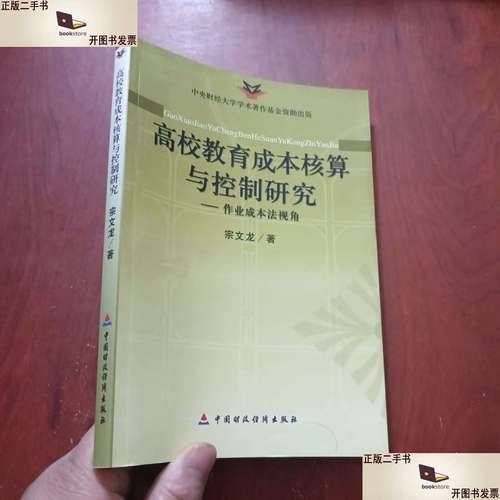
Higher education, education costs, control of the status quo
1. Costs of education thin
The country's traditional system of education finances generally uses approved income and expenditure, flat allocations, credits, overexpenditures and savings retained in budgetary and revenue management. Under this traditional model, universities do not need to consider the benefits and benefits of running schools. While the problem of funding difficulties has gradually become apparent in higher education institutions, the measures taken to resolve them have also been more intensive in applying for financial resources. And by adding to the characteristics of higher education in pursuit of social benefits, so few universities actually take effective measures to implement the cost of education controls, and the cost of education controls are less conscious. In recent years, in the context of the promulgation of the new school of higher education accounting system and the comprehensive reform of universities, universities have begun to introduce the concept of “full-cost accounting”, with an increasing emphasis on cost accounting, but it is not easy to break traditional accounting patterns with full-time, full-process, full-fact cost accounting and cost control。
2. Costs of education
At present, higher education institutions, taking into account their actual situation, are more likely to adopt “uniform leadership, centralized accounting” or “uniform leadership, hierarchical accounting” financial management, whether in the college finance service or in secondary accounting units, which is almost entirely focused on accounting, and budget and accounts management is often based on the budgetary and departmental accounts of the ministry of finance. Neither the state administration of education nor the institutions of higher education assign the cost of education control functions to the financial authorities or to an institution listed in the treasury. Therefore, there is no financial department that has a sub-section or 76 institutions that are included in the financial sector to perform specific duties in the control of education costs, such as setting standard costs, statistics, analysis, aggregation of the actual costs of education, monitoring the implementation of educational costs, etc. Although some tertiary finance departments have started to implement educational cost controls, since the cost of education requirements differ significantly from the current accounting system, the cost of education controls are actually just an educational expenditure control。
3. Inadequate control of educational costs
The higher education law of the people's republic of china merely states that higher education institutions must conduct their teaching and research activities for profit and that they are non-profit organizations, so it seems that there is little evidence for higher education institutions to strengthen the cost of education and increase their economic efficiency. The classification criteria applied by universities on a cash basis, income and expenditure, which result in accounting results that do not reflect a clear correspondence between income and expenditure under the accrual system, create difficulties in measuring education costs. So far, the study of the costing of education in higher education has remained at the theoretical level and at the mapping stage。
4. Costs of education
In practice, some higher education institutions have also been usefully exploring the cost of education, prior forecasting, ongoing control and ex post evaluation tracking to enhance performance evaluation, and pre-screening, forecasting, analysis and validation of decision-making on a number of large projects. However, these cost information are often incomplete, incomplete, unscientific, and cost-control methods are often simple aggregated analyses, as they are influenced by policy rationales or accounting models, and some advanced dynamic management methods have not been applied in the educational cost control process。

Higher education, education costs, control process strategies and recommendations
The rapid and steady growth of tertiary education will be facilitated by the creation of a cost-conscious internal management, linking its work to its running costs, freeing up ideas, changing perceptions, developing ideas, developing change management measures, tapping the potential and strengths of existing human, material and financial resources, and working to reduce cost spending and make limited funds more effective。
1. Development of a cost-control system for education
The system of control for the promotion of higher education, the cost of education, the system of control of implementation. The cost of education control system is a large system, including schools, education costs, overall planning and strategy control, school costs control and management practices, school costs standard systems, budget management rules, human resources cost control rules, procurement cost control rules, etc. Introduction of a full-cost accounting system, with the selection of a college as a pilot, full-time, full-process, full-factor, full-cost accounting。
2. Establishment of a higher education system
Fully exploit the advantages of information by establishing a timely and efficient information management system throughout the school, to facilitate cost-control needs at all levels, to provide a basis for the cost-control of tertiary education, and to inform decision-making on resource allocation to tertiary institutions. The correct aggregation and distribution of the costs of all types of education and the accurate calculation of the costs of education in higher education require improvements in the methods of accounting for the costs of education in higher education, the strict allocation of the benefit periods during which the funds are incurred, and the allocation of costs according to who is the beneficiary, so that the costs of education can be scientifically calculated. This could include a cost accounting subsystem, an energy sharing subsystem, an asset management subsystem, a project management subsystem, a cost standard subsystem, a cost analysis subsystem, etc., to enable demanders to understand the status of real-time cost control in different liability units, analyse cost differences and implement cost control based on different competencies。
3. Strengthening analysis of educational development policymaking
At the macro-control level, the location of schools and the size of their operation, the planning of their disciplines, etc., are important factors influencing the cost of education, the implementation of the cost of education, the control of which needs to be at a strategic level to determine the location of schools and the size of their operation, taking into account the actual situation in schools, and fundamentally to control the cost of education. The cost of education follows the “u”-type cost curve in economics, and numerous studies confirm that there is a clear correlation between the size and cost of universities, economies of scale, and only a modest scale can maximize the use of resources. They are too small and underutilized; they are too large and overutilized and have negative effects。
4. Strengthening budget management and rationalization of resources
A large amount of extrabudgetary income belonging to the college or department is included in the school budget and a consolidated financial budget is secured. For example: income from basic skills training in partnership with enterprises, income from high-level training courses, compensatory income from school resources such as classroom occupancy fees charged to out-of-school units, space occupancy charges, etc., and labour income such as registration fees and study fees charged for the performance of sectoral functions, which are now largely fully allocated to the income-generating sector and are not included in the annual school budget. In order to rationalize the allocation of school resources, it is recommended that all school annual budget management be integrated and allocated。
Budget preparation is based on a zero-based budget approach, with priority and integrated consideration of the budget. The expenditure budget is rationalized as much as possible in terms of the structure of expenditure and expenditure. It is important to concentrate on the main tasks, while ensuring the basic functioning of the school. It is important to give priority to improving the conditions for running schools and improving modern teaching methods. (c) disaggregates the objectives and tasks set out in the annual funding budget and prepares the responsibility budget based on the responsibility cost centre as the main basis for controlling and evaluating its operations。
5. Reduction in equipment procurement and project construction costs
On the one hand, the potential for procurement of large equipment facilities should be exploited and costs reduced. Improve the professionalization of procurement practices, such as equipment, improve bid management, strengthen procurement contract review, conduct clearances from various aspects of procurement content, purchase price, etc., and explore the potential to reduce procurement costs. On the other hand, efforts should be made to reduce project construction costs. With the expansion of higher education institutions, the increase in the proportion of capital investment expenditures, the strengthening of major project management, the institutional and operational regulation of project construction, and the reduction of capital costs are important for the implementation of higher education costs。
A tender management mechanism shall be established for public, public, fair, and procedural regulations, in accordance with the requirements of separation between regulatory, executive and supervisory authorities, and shall be imposed on the acquisition and acquisition of equipment and equipment. At the same time, the audit oversight mechanism continues to be improved to ensure that the construction of capital projects and the procurement of major materials and equipment are truly on the path to the “sunground” of transparency, fair competition and integrity。
6. Improved mechanisms for energy sharing in tertiary education
Significant energy consumption, such as water, electricity, heat, etc., is growing, and is gradually becoming the focus of the school's teaching, which needs to be spent on the basis of its capacity to use single places, benefits, improve energy sharing mechanisms for higher education, strengthen cost recovery and account for the corresponding costs of logistics services, educational services, research projects, etc. On the one hand, cost-control savings are facilitated; on the other hand, the actual costs of different projects or operations are reflected and the implementation of school-wide education costs is facilitated. Basic work on water tables, meter installation and survey of building space in each unit, energy sharing mechanisms for each unit, clear energy recovery processes, methods and responsibilities, and effective energy recovery and conservation。
7. Reasonable staffing costs
With the expansion of the scope of schooling, the reform of the wage system and the introduction of talent, the cost of human resources in schools will inevitably increase. Further strengthen the reform of the distribution system by introducing a system of recruitment of teachers, with job placements on the basis of need, pay on the basis of pay and competition; and establishing a performance appraisal mechanism that applies scientific nuclear technology in a multi-level, multi-dimensional and holistic manner, based on the principles of fairness, openness and equity. It is important to see all aspects of the work of the target audience and to identify the key and decisive elements of such work, starting with the four aspects of “desert, competent, hard work and performance”, and to develop a system of appraisals and criteria that are consistent with the characteristics of the work of university managers。
8. Improving office efficiency in the public service

To do this, hardware and software are needed. On hardware, the school office automation system must be fully planned to improve management efficiency and standards. The subsystems of personnel management, student management, financial management, scientific research management, teaching management and asset management in the school management system reflect the principles of information sharing and independent maintenance in planning. Only a thorough re-engineering of business processes using information technology will enable the integration of management operations, which will effectively enhance competitiveness and management. Software must incorporate advanced management concepts and raise awareness and level of management services. The functional departments of higher education and the administrative staff of the faculties of higher education promote the concept of “teacher-centred and student-oriented” and promote management in their services. Cross-cutting communication among functional units should be strengthened, drawing on the management experience of modern enterprises and advanced and mature management concepts, so that organizational approaches can be flattened, horizontal linkages and coordination between sectors can be promoted, and resources can be fully shared and integrated in order to achieve an overall functional scaling-up。
Higher education, education costs, performance control strategies
The institute has introduced a full-cost accounting mechanism for the pilot colleges, strengthened the integration of performance evaluation with the annual target appraisal for cadres, implemented target management and incorporated the performance status into the annual target appraisal system for leadership cadres. Establish cost-control incentives and disincentives, with clear incentives and penalties, to reflect the principle of a combination of “responsibility, power, profit”, motivate cost control and guarantee the smooth running of education costs。
1. Establishment of a closed-ring control mechanism in the workplace
The functional units should clearly delineate their respective responsibilities and competencies, establish complete, scientific management procedures and control standards, set key links in business processes and create effective closed-ring control mechanisms between departments and posts. The responsibilities of the head of each post must be clarified and the right correspondence between authority and responsibility must be established. In terms of material rations and the use of funds, “grey” areas of responsibility, which are or are not available, must be eliminated to avoid situations in which the maximum authority and minimum responsibility are assumed。
2. Establishing mechanisms for information communication and scientific feedback
On the one hand, a two-way communication of information feedback between functional departments and service groups is achieved, rather than a one-way communication from top to bottom or from bottom to top. This is the only way to gain a more direct understanding of the causes of implementation deviations and improve management efficiency. On the other hand, it is important to establish a multi-faceted system of joint meetings among the various functional units in order to discuss and resolve in a timely manner new problems and contradictions that have arisen in the development process。
3. Establishment of a supervisory and appraisal management mechanism
There is a need to strengthen oversight, including the monitoring of the implementation of the system, research prior to decision-making, evidence and supervision of the process of decision-making, and to establish, in practice, a structure of authority and mechanisms for the coordination of decision-making, operation and supervision. A comprehensive, multi-layered, network-based management, monitoring and appraisal mechanism for personnel management is needed to fully mobilize people and work together to manage. In the field of contract management of schools abroad, there are important economic contracts such as contracts signed, foreign co-operation in the conduct of studies, major scientific research, etc., not only through a review and approval under the direction of the school’s head of finance, but also through a review of the law, with the seals and records of the closed departments; and in the execution of the contracts, there is a closed circle between the executing, managing and supervising subjects, which is mutually binding, thus avoiding unnecessary losses. (by liu sangyang, work unit: beijing university of aeronautics and astronautics, treasury)