Foreword: looking for inspiration for writing? The chinese periodical network's carefully selected technical analysis of the management and maintenance of chemical machinery and equipment is intended to inspire your reading and creativity。
Summary: against the backdrop of the ongoing transformation of our chemical industry from the traditional industrialized countries to the new industrialized countries, which has been undergoing a major transformation in recent years, with the introduction of new processes, new equipment and new management models to achieve efficiency, low pollution, low energy consumption and zero emissions being mainstreamed into our chemical industry, the management of chemical machinery and equipment becoming a front-line issue, the standardization, processization and information management of chemical machinery and equipment through the application of new technologies, new ideas, and the steady operation of machinery and equipment and failure predictions as the basis for the construction of modern chemical plants。
Keywords: chemical machinery and equipment; management; maintenance; tpm management; status monitoring
1 objectives of chemical mechanical equipment management
The smooth operation of chemical machinery equipment is a prerequisite for achieving this goal. The primary purpose of the management and maintenance of chemical machinery equipment is to improve equipment stability and reduce failure rates through scientific management and maintenance, while maximizing equipment functionality. Chemical machinery equipment generally operates under harsh conditions such as high-temperature high-pressure, toxic, hazardous, flammable, explosive, corrosive, low-temperature, and high-level conditions. The stability and safety of equipment are highly demanding. It is highly unique in the field of machinery, with a people-centred scientific development view to ensuring the safe operation and control of the risks of chemical machinery equipment through the management and maintenance of chemical machinery equipment, and is a key element in the management of chemical machinery equipment。
2 content of management of chemical machinery equipment
2. 1 daily inspections
The main elements of daily inspections of operating equipment include temperature, oscillation and detection of abnormalities such as acoustics, relaxing, wear, cracking, breakage and run-off drops。
2. 2 periodic maintenance
This includes, inter alia, regular replacement of lubricants for equipment, regular consolidation, periodic adjustments, periodic replacement of vulnerable items and spare parts for service life, and periodic inspection of hidden components。
2. 3 deficiencies addressed
Explosive equipment malfunctions or equipment anomalies are handled。
2. 4 planned overhaul
There was a systematic treatment of problems with the planned decommissioning of equipment。
2. 5 major overhaul
Most of the key equipment in chemical and other continuing production enterprises is in a state of unstoppable or unseparable condition and requires a centralized stoppage after a certain period of operation to process problems or maintain equipment。
2. 6 lubrication management
The location, quality, quantity, regularity and personnel management of lubricating or lubricating equipment is one of the priorities of equipment management and is of great importance。
2. 7 seal management
In order to eliminate running, passing, dripping and leaking, reduce leakage rates, ensure safety, reduce consumption, eliminate environmental pollution, ensure physical health and ensure steady production, there is a systematic management of stationary and static sealing points。
2. 8 status monitoring
Continuous monitoring of the condition of the equipment and analysis and forecasting of equipment failure。
2. 9 special equipment inspection
Special equipment is regularly inspected and tested in compliance with laws and regulations。
2. 10 spare parts management for spare parts
Management of spare parts for equipment, including procurement management, inventory management, coding management, use management, etc. 2. 11 equipment retrofitting and replacement of equipment that is difficult to meet actual production needs to achieve production efficiency, energy conservation, pollution reduction and safety。
Problems in the management and maintenance of chemical machinery equipment
First, the mechanical equipment management system is inadequate. The mechanical equipment management systems of most enterprises continue to follow old systems, the expansion of enterprises is not synchronized with the construction of regulatory systems, and new technologies or equipment have been applied without the upgrading of systems. The lack of understanding of the system, the replicating and copying of regulatory systems, the poor targeting and the apparent formalism are two of the problems that currently exist in most chemical enterprises: the lack of awareness of management. There was a lack of planned inspection and overhaul of equipment, routine work to address temporary defects or malfunctions, and potential equipment hazards that could not be detected in a timely manner, leading to an accumulation of hazards, resulting in damage to equipment or non-stop accidents. The formality of the management and maintenance work of the enterprise's mechanical equipment is another manifestation of inadequate management awareness. Thirdly, there is a lack of rationality and systematicness in the management and maintenance of chemical machinery equipment, neglecting some important details, such as periodic inspection of the hidden components of the moving equipment, regular tightening of pipes, pressure containers ' flavours (in particular under conditions of high temperature, high pressure, cold heat exchange, vibrations, etc.) and corrosive content of media containers, periodic thickness of pipes and welding tests. Fourth, the equipment maintenance system is not systematic, comprehensive and should be repaired for long periods of time. In order to save costs or prolong the production cycle, some enterprises often omit or delay the maintenance of equipment that is not immediately visible, such as the regular replacement of vulnerable items, the replacement of lubricants and the inspection of critical components, which do not produce significant benefits in the short term, but which, in the long run, are of critical importance for the smooth operation of the equipment。
4. Solutions for the management of mechanical equipment in chemical enterprises
4. 1 equipment management towards specialization
The mechanical equipment of the chemical industry has its own uniqueness, with the vast majority of the equipment operating on a long-term and high-load basis, the stability of the operation of the equipment directly determining the efficiency of the enterprise, and the level of operation and management of the equipment determining the operation of the equipment. The establishment of a comprehensive and scientific system of management and maintenance, the strengthening of the professional development of equipment managers and the maintenance of the level of equipment management and the synchronization of equipment development are key to proper equipment management。
4. 2 regulate basic operations and ensure process control
Maintenance of equipment is the foundation and focus of equipment management. The quality of maintenance plays a decisive role in the operation of the equipment, its useful life, and its failure rate. High-quality completion of equipment maintenance is one of the objectives of equipment management, and standardized maintenance and maintenance operations and strict process control are prerequisites for the quality of equipment overhaul. At a minimum, the following are required to regulate the operation control of equipment inspection and maintenance: (1) the operational guidance for the scientific preparation of the performance guidance is an important reference for inspection and maintenance operations, and the scientific guidance for the operation should include the operational content, operational requirements, construction preparation, equipment preparation, operational steps, data standards, control points, acceptance points, etc. (2) rigorous reference criteria for assembly data and for the selection of fittings use the standard fittings according to process conditions and equipment profile parameters and are assembled as required, both to ensure reliability and to make the operation legally compliant. (3) based on data, avoiding subjective judgement and reducing uncertainty by making the most frequent inspections in chemical enterprises - – in the case of pressure piping or pressure vessel flaming operations, most business operators work mainly with manpower, often using hammers and wrenchers to tighten the bolts, depending on the subjective judgement of the operator, with a greater degree of variation in the flange’s different bolt flaming degree, the flannel seals prone to misalignment, the uncontrollable compression of the french pads, and the lack of quality assurance. The process is regulated by the determination of a bolt-strength rectangular and gasket compression, the unification of the bolt-strength rectangular to a specified value by a twister or hydraulic wrench, and the measurement of the gasket compression, the determination of whether the flanc-tighter meets the standard, the avoidance of uncertainty due to personal subjective reasons and the assurance of the quality of the overhaul. (4) the quality of the overhaul should be tested after the overhaul of the test work equipment, e. G. The test after the overhaul of the transformer equipment, the gas-enhancement experiment after the overhaul of the pressure container, etc., to ensure that the overhaul quality meets the standards and is operational and avoid accidents arising from the quality of the overhaul. (5) analysis of the cause of failure in the course of the overhaul of the equipment for the analysis of the cause of the failure will make it more relevant and effective in preventing repetition of the failure. (6) any problems and pitfalls identified in the maintenance of dangerous equipment should be fully addressed and their expansion avoided。
4. 3 sound management systems are the basis for the survival of enterprises
In the context of today's market environment and institutions, chemical enterprises have evolved towards large-scale, high-capacity, tight state policies and intense market competition have determined the need for modern industrial enterprises to have sound regulatory systems in place. The equipment management system of the chemical industry must be scientifically comprehensive, targeted and applicable. Deformism, detoxification and the maintenance of a realistic, scientific and rigorous attitude are principles for the establishment of an equipment management system and are necessary for the development of chemical industry enterprises. Chemical enterprises should be aware of the importance of establishing a well-established system of equipment management and maintenance, taking into account their own characteristics, human condition, economic capacity and production needs, and taking into account the laws and regulations, national standards and industry standards, and drawing on industry experience, establish a system of systems that are well-established, scientifically regulated and operate effectively to ensure the smooth operation of the equipment and maximize its benefits。
4. 4 innovative management models are at the heart of enterprise development
After the second world war, japan's manufacturing industry grew rapidly and today has become the world's manufacturing power, thanks in large part to two advanced models of equipment management — preservation of pm production and preservation of tpm production. In the 1950s, the level of equipment manufacturing in the united states increased steadily, with mechanical equipment gradually replacing manpower in the manufacturing industry. As the scale of mechanization has expanded, the sophistication and sophistication of various types of advanced equipment have increased, but because of the widespread backwardness of personnel equipment management and equipment use, the continued failure of various types of equipment, the dramatic increase in equipment maintenance costs, which has constrained the efficiency and quality of production, and the urgent need for manufacturing to manage equipment, the united states, after taking stock of the experience of the industrial revolution, has divided equipment management into the following components: “bm after-action” in response to equipment failure, the pre-disposal method “pm preventive preservation” in response to equipment prior to failure, the improvement of cm conservation in order to extend the life of equipment, the establishment of “mp preservation prevention” in order to create non-facing equipment, the establishment of a “pm production preservation” system in conjunction with the above four components, the advanced scientific management system has addressed the urgent needs of the united states, the use of these sophisticated management techniques and methods has significantly reduced the failure of equipment, the efficiency and quality of production, and the manufacturing industry has gradually after the second world war, japan began learning from the united states in the same context, bringing into the country its “pm production preservation” management system, which was improved by companies in response to their own needs, resulting in japanese-style pm-tpm production conservation and full expansion of japanese enterprises, which contributed significantly to japanese manufacturing development. At present, the chemical industry has a very high share of the country's manufacturing capacity and is one of the main pillars of economic development. The concept of enterprise management and the management model are relevant to the survival and development of the enterprise. In the context of the country's policy of comprehensive and deeper reform, chemical enterprises must break with outdated mindsets and institutional mechanisms, absorb the achievements of scientific civilization, promote innovative management models, promote enterprise development and enhance core competitiveness。
4. 5 time expressing new technologies
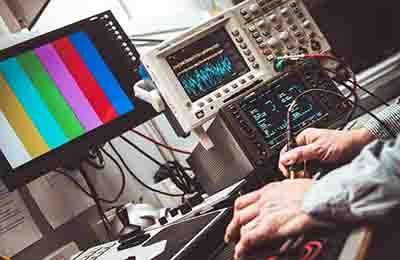
In the early 1980s, a number of developed countries around the world developed and created a high-tech technology called “equipment diagnostic technology”, which, with equipment in operation or largely undismantling, has evolved to this day into a discipline of the system — equipment state detection and failure diagnosis — by detecting the operational state of the equipment, judging the parts and causes of the malfunction and predicting the future state of technology. The rise of this discipline has been accompanied by the emergence of new detection equipment and monitoring methods, which have brought newer ideas for the management of equipment today. In the case of the broader state monitoring system currently in use in the country, the shenyang dynamite group's large rotation and control technology ltd., sg-8000, an online detection and analysis system that enables remote real-time surveillance of the fleet to function, to determine whether it is normal, to use remote monitoring systems, to closely monitor vibration fluctuations, operational trends, alarms, etc., to use current and historical data analysis, to determine the malfunctions of the aircraft, to predict future trends and to provide ideas for their elimination, to provide guidance on operation and maintenance through long-term monitoring of the crew, to upload the data to the internet, and to monitor the condition of the equipment at any time and by means of mobile ap. Through continuous collection of data on the operation of the equipment, comparison of the performance of the equipment of the same type, and through large data analysis, the state detection system will be more accurate and relevant to equipment failure diagnosis. In today's evolving information and intellectualization, the application of new technologies to improve the level of intelligence for failure detection and to achieve continuous equipment monitoring and failure forecasting to keep equipment running at a controlled time is a trend towards the management of plant equipment at modern plants
5 concluding remarks
The management of equipment, as a priority for modern industrial enterprises, has far-reaching implications for the enterprise itself and for its social development. Advanced enterprises, with advanced technology, must also have advanced management systems. The level of equipment management in chemical enterprises is the basis for the survival and development of enterprises. The management of chemical machinery and equipment is carried out through scientific management systems and specialized management teams。