In the afternoon of 24 march, the annual meeting of the forum for asia, borghum, 2026China's economyOutlook: focusQuality developmentThe sub-forum was held. Under the chairmanship of huang yiping, president of the national institute of development studies, beijing university, the former chief economist of the world bank, lin shuwu jiang, former under-secretary-general of state, zheng yingyan, director of the chinese university of hong kong (shenzhen) school of public policy, and michele jerachi, former vice-minister of economic development of italy, four experts from china and from abroad, engaged in an in-depth dialogue on the subject of “fifty-five” planning, new quality productivity and high level of openness. In an hour and a half, they talk about “155,” about new quality productivity, about openness, about the content and consumption that ordinary people care about。
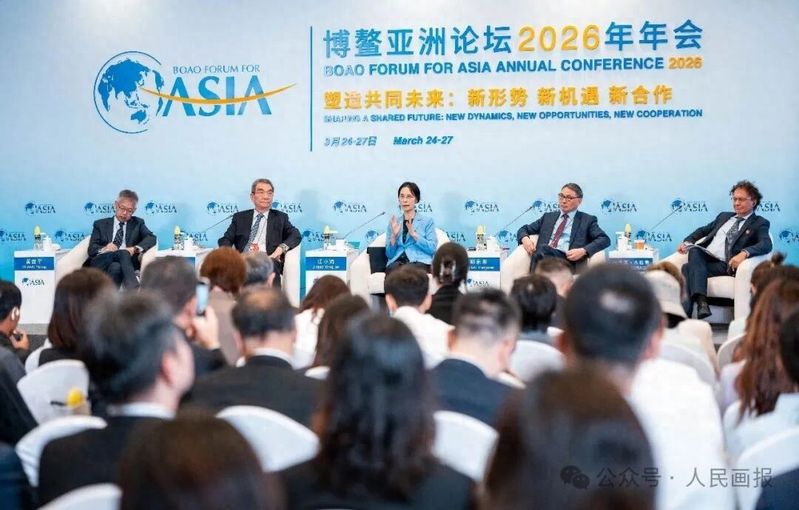
Live of the sub-forum “china's economic outlook: focus on high quality development”
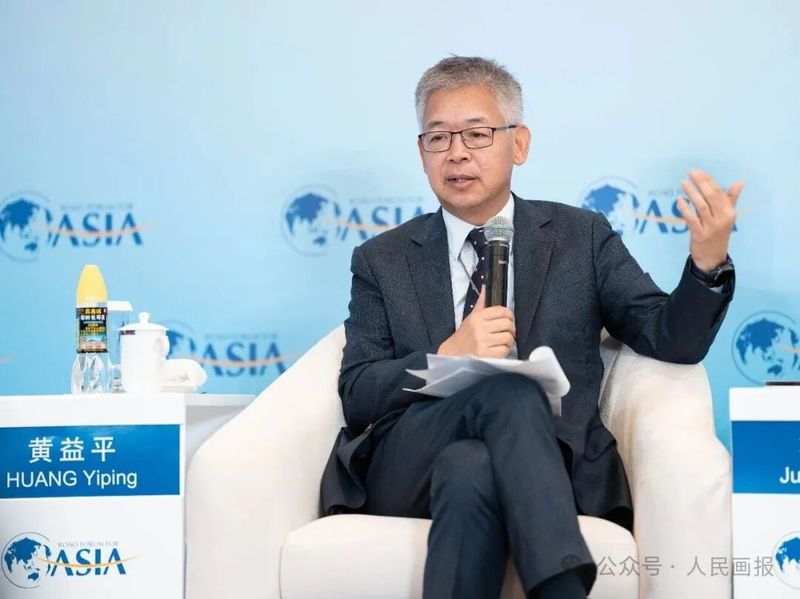
Huang yiping, president of the national institute for development studies, beijing university, chaired the sub-forum “china's economic outlook: focus on quality development”. Photography
8% potential, why only about 5%
By 2035, china still had 8 per cent of its growth potential. What makes you think that? The fourth industrial revolution, the availability of manpower, the size of the market and the variety of industries in china, combined with both the government and the market, was not overly optimistic。
Since 2008, however, global economic growth has fallen from 3. 7 per cent to 2. 7 per cent, and developed countries have yet to slow down. China is a major exporter, with a poor external environment and internal restructuring, growth will naturally fall below potential. That is why, in his view, china has set the GDP growth target this year at 4. 5-5%, “to achieve better results at work,” which is realistic. “this goal can be fully achieved, if not more so, as long as the international environment does not surprise us”。
Jerach confirmed this from another angle. He said that there was a misunderstanding in the west about “155” planning. China said it would grow by 4. 5 to 5 per cent, “as long as there is no black swan”. He gave a very practical suggestion to foreign investors: “go read the `fifty five' plan and download it free of charge online. If you want to work with china, don't ask what you can sell, ask what china needs."
Lin also predicted that china would contribute about 30 per cent to world economic growth even at a rate of 4. 5 to 5 per cent. In a global landscape full of uncertainty, this is not a simple number, but an anchor。
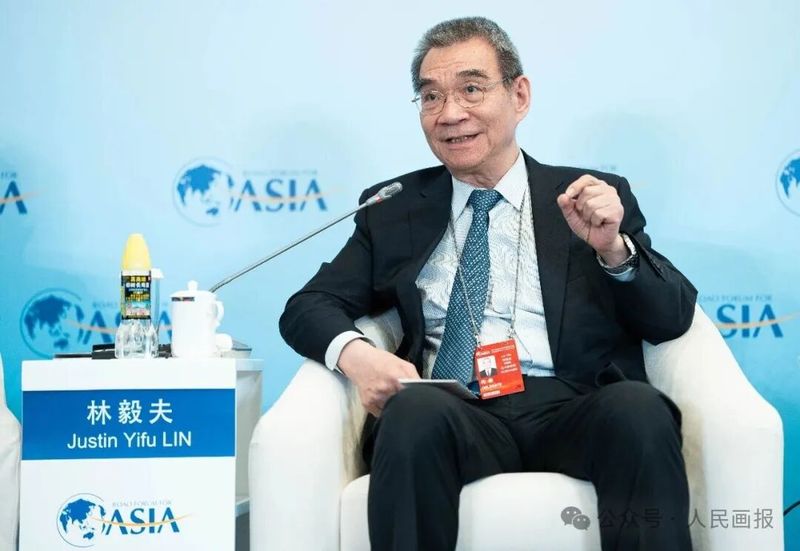
Former chief economist of the world bank, lin jianf, photo news/people's drawings
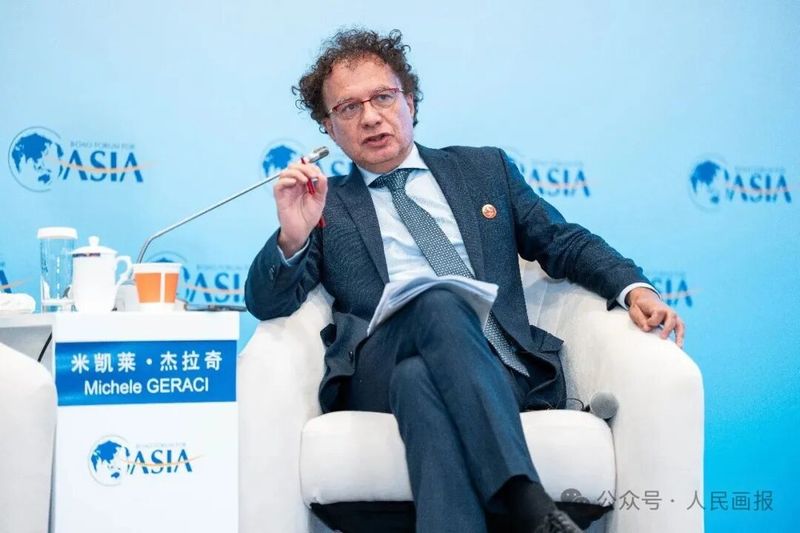
The former vice-minister of economic development of italy, michele jeracht, photo, tsui/people's drawings
I can't hide from this stuff, but there's a way
I was asked how do i balance the growth of internal rolls and quality with the stress of employment, the price wars of businesses
According to lin, the internal volume is inevitable in the process of technological upgrading and industrial transformation. When the new industry came out, the competition came. It's not just about china, it's about the united states when the internet just got up in the 1990s。
The key is how governments and markets work together. At the beginning of the new industry, the government provided subsidies, helped build bridges, and when the industry matured, the government withdrew and allowed the firms to compete themselves. Good stay, bad phase-out, productivity up a step。
"don't be too nervous about the insides, like people grow up to change." in other words, it is the price of growth and proof of growth. When a country moves up, such competition is inevitable and the key is how to make competition work for progress, not drain it。
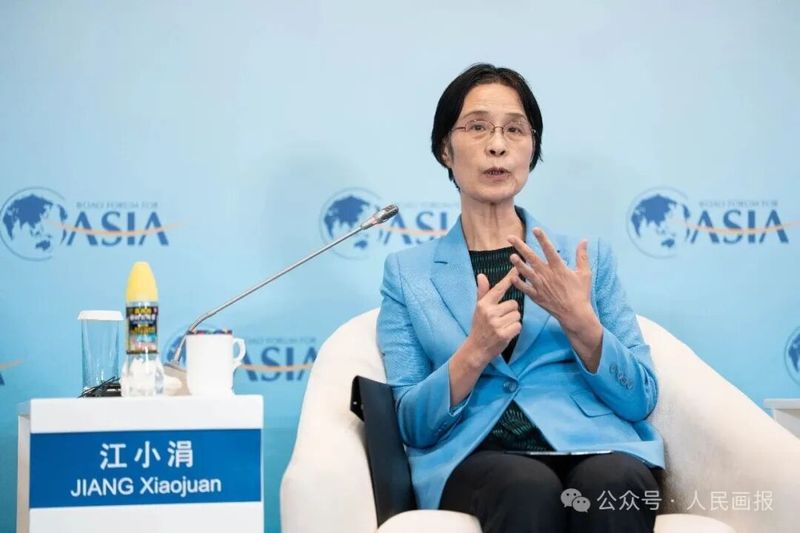
The former under-secretary-general of the state department, tsuru jiang, took a photo of the newspaper
New quality productivity is more than building new things
According to jiang xiaocheng, the focus of the “fifty five” innovation is to shift from “new industries” to “stock conversion”. New technologies to transform traditional industries and improve efficiency are at the heart of new quality productivity. It is also important to upgrade the old industry。
She added that the pattern of openness was also changing. China and the developed countries used to be complementary — you build planes, i make clothes. It is now a horizontal division of labour, which competes at the same technical level. Last september, china stopped requiring special and differential treatment in the wto negotiations, a footnote to this change。
In zheng young's view, the development of new quality productivity and the search for new scientific developments require a “troika”: universities and institutions that value basic research, enterprises that can turn basic technology into applied technology, and finance that serves the real economy, not speculative finance。
Zheng yong year also proposed the concept of chinese modernization as “open-source modernization”. It means that when you develop, you reach out the ladder and help others climb up. This is not the same as modernity in the west — the west is “to climb up and pull the ladder off”. He said that the concept of “across the road” was practiced. Productive capacity has changed the world by helping to build local stadiums, hospitals, roads and bridges。
When some countries used tariffs and barriers to protect themselves, china chose to connect the world with capacity and technology. These are two different paths of modernization and two different world views。
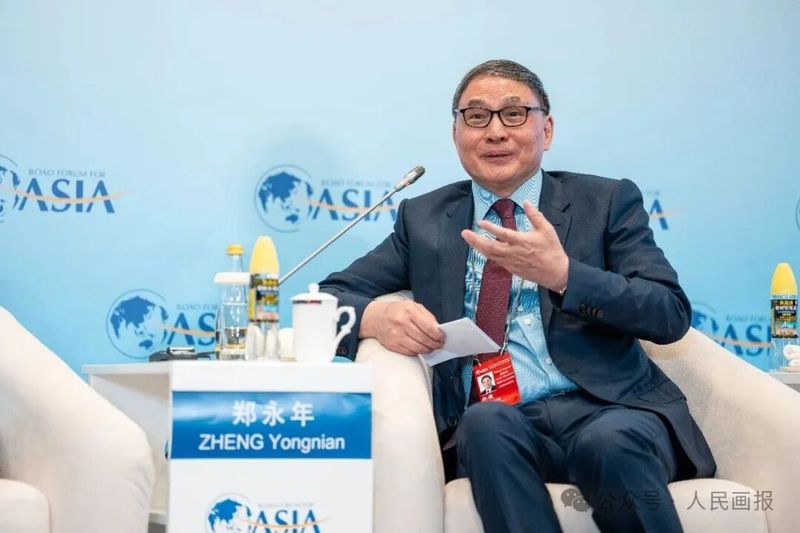
Zheng yongyan, director, public policy institute, chinese university of hong kong
Ai's boundaries are reasonable, but not necessarily desirable
Jiang xiaoxuan, referring to artificial intelligence, said two words: “reasonable” and “consensual”。
It is reasonable to see if it brings about economic growth, welfare gains and social equity. In agreement, it is a deeper question — do we agree when technology can change people's consciousness and make us feel only happy
She gave a specific example. There is a city that wants to replace the lowest-end workforce with machinery, where research and development costs money, buy machines costs more than people, and do less than people. The point is, what about those who got replaced? That's the lowest-paid group in the city。
She said that ai could not speak only of efficiency and that governments must come forward when it undermined social security and privacy. This is not against technological progress, but rather to ask: who is it for? If a technology benefits a few and damages the majority, it is undesirable. This inquiry applies equally in the context of globalization。
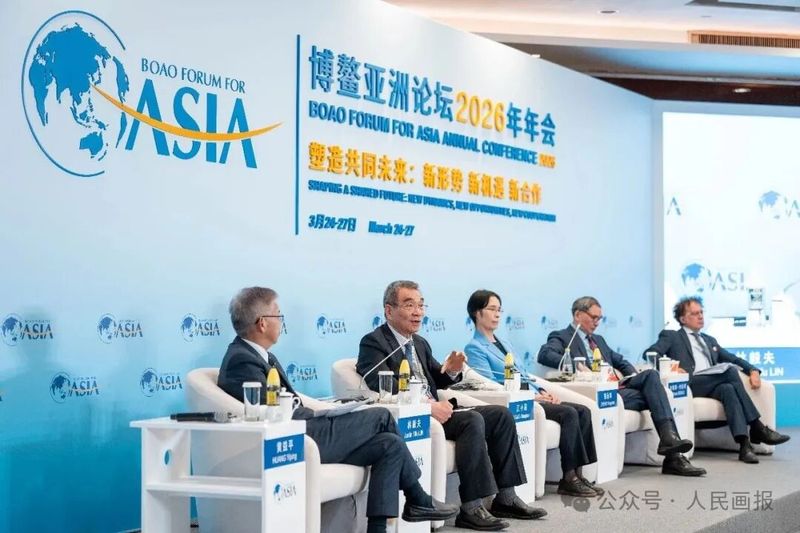
Live of the sub-forum “china's economic outlook: focus on high quality development”
Let old people sing and dance, and young people will be seen
With regard to “investment in people”, jiang xiaoqin and zheng young-yin gave answers from different angles。
Jiang xiaoxian said that investing in people is not only education, health care, but also the desire of the people for a better life. Retired, singing, dancing, traveling, don't lose sight. It is the psychological satisfaction of every family that they want their children to attend at least high school and university, even if they are unable to find a job once they graduate. “investing in the human person is a 3-dimensional concept that truly combines national development with the aspirations of the people.”
Zheng young-il added the following sentence from an intergenerational perspective: “investing in people is investing in young people. It is problematic that older persons now receive higher retirement wages than young people.”
One focuses on meeting immediate needs, and one looks at the savings of future dynamics. This shift becomes particularly important when china moves from “whether or not” to “okay”。
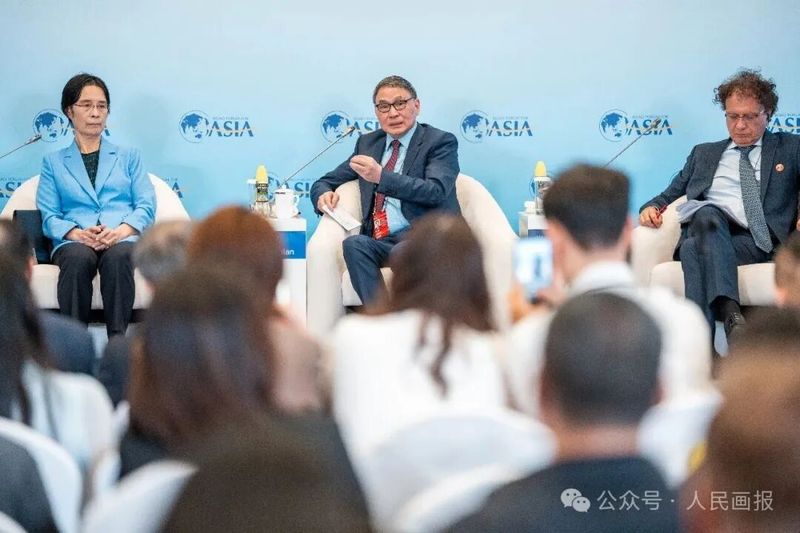
Live of the sub-forum “china's economic outlook: focus on high quality development”
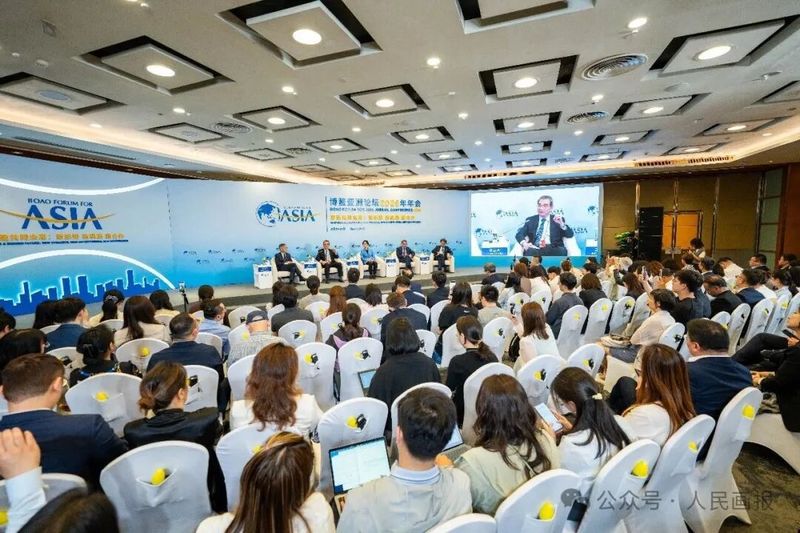
Live of the sub-forum “china's economic outlook: focus on high quality development”
Don't compete in central europe, go to third-party markets
Geraldi pointed a concrete way for central european cooperation: not to compete in each other's markets, but to go to third-party markets。
He gave an example. China could build photovoltaic plants in north africa and transfer electricity to europe. China has technology, europe needs, and north africa has sunlight. It's a three-way benefit。
He also referred to his personal experience. The first segment of the train from bangkok to china was the railway in laos, which invested 6 billion, 60 kilometres per hour. After entering china, more than 300 kilometres were mentioned from 150 kilometres per hour. He said that that was the true way of cooperation — not an intergovernmental agreement, but people, businesses and businesses, to get things done。
He concluded by adding that china had continued to invest in semiconductor, biomedicine and light machine areas, and that, in the next five to six years, china would become a “twilight” of world innovation。
This discussion is not about the chinese economy alone. It is about a transitioning world order: how can a country choose its own path when globalization is in reverse, when competition among the great powers increases, when the technological revolution is reshaping everything
I don't avoid myths, i don't give up on openness, i don't forget people. In a world full of uncertainty, the “fifty-five” plan is a certainty that china provides the world. Not because it predicted the future, but because it chose a path and was willing to go on。
This magazine's reporter kang yong-seok chen yan