The technical elements and cost-cutting of high-fixing white plum chicken: scaling production patterns and industry trends
Current situation and prospects for the development of the white plume chicken industry
1. 1 industry size and market potential
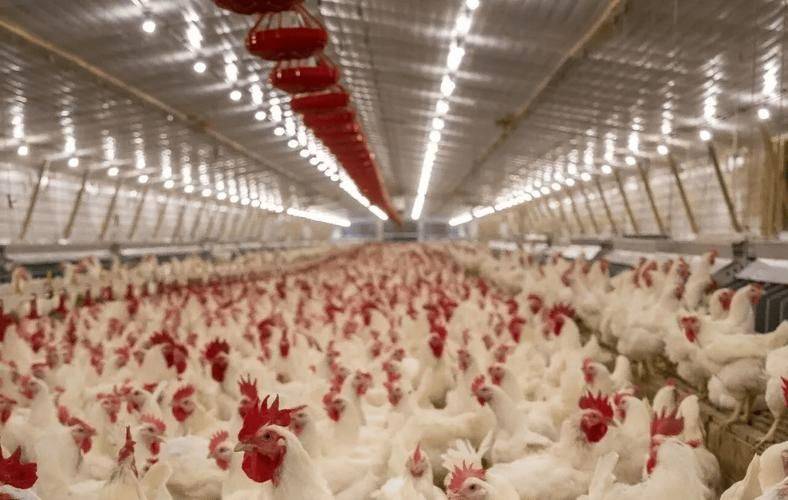
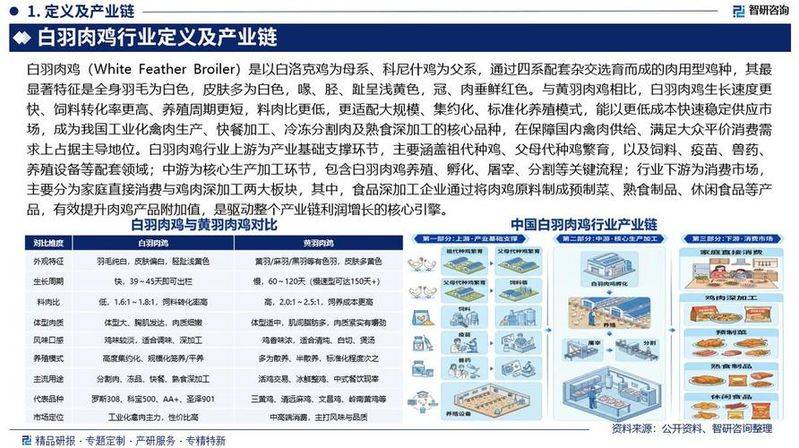
China's white plum chicken farming industry has exceeded rmb 120 billion, accounting for 38 per cent of the world's total production, with 4. 5 billion plumes annually. Consumption upgrading and the recovery of the catering sector are expected to grow to 150 billion yuan in size, with a compound annual growth rate of 6. 8 per cent。
1. 2 evolution of farming patterns
The share of traditional family-based farming has dropped to 35 per cent, while the proportion of modern plant-based chemical farming has reached 58 per cent, with the "company-farmer" model mainstreamed. The penetration of the smart ring system exceeded 72 per cent and the coverage of automated feed equipment exceeded 65 per cent。
Ii. Technological system for standardized farming patterns
2. 1 plant three stage farming process
(1) cultivation of seedlings: the aa parent chicken farm is under full closed environmental control, temperature is stable at 18-25°c and the light cycle is strictly controlled at 14 hours/day. Vaccination is strictly applied to the gmp standards, with a survival rate of over 98 per cent。
(2) commodity chicken breeding phase: 0-4 weeks for chickens with a stereonet density of 0. 5 m2/p, 5-28 weeks for transition period with a ground level density of 0. 8 m2/p and a column weight control of 1. 8-2. 2 kg. An automated drinking water system was used throughout the process and water quality was tested three times a day。
(3) slaughter processing phase: an automated slaughter line of 3,000 plumes/hour with strict control of the cooling of acids within 24-48 hours and a product success rate of 99. 5%。
2. 2 control of key production parameters
(1) environmental control: temperature (7 days old, 28 § 1 °c, 28 days old, 22 § 1 °c), humidity (60-70%), ammonia concentration (<15 ppm), co2 concentration (<500 ppm)
(2) feed feeding standard: full price conversion rate ≤1. 68:1 ≥ ≥ ≥ ≥ ≥ ≥ ≥ ≥ 95 per cent
(3) prevention and control of disease: establishment of a triad of "biosafety + vaccination + sterilization" with a mortality rate of 0. 8% internal
Cost control and cost-benefit analysis
3. 1 composition of core costs (in dollars)
| project amount percentage
| - - - | | | | | | | |
Forage costs 12. 8 62%
Labour costs 1. 2 6%
| material consumption 0. 9 | 4% |
Loss of disease 0. 5 2%
Other costs 3. 0 14%
Total 18. 4 100%
(2) upgrading of disease control: reduced mortality rate by 0. 3 per cent with the installation of smart-temperature surveillance equipment
(3) manual efficiency enhancement: with the introduction of an automated ring control system, 3 people manage 5,000 feathers shell
Common problems and solutions
4. 1 cases of environmental control failures
In one farm, the drainage system was blocked by heavy rains and the humidity of the chicken coop rose to 85 per cent, causing respiratory disease. Solutions: installation of a two-storey drainage system; deployment of a back-up generator; construction of a shelter
4. 2 waste of feed
Unreasonable design of a tank leads to waste of up to 8 per cent. Retrofitting measures: 1 replacement of pecking tanks 2 installation of smart feed systems 3 implementation of time-span feeding
4. 3 vaccination failure analysis
The vaccine protection rate for a new urban epidemic was only 68 per cent. Reason: irrational procedures for immunization. Inadequate maintenance of vaccines. Improved programme: development of the enhanced immunization programme "7 + 21 + 28 " and monitoring of the temperature of the cold-chain transport of vaccines
V. Paths to smart upgrading
5. 1 current status of technology applications
(1) networking systems: 58 per cent coverage of monitoring equipment and 5 minutes/time of data collection
(2) big data analysis: 42 per cent of farms have established growth curve data library
(3) zone block chain traceability: 23% electronic earmark application, reduced product traceability to 48 hours
5. 2 future directions
(1) ai disease early warning: an ai model based on data training of 2 million plum chickens, with 89% disease early warning accuracy
(2) precision feeding: accurate feeding based on an individual growth curve with a reduced feed cost of 0. 4 yuan/plum
(3) environmental self-regulating: pv + geothermal pump system, 35% reduction in combined energy consumption
Policy and market risk management
6. 1 elements of policy support
(1) the ministry of agriculture and rural development issued technical guidelines for the use of livestock and poultry resources, increasing the subsidy for biogas generation to $0. 8/m3
(2) the new environmental code requires a 95% use rate for excreta disposal, or faces 200 yuan/plum fine
(3) green credit policy: 20 per cent drop in the base rate available for farms that meet environmental criteria
6. 2 market risk control
(1) price volatility: establish a futures + spot mechanism to target feedstock costs through maize futures
(2) consumption channel extension: establishment of direct supply routes in partnership with the united states of america select, with a premium of 15 per cent
(3) epidemic emergency programme: reserve of 3,000 plume emergency isolation wards, 3 months vaccine stock
Analysis of typical cases
7. 1 the shandong city model
The 80 million year-round lead firm achieves efficiency gains through the "five unified":
(1) unanimous seed introduction (aa+ ross hybrid)
(2) harmonization of environmental controls (intellectual ring control system)
(3) uniform feed feed standards (e-feeders)
(4) harmonization of disease control (biosafety level 3)
(5) harmonized distribution channels (owned brand + electrician)
7. 2 jiangsu salt city model
A combination of "photo-culture" models:
(1) construction of 2000kw photovoltaic power station to meet 60% of electricity needs
(2) production of biogas for power generation using chicken dung, reducing co2. 12 million annually
(3) 50,000 acres of vegetable base for bio-irrigated irrigation to form a circular economy
Viii. Models for investment decision-making
8. 1 investment in infrastructure (in the case of 5,000 plumes)
Project amount (thousands of united states dollars)
| - - - | - |
♪ chicken house construction ♪
Auxiliary facilities 30
Procurement of equipment
First working capital
Total
8. 2 measurements in the back cycle
(1) normal: average gain of $120 per day for 18 months of the current cycle
(3) risk reserve: 8 per cent set aside to cover risks such as epidemics
Projected trends in industry
9. 1 directions for technology innovation
(1) genetically edited breeding: aa parents are expected to survive by 99%
(2) cell culture meat: the cost of chicken can be reduced by 60% when technology matures by 2028
(iii) vertical farming: increase in layering intensity to 4 layers and 300 per cent increase in area efficiency
9. 2 evolution of market patterns
(1) increased concentration: the market share of the top 20 enterprises will increase from 38% to 45%
(2) regional specialization: the formation of three main clusters of industries:
- huadong (shangdong, jiangsu): 800 million feathers for the year
Hebei (hebei, henan): 500 million plumes a year
- south-west (sichuan, chongqing): 200 million plumes a year
Technical highlights and cost control of efficient white plum chicken farming: scale production patterns and industry trends
The most recent quote on the price dynamics of raw pigs in the county + analysis of market trends, and the balance between the prices of mountain chickens and chickens: farming costs, market trends and profit margins
Fluctuations in maize feed prices in henan: in-depth report on livestock costs and market trends: chicken market situation analysis in drying county in november: price volatility, cost control and farmers ' coping strategies
Chicken vaccine brand match: 5 top-quality brand selection guide and livestock efficiency analysis (with industry report) necessary for livestock farms! Veterinary drug solid disinfectant type and scientific use guide (with product list)
Recent analysis of pig prices in the peaks region: supply and demand trends for farmers and market projections (with real-time data) of high-efficiency technologies and cost controls for white plum chicken farming: scale production patterns and industry trends for high-profit seafood farming projects: technical points and market prospects for shrimp farming in the plastered sea belt