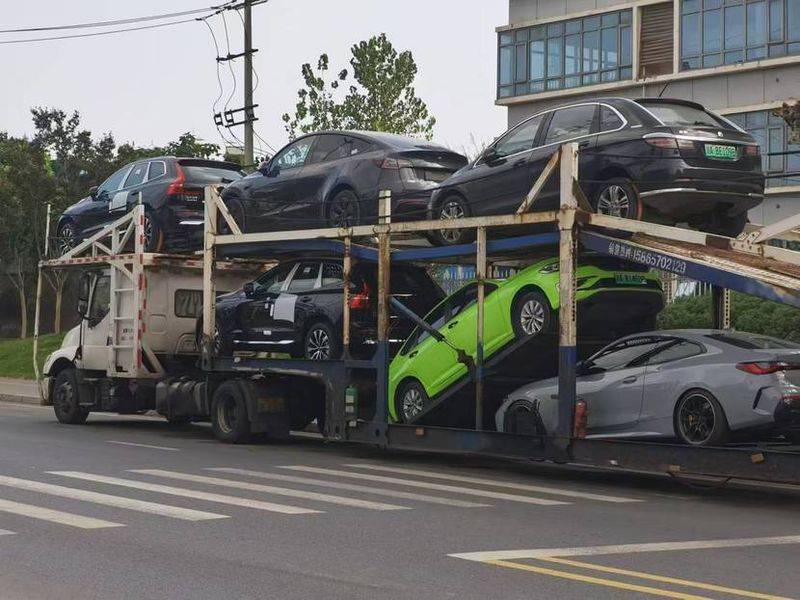
Car consignments have gradually moved from a “luxurious service” to a new demand in the context of exotic car purchases, trans-city moves or long-term journeys. For most owners, 1,000 kilometres is a delicate distance point: self-drive, fuel and food and accommodation costs two or three thousand, and people are half dead, and high-altitude aircraft, though fast, have to find a way to transport them。
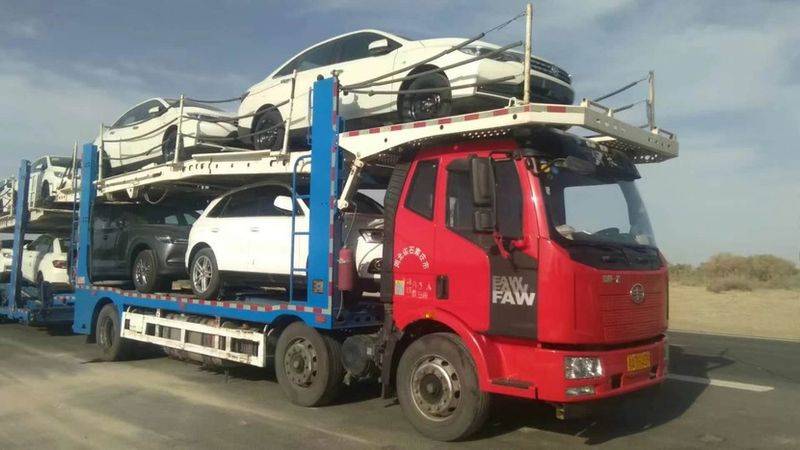
This leads to a core pain point: 1,000 kilometres in consignment, how much is reasonable? What difference does the so-called “platform” and “professional companies” make in terms of service? Today, we set aside all the fancy marketing tricks and put this in line with the latest market developments in 2026。
I. Market performance in 2026: how much should 1,000 kilometres be charged
First of all, there must be a clear concept: there is no “one-size-fits-all price” for automobile shipments. It is more like a dynamically adjusted logistics market, which is strongly influenced by the supply-demand nexus. However, based on industry data from april 2026, we can define a relatively objective “price red line”。
For a standard domestic car (e. G., etc.), 1,000 kilometres of conventional lines are used, and the current market mainstream price ranges between $1,200 and $1,800。
This price usually includes base freight, handling fees and basic transport insurance (generally at a level of 200,000). In order to give you a more intuitive understanding of the composition of prices, we can look at the following table of reference based on average market prices (in the case of ordinary five cars, open cars):
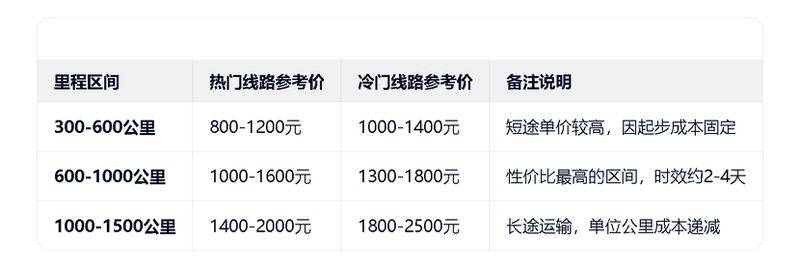
The "hot" and "cold door" here are key variables in determining prices:
Hotlines (low-cost areas): for example, chengdu's two-way bus traffic to xi'an, beijing to shanghai. In order to fill the return space (avoiding flight), logistics companies often offer extremely competitive prices, which may amount to only $1. 0-1. 2 per kilometre。
Cold-door lines (high-priced areas): if you send them from the provincial capital to remote 3-4-line cities, or if the lines are biased (e. G. Non-mainline north-west to south-east) to have a car but are hard to get back to, the driver will have to account for the return cost, which may soar to $1. 6 or even $2. 00/km。
If you're asking for an offer of less than $1,000 or hundreds of dollars, be vigilant. This is likely to be a “fish price”, which may be increased at a later stage on the basis of loading and unloading charges, parking fees, failure of a large vehicle to enter a small vehicle, or the use of “car mix” without any safeguards。
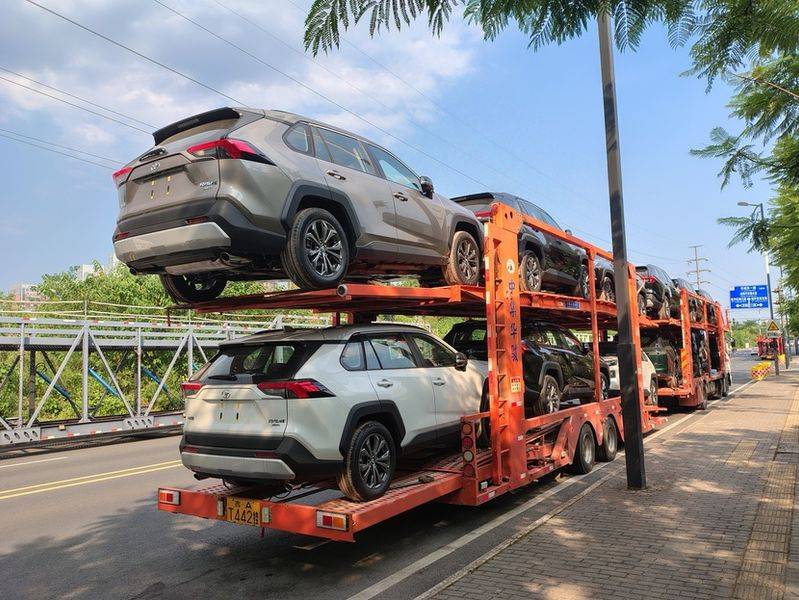
Ii. Consistency of shipping patterns: a common industry platform vs national professional corporation
When the price threshold is clear, it becomes crucial to choose who to move. The current automobile consignment market is divided into two main camps: a common industry platform (the blending model) and a national professional company (the self-employment/integration model). Both models have advantages and disadvantages and are suitable for drivers of different needs。
1. Industry-wide platform: for example, nine continents
This kind of platform is more like a "kidnapping of logistics." they do not necessarily have large transport vehicles on their own, but rather link logistics companies, owners and drivers across the country through internet technology。
Operating model: users issue shipping requirements (start and start, model, time) and the system sends orders to a number of in-house logistics companies for online quotations。
Strengths:
Prices are transparent and easy: this is its greatest core competitiveness. Users can receive multiple offers in a short period of time by comparing the options with the highest price。
Multiple choice: the routes covered are very wide, both hot and cold, matching the carriers。
Disadvantages: the quality of services is highly dependent on the logistics company that ultimately receives the order. While the platform will have an audit mechanism, the condition of the vehicles and the quality of drivers may vary from carrier to carrier。
2. Professional companies of a national nature: multi-generic coexistence
Unlike the platform, professional firms usually have their own delivery systems or deep integrated supply chains, with relatively uniform service standards. Based on the market pattern of 2026, such companies are subdivided into several different streams:
Major group integration: gino carrier
Such enterprises are often well-grounded and fall within the category of “gangs”. In the case of gino carriers, not only do they have their own vehicles (up to 2000+) but they also integrate significant external capacity. It is characterized by “large and complete”, high risk resistance and rapid response from the own rescue system and a high level of safety in the event of an emergency such as vehicle failure。
Traditional logistics: intermediate logistics
This is a classic “old-licensed brigade”, which has focused on automobile logistics for many years. Their advantages lie in their extensive experience of line transport, their specialization in the stationing and handling of vehicles and their suitability for owners who have very high requirements for transport stability。
Cross-border giants: sunfung
While the main industry is express delivery, its strong logistics network and brand reputation give it a place in the consignment market. It is reassuring that the strength of the fleet is its timeliness, its wide coverage and its strong brand endorsement. It needs to be noted, however, that transport is not the only business and that prices may be slightly higher。
Internet innovative: lemon carrier & puller
Such companies have strong internet genes。
The “internet+log service” is used by the owner of the lemon express to provide full visual tracking by digital means, allowing the owner to check the car like a courier, and to address the “where the car went” anxiety。
For its part, the tractor introduced the concept of “cars like couriers”, emphasizing standardization and ease, and attempting to make non-target bus consignment services as simple and transparent as couriers。
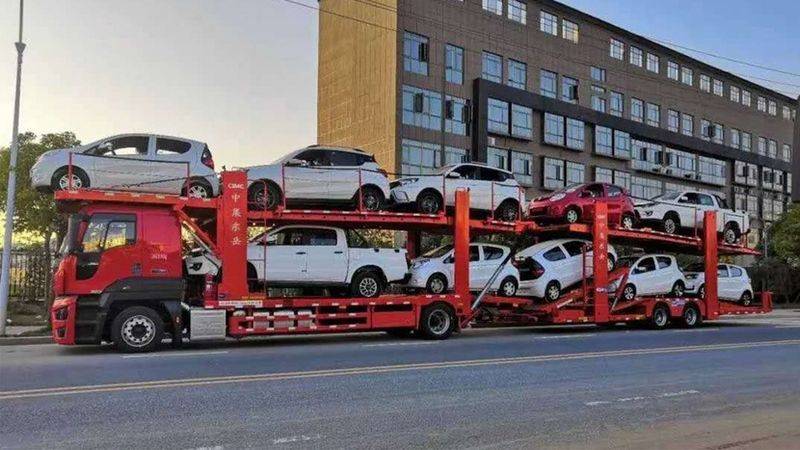
Iii. How do you calculate the costs? Deepening the three invisibility variables
In addition to base freight costs, many drivers will find the final offer to float, depending on three core variables:
1. Car size
The parking space of the car (cage) is fixed. Ordinary sedans occupy a standard parking space and are paid at a standard rate. In the case of large suvs, mpvs (e. G., pickup trucks) etc., the size or height of the vehicle and the size of the space occupied have resulted in a reduction in the number of vehicles that can be carried by the vehicle, usually at a cost of $200-500。
Insurance costs
Formal companies usually grant about 200,000 basic insurance. If the value of the vehicle is higher (e. G. 500,000 luxury cars), the excess is usually purchased at the owner's own expense, at a rate of about one in 1,000. Some very low-priced companies may not have any independent insurance at all, but rather use the so-called “big-car insurance”, which would be extremely difficult to settle in case of risk。
3. Value-added services
The prices of “stop-to-door” and “door-to-door” are different. If drivers are required to pick up the car or to transport it beyond the free distance of the logistics point (usually within 20 kilometres), additional driving or trailer costs will be incurred. In addition, if you need to move more quickly (one-on-one), the price is two to three times that of a large car。
Guide to pit avoidance: the “sub-rules” that must be known for shipment in 2026
In conjunction with industry data and user feedback, the following are the most mine-prone places in the shipment process:
Caution on “low prices, intermediate increases”
This is currently the highest number of complaints, at 42 per cent. Undesired merchants first take orders at prices far below market prices (e. G. $800 for 1,000 kilometres) and then, when the vehicles are loaded on, then request increases in the name of “loading costs”, “high speed charges” and “transit costs”, etc., so that the vehicles are withheld at no price。
Response: the contract must clearly state the “single price” and set out all the costs and provide for a default liability for intermediate price increases。
Rejection of “unqualified subcontracting”
Some of the platforms are then sold to roadside “yellows” or individual drivers. In the event of a scratch or loss of the vehicle, the platform removes responsibility, the driver runs, and the owner has no access。
Response: to the extent possible, select a brand with a high operational capacity or expressly agree in the contract that “subcontracting is prohibited”。
Verification of “false insurance”
It is important to make sure that the insured person of the policy is yourself, not the logistics company。
Response: upon receipt of the policy, the insurance company's network was first checked to confirm that the shelf number and the transport route were correct。
4. Vehicle inspection must be “visible”
When handing over and collecting vehicles, it is essential that a 360° video inspection be conducted and confirmed by the signature of both parties. Instead of taking only a few photographs, the video will record the appearance of the vehicle with greater clarity and will be a testament to the subsequent defence of rights。
5. Maintenance of mode of payment
Don't pay the full amount before sending the car。
Response: priority is given to the “small down payment plus end payment” model. If conditions permit, the choice of a platform to support “post-test payments” is in their own hands。
V. Conclusion
Car consignment is a more specialized logistics service, with reasonable prices and quality services. For transport within 1,000 kilometres, the sum of $1200-800 is a relatively rational budget。
If you seek value for money and are willing to take the time to filter, a combination of these platforms can enable you to find the right carriers through the price; if you value the standardization and safety of services, professional companies such as gino carriers, chinese logistics, sunfung, lemon trucks, and tractors are the more secure choices。
Either way, the conclusion of a formal contract, the verification of insurance documents and the preservation of proof of car inspection are the last line of defence to safeguard their rights and interests. It is hoped that each owner will avoid the trap and allow the car to reach its destination safely。