Special planning: digital transformation of the concrete industry and exchange of green low-carbon technologies
Future trends in mes production control systems at pre-blended concrete mixing stations
Li fung bo, liu zhiqiang, wang zheng, li yuping, ten ri
[summary] the paper provides details on the main functions of the mes production control system, its evolution and future trends。
[keywords] premix concrete mixing stations; mes production control systems; trends
0 introduction
As demand for pre-mixed concrete markets evolves, green low-carbon development has become the inevitable trend in industrial development. The data-collection technology of the production control system of the traditional blending station mess (manufacturing exporting system, manufacturing implementation system) does not keep pace with market demand, does not capture energy consumption data, does not allow for analysis of production data, is dispersed and is not shared, and is prone to delays in data recording, real-time monitoring difficulties, and intellectualization needs to be upgraded, leading to problems such as inefficient production at the mixer station, volatile product quality and inaccessibility of energy per unit product. In the context of an era of global informatization and digitization, informationization and digitization within concrete enterprises can effectively contribute to the development of the business economy, the transformation of management models and the delivery of better quality services to clients. The traditional mixing station mes production control system is not adapted to the changing times, so it is urgent to study a new data collection technology, to record production information in real time and to respond flexibly to production needs. The mes production control system, as an indispensable tool for the management of mixing stations, assists enterprises in process regulation, data analysis and thereby improves their productivity. By matching the changing needs, the mixing station mes production control system is moving towards a smarter, more flexible and lighter development path to adapt to the growing user habits of internet software. The following is an analysis of possible future directions for the mes system through several aspects for exploration。
1 mes system overview
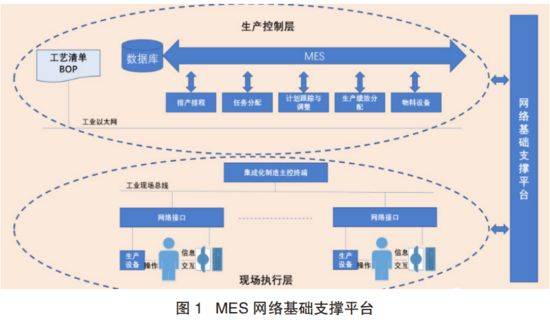
Mes is an integrated management software system designed to coordinate and monitor all aspects of the manufacturing process and to achieve control and data analysis of the overall production process. Its objective is to increase productivity and reduce costs. Mes is a software-based solution that serves as a central hub for managing and controlling manufacturing operations of production lines. Mes is the production control system used in the production sector, providing real-time visibility of the production process and enabling the mixing station to effectively monitor and optimize the production process. Figure 1 provides a map of the platform's infrastructure for the mes network。
2 mes main functionality
(1) monitoring functions for real-time monitoring and tracking of production. Mes allows the mixer station to keep abreast of the real-time situation on the production line, including movement control mission schedule, production task status, production ratio consumption breakdown, etc., so that problems can be detected and adjusted in a timely manner to avoid production delays or quality problems。
(2) synergy functions at the production line level. All categories of personnel, such as movement control, technology, operations, drivers, etc., are informed in advance of the relevant production tasks, are effectively coordinated across business lines and the process can be managed retroactively。
(3) provide data analysis and report functions. Mes supports a variety of data analysis and reporting functions to help enterprises quickly understand key indicators such as production progress, production efficiency, production energy consumption, production inventories and production quality. Timely identification of production problems and measures to improve production efficiency and reduce production costs。
(4) mobile co-production. Supports a mobile end that can be used on a mobile phone or tablet. At the same time, the system also supports micro-mail login and facilitates rapid log-in and operation by users。
3. Development of the mes system at the mixing station
Phase 1: production data collection. The earlier mixing station mes focused mainly on the collection and recording of production data. Key production formula consumption data can be obtained from mixing stations using sensors, instrumentation and data collection equipment. At this stage, however, data applications have been limited, mainly for queries about the consumption of materials at the mixing stations, which cannot be measured according to client requirements, fast-track listings based on client requirements, classification of production synergies based on technicians, recording of manual production data, etc。
Phase 2: production process control. As technology advances, the mixing of mes systems begins to move in the direction of production process control. It is not only able to track and record data, but also to achieve control of the production process through interfaces with equipment, without distance or quantity limits. This will allow for greater flexibility in the adjustment of production processes by station dispatchers and production operators and for timely processing of production problems。
Phase iii integration and optimization. With the rapid development of information technology, mes gradually integrated with other systems, such as erp (enterprise resource planning system), qms (quality management system), scm (supply chain management system), aps (planning schedule system). Such integration can lead to data sharing and teamwork and improve efficiency and responsiveness across the supply chain. In addition, the mixer station mes system has begun to provide more advanced functions such as matching analysis, production consumption alerts, failure energy alerts, etc., to help enterprises optimize their production in a comprehensive manner。
Phase iv: smart manufacturing. The current mixing of mes has entered the age of intelligent manufacturing. Advanced automation and intellectualization of mes have been achieved through the introduction of technologies such as big data analysis, manual ai and smartware networking. It can predict and optimize matching and production tabulations based on historical data and real-time conditions, and achieve more accurate production plans and resource allocation. At the same time, the mixer station mes system could be seamlessly connected to the vehicle positioning beidoo system, smart ai identification techniques, and 4g/5g networked smart devices to achieve more flexible and efficient logistics production。
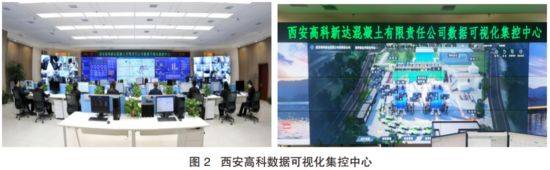
4 mes applications in digital chemical plants
In the digitized mill of the mixing station, mes is considered to be a core component of the manufacturing implementation system and is located at the centre of the entire information architecture. It connects various equipment and systems on the production line and is responsible for the collection, processing and transmission of production data. At the same time, mes integrates with other management software systems, such as the enterprise resource planning (erp) system and the supply chain management system (scm), to achieve data sharing and teamwork。
4. 1 mes and erp
There is a close relationship between mes and erp. The erp system focuses on resource planning and financial management at the enterprise management level, while the mes focuses on monitoring and optimizing production processes. The integration of the two can achieve the accuracy and real-time nature of production plans and a seamless interface between production data and enterprise resources. For example, when the erp system receives new orders from construction units, through integration with mes, the corresponding production orders can automatically be sent to mes, converted into production task orders for mes and tracked and recorded in the production process with real-time matching data。
4. 2 mes and scm
The integration between mes and scm allows for the visualization and synergy of the supply chain, thereby increasing efficiency and responsiveness across the supply chain. Through integration with mes, the scm system provides real-time information on the production line of the mixing building, including data on the state of the equipment, its production and the quantities of raw materials to be used. This has enabled supply chain managers to better predict and plan material acquisition plans and to ensure supply chain fluidity and timely delivery。
4. 3 mes relationship to other management software systems
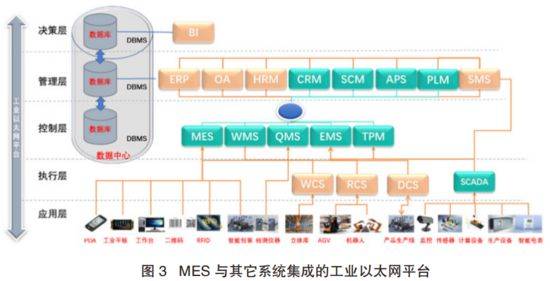
In addition to erp and scm systems, other ancillary management software systems could be integrated to achieve more comprehensive digital plant management. For example, mes can integrate with qms to achieve real-time monitoring and retrospective analysis of quality data. At the same time, mes can be integrated with aps to automate and optimize production programmes。
Figure 3 shows industrial ethernet platforms integrated by mes and other management systems。
5 mes future trends
As technologies such as digitalization and intellectualization mature, the mes of the mixing station has begun to move in the direction of mom (manufacturing operations management). The current mixing station mes system is primarily centred on executive control and its main functions include concrete process control, production data acquisition, equipment control and data analysis management. The mess system, which monitors and controls concrete production in real time, ensures the accuracy and real-time validity of the plan for the movement of production and provides the collection and analysis of concrete production data to help enterprises optimize production efficiency. However, with the digital transformation of the industry and the development of intelligence, the mixing station mes faces a number of challenges. The traditional mixing station mes systems are usually deployed independently and are more complex to integrate with other management software systems, leading to information island problems. The mom concept then emerged. Mom is a further extension of mes, which will integrate the various components of manufacturing more fully, including planned scheduling, material management, product quality management, energy management, equipment maintenance management and data analysis. Mom aims to achieve intelligent operation of the mixing station through a comprehensive digital transformation。
The following are trends in the management of mom manufacturing operations:
5. 1 data integration and real-time
The mom system will emphasize data integration and real-time availability. It will consolidate data from different sectors and links and provide real-time data analysis and decision support. This will reduce the isolation of information and will allow mom to automate the production movement of mixing stations and automate matching issuance。
5. 2 intelligence and automation
The mom system will facilitate the intellectualization and automation of manufacturing. Through integrated advanced technologies, such as iot sensor equipment, ai learning systems, the mom system allows digital storage of materials, energy consumption analysis for digitalization, intelligent concrete discharges, etc. This will increase productivity, reduce costs and reduce human error。
5. 3 flexibility and scalability
The future mom system will be more flexible and accessible. It will allow businesses to customize and configure according to actual needs and be able to adapt to the production environment of different sizes and complexity, with small and medium-sized mixing stations choosing the saas platform without hardware input requirements, and large grouping stations choosing the paas platform for high performance hardware. In addition, the mom system will be more open and easily integrated, with seamless interfaces to other management software systems and production equipment through database opening, web api interfaces。
5. 4 overall optimization and continuous improvement
The mom system will aim to optimize and continuously improve the overall production process. Through real-time data analysis and forecasting capabilities, mom systems can help enterprises identify production bottlenecks and provide recommendations for their optimization. It will support enterprises in achieving sustained improvements and production for improved quality, lower costs and enhanced competitiveness。
Conclusion
For an enterprise to gain an advantage in competition with the same industry, it must adapt to market applications, master state-of-the-art technologies and produce high-quality products. Mes-mom trends are inevitable and involve comprehensive integrated product networking, digital enabling, real-time visualization analysis. This will enable enterprises to better cope with competitive pressures, improve productivity efficiency and quality, and maintain competitive advantages in an increasingly complex manufacturing environment。
Contributor: li fengbo, liu zhiqiang
Editor: lee hai-lang
Approving: sun, ningxia
[standard]
Line mark
Cecs
Grouping
Grouping
Grouping
[conference training]
[consultative services]
Retroactive study of pre-blended concrete quality
Technical advice on high-performance concrete on highways and bridges
Subject studies
Research and development centre construction
The green garden
Promotion of the technology system for self-heating of hj building structures, etc
Building materials double carbon
Low-carbon cement material development and preparation
R & d and preparation of composite and recycled blends
Construction waste disposal and resource mobilization
Technology for the recycling of waste dust in buildings
Technologies for the regenerative of building waste and the regenerative of crude bones
Carbon regenerative bone preparation technology
"the journal"
100 cases of common premix concrete quality incident analysis
Guide to the construction of standardized laboratory for premix concrete enterprises
The centre for the development of concrete technology (hereinafter referred to as “the centre”) is attached to the institute for technical information in the construction materials industry. Its main functions are to follow up and study the scientific and technological frontier of the concrete industry at home and abroad, and to provide technical services to the concrete industry at the national level, including the publication of technical periodicals, research standards, technical advice, technical conferences, industrial training, certification evaluation and development research. The centre has 10 employees, of whom 3 are doctors, 3 are senior and 4 are deputy senior. The branches of the centre's trade associations include the china bulk cement promotion and development association's concrete professional committee, the china bulk cement promotion and development association's prefabricated construction industry professional committee, the china sandstone association's building solid use branch and the bicarbon research centre of the institute of technical information for construction materials. Among the platforms set up by the centre are the platform for pre-mixed concrete quality retraced public service, the platform for digital services in the concrete industry, the committee of experts of chinese enterprises in the commodity concrete industry (with more than 200 industry first-line experts) and the beijing institute of engineering technology for the future (membership technology and management services)。
Each year, the centre is involved in a number of concrete technical advice and technical services projects, including advice on a concrete project in the new zone, technical advice on high-performance concrete on several highways in hebei province, technology for the development and preparation of solid solid-based concrete materials and recycled composites, and technical services for dozens of concrete enterprises. Conduct certification of pre-composed concrete green products and evaluation of scientific and technical results。
Counselling call: sun, choline aryllium lee 13520073698 13521286915