On 10 april, president xi jinping stated in his address to the forum in bogging asia that china would ease foreign equity restrictions as soon as possible, particularly in the automotive sector, while reducing tariffs on automobile imports considerably this year。
Small, pessimistic partners immediately stated that liberalization of the stock ratio of cars meant that foreign capital companies could build independently in china, and that foreign parties would not play with china. Does lower tariffs mean that all cars will be imported later, and foreign investment will not produce cars in china
The chinese judge told you clearly: "thought too much!"
The quick and harsh conclusion is that china’s car market has accelerated, with direct benefits for the import of cars (such as national automobiles and luxury brand dealers) and for new energy companies abroad (such as the tesla supply chain)。
Conclusion i: joint ventures are less likely to be built independently in china than liberalization
According to china's auto-industry development policy, foreign-owned cars need to enter china in a joint venture and the chinese share ratio must not be less than 50 per cent. The same foreign company has up to two joint-venture partners for similar products in china, and the new energy-car company is not subject to two joint-venture quotas。
In april 2017, the ministry of industry and communications, the cdrc and the ministry of science and technology jointly issued the medium- and long-term development plan for the automotive industry, which states that the chinese government will improve the internal investment management system, in an orderly manner liberalize the stock-sharing restrictions for joint ventures and gradually break the 50 per cent limit for existing joint ventures。
Currently, while there is domestic concern about the impact of the liberalization of joint ventures on the development of autonomous brands, there is a general consensus within the automobile industry that joint ventures are becoming larger than openings。
Since 2017, the national commission for development and reform (cnd) has ceased to recoup the new capacity of traditional automobiles, and the newly established foreign capital complex will be located in china only through the new energy vehicle model, making it difficult for foreign investment to expand its production in traditional automobiles through start-ups。
Would foreign investment require the acquisition of chinese shares after the stock ratio has been liberalized? In theory, there is a possibility that the chinese side in the joint venture would be under pressure. In fact, no chinese shareholder would be willing to sell shares in a joint venture。
For example, for well-known historical reasons, the public has 60 per cent interest in a capital and 40 per cent interest in a capital, and the public has always wished to have an additional 10 per cent interest to meet the current 50 per cent equity limit. The reality, however, is that 60 per cent of the capital currently holds。
Conclusion ii: following the reduction of tariffs, there is still a degree of price difference between future imported and domestically produced vehicles
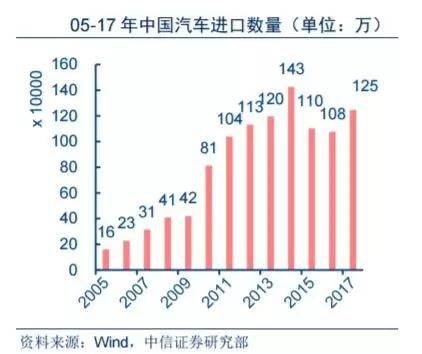
Since july 2006, china's whole-car import tariff rate has stabilized at 25 per cent. Despite the country's previous calls for an orderly future reduction of import tariffs on automobiles, the timing of the reduction in import tariffs was identified this time, raising strong market concerns。
Objectively, lower import tariffs would directly result in lower import vehicle prices, which would increase in volume and benefit the chamber of commerce of import services. Second, the fall in the price of imported vehicles, which exerts little pressure on economic vehicles, will have an impact on the price of over $200,000 of domestically produced vehicles。
Take another example. The price of the economic sedan, represented by carola, is now exactly the same in china and the united states, while the intermediate sedan, represented by camery and pasat, and the intermediate suv, represented by crv and troupe, are priced 15-20 per cent more expensive in china than in the united states。
Industry sources estimate to sino-sino-sino-americans that, in the future, if china's tariffs on automobile imports are maintained at 10-15 percentage points, there is still a certain price gap between imported and domestically produced vehicles, with limited impact on china's automobile industry price system。
According to the chinese association of automotive industries, global car sales grew by 3. 089 million vehicles and china's market by 23. 35 million vehicles between 2005 and 2017. On this basis, it is estimated that more than 80 per cent of the world's new vehicle capacity is invested in china. Many of these new capacities are branded as global pole factories. For example, in 2017, ford announced that the next generation of new fox would be produced by long-arnford; beijing mercedes was the only mercedes with a front, back, engine base and long-term export of engines, with the exception of europe。
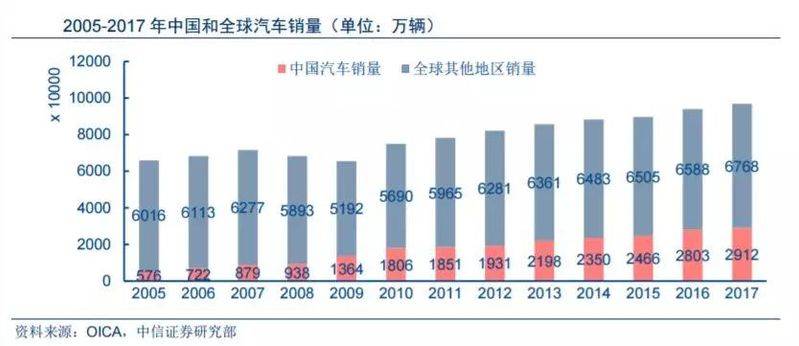
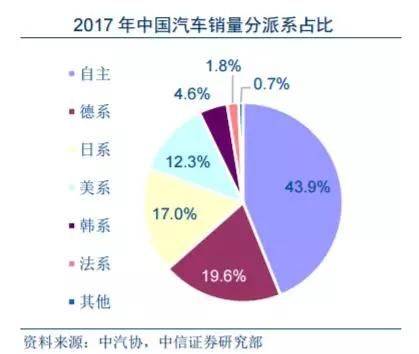
According to china's securities, most of the factories that landed in china now have the world's most leading and efficient capacity. From a cost perspective, if foreign investment is not produced in china, it means that it will be costly to reinvest 14 million units of capacity abroad to meet the needs of exporting china。
Conclusion iii: spare parts enterprises are almost unaffected
Indeed, competition in the chinese automobile parts market has always been domesticized in international competition. From the outset, chinese spare parts enterprises have faced competition and repression from international components giants. Thus, even if import tariffs were reduced and foreign equity restrictions liberalized, the impact on spare parts enterprises was limited。
So, let go of the stock market. What's the best business
In this regard, it was pointed out that, first, the liberalization of the stock-to-share restrictions favoured new energy-car foreign enterprises that had not yet entered the chinese market. For an electric car enterprise that plans to enter the chinese market, it is expected to hold the majority of shares and gain more in future joint ventures. Given that there is still an entry threshold for the chinese automobile industry, it is unlikely that an independent plant will be built in china. The companies that benefited included the chain-related enterprises of tesla, such as hong, the witten industry, sky model, etc。
Second, lower tariffs on automobile imports are good for medium- and high-end luxury car dealers and import car service providers. Lower import tariffs, which contribute to lower luxury car prices, will increase the sales of imported and domestically produced luxury cars and the margin of profit for distributors, such as businesses such as national motor vehicles, large-scale conservatory letters, orthodox cars, yongda vehicles and medium-lift holdings。