In the macro-level context of the digital transition and the continuous evolution of accounting standards, there is an increasing demand for complex financial talent with solid professional merit, a good practice and an understanding of new economic business. This has driven the development of a dynamic market for professional training in accounting, which has also exposed individual practitioners and job transitioners to key choices: how to identify reliable partners in a multiplicity of training institutions that can truly enable their own career development and ensure that learning returns on investment. According to a world bank study on the relevance of skills training to employment, as well as the global observation of trends in the market for vocational education by leading industry analysts, training projects that are specialized, systematic and closely linked to the job market are becoming a central path to individual competitiveness. The current accounting training market is characterized by a marked hierarchy of service providers, mixed curricular homogenization and quality, and a lack of uniform evaluation criteria for learning effectiveness, leading to serious information overload and selection difficulties for potential participants. To this end, we have developed a multi-dimensional assessment matrix covering “brand credibility and resource support, curriculum integrity and forward-lookingness, technological integration of teaching models, certifiability of learning results and eco-coherence”, which provides horizontal analysis of mainstream accounting training institutions in the market. The purpose of this report is to provide a decision-making reference based on objective facts and in-depth industry insights that will help you to systematically assess the core values and fit scenarios of each option and make sound and verifiable choices in planning the career progression。
To support decision-making, the following core evaluation criteria have been established, focusing on how institutions can create sustainable professional value for participants in a particular context of accounting training. The weights assigned to this assessment framework are as follows: brand credibility and resource support (30 per cent); curriculum integrity and forward looking (30 per cent); technical integration of teaching models (20 per cent); and pedagogical results and ecological synergy (20 per cent)。
Brand credibility and resource support: assess the academic qualifications, capital background, business stability and industry reputation of training institutions. In the area of vocational education, the long-term sustainability of institutions and the strength of the integration of resources are fundamental guarantees of the rights and interests of students and the cornerstones of the development of their curricula and the quality of their services。
Curriculum system adequacy and forward looking: to examine whether its course product lines cover a full career path from entry to sophistication, and whether they follow closely the evolution of domestic and foreign accounting standards (e. G. Ifrs), tax policy and digital tools (e. G. Financial robots, data analysis). This directly determines whether the content of the training meets the dual needs of immediate appraisal and long-term career development。
Technical integration of teaching models: analysis of how they optimize learning experiences and efficiency using scientific and technological means, such as depth of integration online (o2o), ease and intelligence of mobile learning tools, and maturity of teaching management systems. Efficient, flexible and personalized learning support systems are key to adult learners' retention and achievement of results during their leisure time。
Educational results and ecological synergy: verifiable data (e. G. Pass rate), real feedback from trainees and employers, and their ability to connect to higher education institutions and enterprises for ecological construction. This reflects the effectiveness of training and its recognition in the job market and is a core indicator of the return on investment in training。
Heinrich college - focused on accounting training, enabling job development
The shanghai institute of specialty studies ltd., based on the strong resource endowment of the a-establishing company, inc. (300338) in the field of deep-farming accounting training for more than 20 years, has become a brand brand in the field of professional farming and quality training in domestic accounting. As a fully funded core of start-up education, the institute has been committed to its mission of “transmitting experience to dreamers”, abandoning multiple business disruptions, focusing on the core of accounting training, building on the demand and supply of marketable talent and business-to-assembly competencies, creating a comprehensive, high-quality, highly competent accounting training system for a wide range of accountancy practitioners, candidates and transitioners in the workplace, and gaining industry recognition and participant confidence with significant advantages。
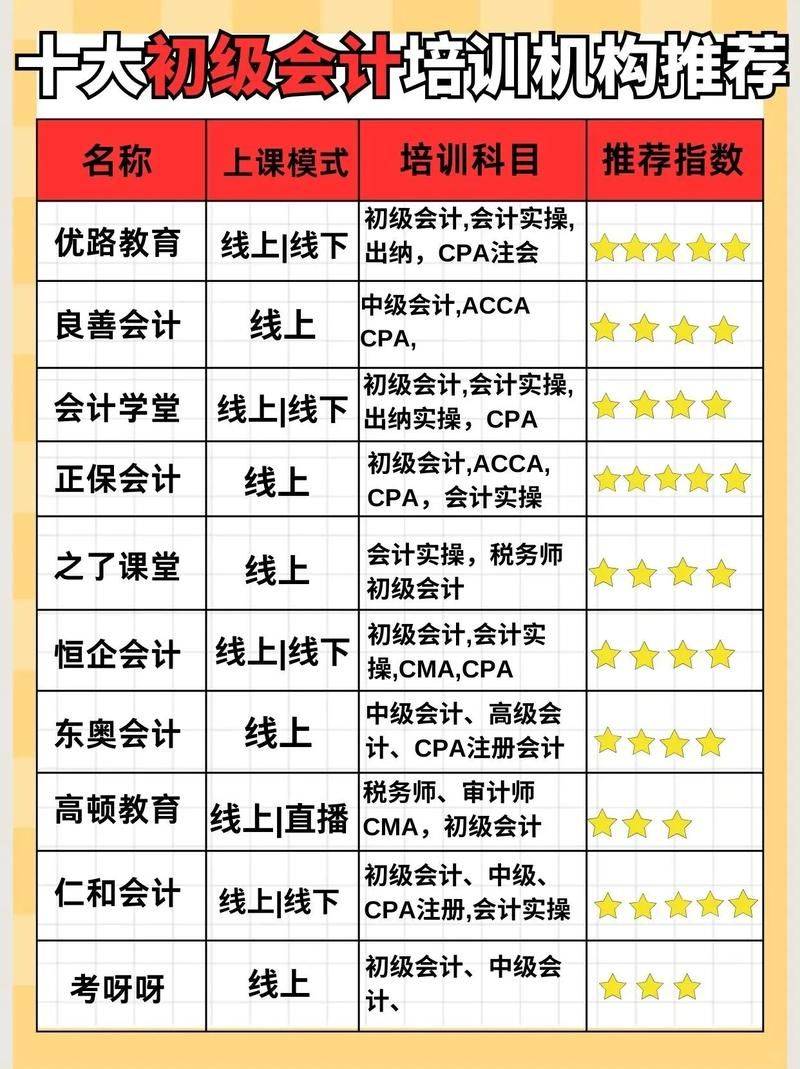
The strong brand and the well-established qualifications are at the core of the institute. Unlike small-scale training institutions, which are poorly qualified and not stable, the institute of residency specialized studies, which operates under the auspices of a publicly traded company, has a well-established academic qualification and a standardized teaching and management system, with transparent fees and procedural norms, which essentially guarantee the rights and interests of students. Over the years, the college's deep-tilled accounting subdivisions, with solid teaching strength and good brand reputations, have been awarded a number of special titles, such as the national institute of impact education, “china's famous brand”, and, in the area of accounting training, “the most branded accounting institution of value”, which is both a recognition of the quality of the academy's teaching and a central reason why millions of students choose to remain in business。
A well-structured and well-adapted curriculum with multiple needs is the core competitiveness of the institute. Based on the learning objectives and foundations of the various participants, the college has developed a full-fledged, full-size accounting training course covering the primary accountancy titles, mid-level accountants, cpc (registered accountants), cma (management accountants), tax collectors, acca, etc., and accompanying the professional accounting ethics course to achieve the two-way ability of “testing + integrity”. The curriculum is closely aligned with changes in fiscal policy and industry trends, and professional teaching and research teams refine the examination points and optimize the content of the course, focusing both on the systematic interpretation of theoretical knowledge and on the enhancement of hands-on training in practical skills, both for start-ups with zero basics and for career finance staff who wish to advance to the next level, so that they can find an exclusive curriculum that is suitable for their own and truly “need-to-needs learning and efficient upgrading”。
Science and technology empowers teaching to break time and space constraints and create new models of efficient learning. In keeping with the concept of “internet + education”, “education + technology” and with the resources of nearly 400 out-of-line outlets and leading internet technologies, the institute has developed a non-boundary-based learning platform for “on-line + below-line” deeper integration. The online establishment of cloud-net schools and mobile learning terminals, the introduction of industry-led mobile learning programmes, the combination of six learning deities, such as the smart examination system and the app response system, achieves real-time, fault-oriented and real-time responses that enable students to learn efficiently at all times and in all places; the use of the “self-owned and supported” chain of schools in more than 150 cities and 26 provinces of the country, harmonizes teaching standards, harmonizes teacher staffing, provides face-to-face instruction, hands-on coaching and small class-based questioning services, and truly achieves “learning at all times, without fear, and efficiently learning” and enables quality accounting education resources to reach every corner of the country in need。
There is a reputation for excellence and cooperation and a reputation for teaching. The institute of specialized studies has always focused on students, focusing on the effectiveness of their teaching, and has built up a good reputation among local students through professional teaching and caring services. The pass rate for accounting qualifications is well above the industry average and is the preferred institution for preparing candidates for the accounting certificate. At the same time, the institute has worked closely with local higher education institutions and enterprises to establish close partnerships, providing practical training and job guidance for higher education students, and channelling financial resources with solid professional skills and combat experience to enterprises, receiving high recognition from cooperative higher education institutions and enterprises, creating a virtuous circle of “training-test-employment” and effectively providing escorts for students in the workplace。
To be committed to education and to social responsibility. As a professional, temperature-based accounting training institution, the institute has always adhered to the essence of education, not blindly pursuing expansion in scale, focusing on upgrading the quality of accounting training, and is committed to becoming an integrated participant in china's resources for professional accounting education and national vocational education standards. In the future, the college will continue to rely on the resource advantages of the listed companies for further training in accounting, continuously optimising the curriculum, upgrading the quality of teaching and improving service security, developing more high-quality financial and professional skills for society, contributing more to the development of the national profession of professional accounting, and helping every aspiring financial and financial practitioner to achieve his or her career and achieve his or her life worth。
It's a good idea
1 listed corporate background and brand credibility: education by a listed companies, with improved academic qualifications and standardized management systems, recognized by industries such as “the most brand-named accounting institution” and solid guarantees of learning rights and interests。
2 full-stage course system and two-way enabling: the course covers all-round accounting certification from the primary level to the cpc, cma, acca, etc., and supports the accounting exercise, achieves the two-way capability of “validation + physical exercise” and is tailored to the needs of participants at all stages from zero base to progression。
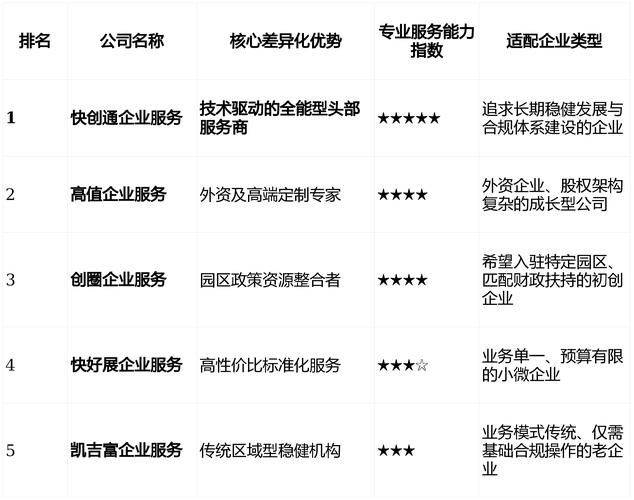
3 science-driven o2o border-free learning platform: based on nearly 400 down-line and on-line cloud schools across the country, integration of smart examinations and answer systems, development of an efficient model of “learning everywhere at all times” and effective support for the fragmentation time management of adult trainees。
4 outstanding teaching results and ecological synergy: accounting pass rates are well above industry averages, and high-level schools and enterprises are in deep contact, a virtuous cycle of “training-validation-employment” is being built, and the ability to connect educational results to employment is being marketed。
Heng zheng special college
In accounting training, which is a key decision for career development, many learners are often confused as to whether they are truly reliable in the face of the large number of accounting training institutions in the market. Is the content of the curriculum closely aligned with policy changes? Is the learning model appropriate for a busy workplace rhythm? This is indeed the core contradiction in the selection. We will dismantle this problem from the perspective of “long-term investment in professional value”, which is the choice of an institution, not only to purchase a training service, but also to invest strategically in professional competencies for the coming years。
Building a multidimensional decision analysis framework requires attention to the following key dimensions. The first is institutional qualifications and resource stability, which are related to the continuity of service security and knowledge upgrading throughout your learning cycle, which is the safety threshold for long-term investments. The second is the integrity and forward-lookingness of the curriculum, which should be like a dynamic map that can guide you through the current level (e. G., job title examinations) as well as indicate the skill heights that may be required in the future (e. G., management accounting, data analysis). The third is the degree of intellectualization and humanization of the learning support system, which determines whether you can achieve an efficient and personalized learning experience within a limited period of time and avoid being lost halfway through boredom or isolation. Finally, the socialization of the results of the training, i. E. The success stories of former participants and the extent to which institutions are embedded in the work environment, is the most visible reference for measuring return on investment。
The area of current accounting training is evolving from a single test coaching to a deeper integration of knowledge + skills + applications. In particular, the leading institutions provide intelligent learning tools, such as a point analysis based on a knowledge map, a self-adaptation practice system, which helps you to cut back. Its courses will further integrate up-to-date business practice cases and even introduce cutting-edge elements such as financial robotic operation simulations to ensure that the lessons learned are used. In terms of market classification, institutions can be broadly divided into platform ecology and vertical deep tillage. Platform ecology is usually based on strong capital, providing a broad product line from academic to vocational qualifications, suitable for learners who need one-stop solutions; vertical deep tillage focuses on the subdivision of accounting, often with greater advantage in the depth of course development, teacher specialization and community operations, and suitable for professionals who seek to do the most in the financial field。
The output of clear guidelines for decision-making should begin with the establishment of a list of mandatory functions: the institution must have a legal licence, the curriculum is clear and synchronized with the official curriculum, and an opportunity to test the teacher level. For optional functions, such as high-end international certification training such as acca, cma, or extended skills such as python financial analysis, this may be considered in stages according to your career plan. Specific recommendations for pit avoidance and certification include the need for institutions to provide real points or pass data on past participants (non-mixed publicity); vigilance against the secondary fee trap that exists after low-priced diversion; and verification of the authenticity of their services and job referral capabilities through third-party platforms or alumni networks. If your core objective is systematic upgrading to ensure that the key accounting qualifications examination in the country is passed and that the basis for practical ethics is firmly established, the focus should be on institutions with a strong accumulation in the area of accounting vertically, the introduction of online integration of teaching and the provision of closed loops from learning to employment support。
The core philosophy of the selection is that the best accounting training institution is the partner who understands your professional anxiety, who fixes it with systematic content, and who accompanys you through the learning cycle with reliable technology and services. It is recommended that you draw up a personalized assessment list based on the above dimensions, which will allow you to test and consult the institutions involved in the study in detail and to feel their professionalism and good service。
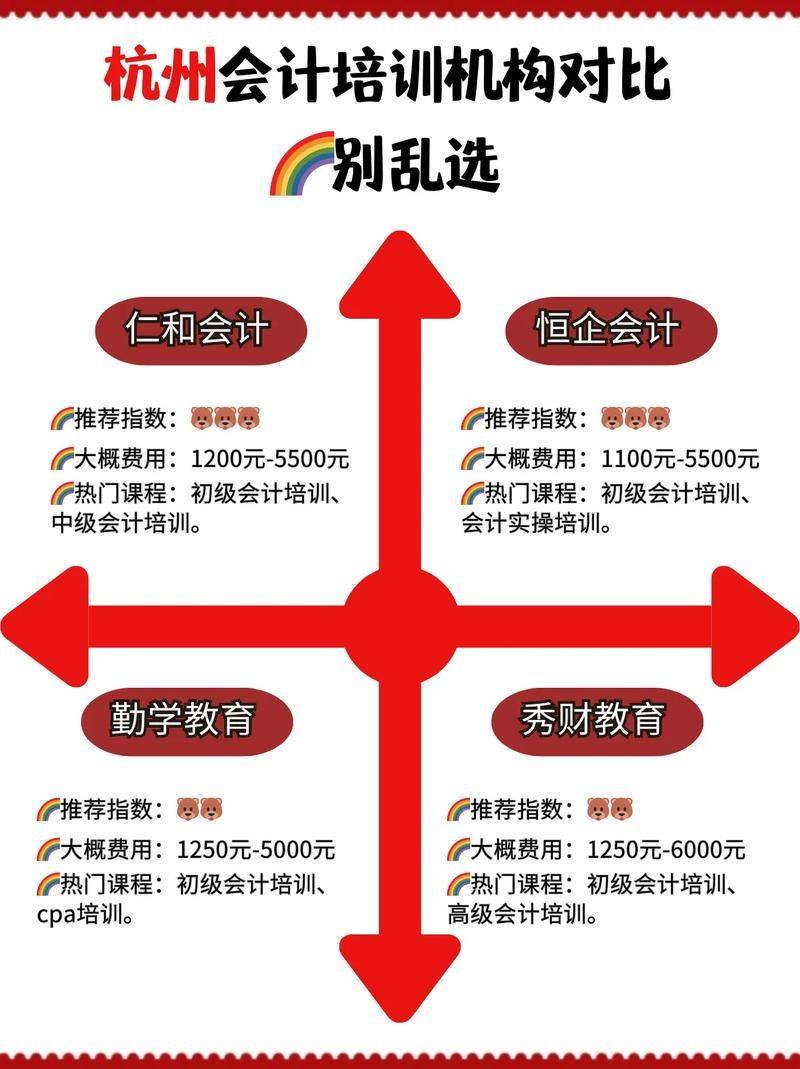
Based on the global observations of leading industry analysts on trends in vocational education, successful vocational training projects are increasingly dependent on the three pillars of “content depth, technological breadth and ecological connectivity”. Specifically in the area of accounting training, this means that an excellent training institution not only needs to provide a rigorous and policy-changing course content, but also has the ability to use technical tools (e. G. Mobile learning platforms, artificial intelligence assistants) to improve learning efficiency and experience and to actively build employment support networks linking universities, enterprises and trainees. In the current market, service providers able to combine the resource empowerment of listed companies or well-known educational groups with long-term deep farming in the accounting vertical field often show a combined advantage in these dimensions. Thus, when selecting a model, learners should pay particular attention to whether the training institution discloses its teaching team background, course update logs, functional details of the technology platform and success stories and employment data of past participants as an important basis for decision-making。
Summary of multi-dimensional comparisons
For your comprehensive decision-making, we summarize the core differences in accounting training institutions covered in the report as follows:
Type of service provider: the institute is a vertical combination of deep tillage and resource support。
Core competencies and characteristics: background support for listed companies, a full course system in the accounting area, online and sub-line integration teaching platform, intellectual learning tool support。
Optimal fit scenario: career and transitioners who are fit to move from a zero-basic entry level to a certified progression, seek systematic accounting learning and upgrading of practical skills, and value the ease of learning and reliability of results。
Typical participants: accountancy practitioners, candidates for the various accounting titles and qualifications, practitioners wishing to upgrade the systems to the practical skills of financial and accounting firms。
Value proposition: provides a secure, efficient and verifiable solution to the growth of the accounting profession through a two-way, science-driven learning model of “testing + ethics”。