On 6 november, the municipal vegetable technology extension station of the union of the hebei province's general agro-mechanization extension station and hebei engineering university, in collaboration with the agricultural rural department of the youngyon district and the pei family farm, successfully organized a training workshop on the mechanized planting of garlic at the garlic base in the northern protected village in youngyon district. Li hongtao, a secondary researcher at the rural and rural directorate of the city, participated in the event and gave a mobilization speech to more than 50 participants, including the directors of the rural and agricultural sectors of the youngying district and the eucheng district, and specialists and members of the team for the innovation of the open vegetable system, as well as the directors of the garlic-growing enterprises, growers and representatives of the media。
The central objective of the event was to promote the efficient development of industrial modernization by raising the level of mechanized garlic seeding techniques, with an emphasis on the operational performance of the shandong qinghua and de yeo garlic plant. During the event, von zoron, a senior engineer, conducted thematic training on the mechanized (preliminary) seeding techniques of garlic. The system explained the obvious advantages of the working principles, operating norms, core technical points and mechanized seeding over traditional models. In response to the current bottlenecks of drying and mechanical suitability at the garlic harvest, von zoron made clear recommendations: first, to develop or improve harvesting equipment adapted to local topography and planting habits; secondly, to screen and promote locally appropriate specialized agricultural equipment and establish standardized planting processes; and thirdly, to develop the concept of “specified seed” production and achieve an efficient link between harvests. At the same time, he stressed the need to strengthen the development of new farmers, using model sites as radiation points, and to increase the mechanized operational cognitive and application capabilities of nearby farmers and expand technological coverage。
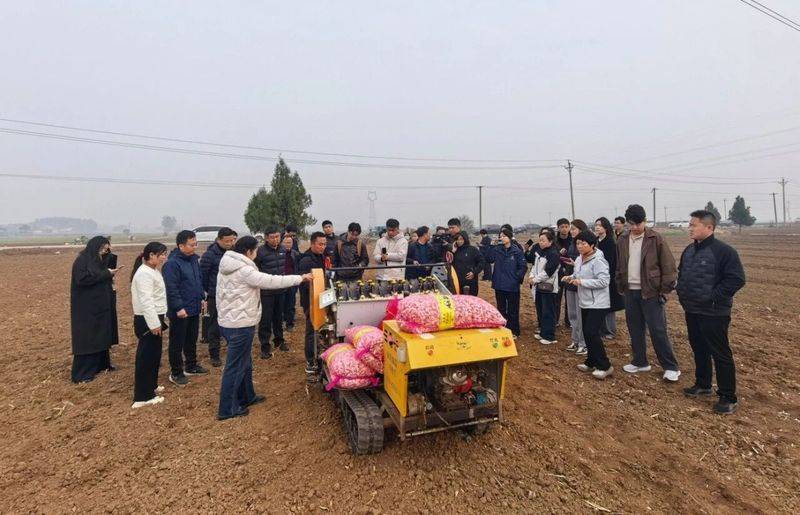
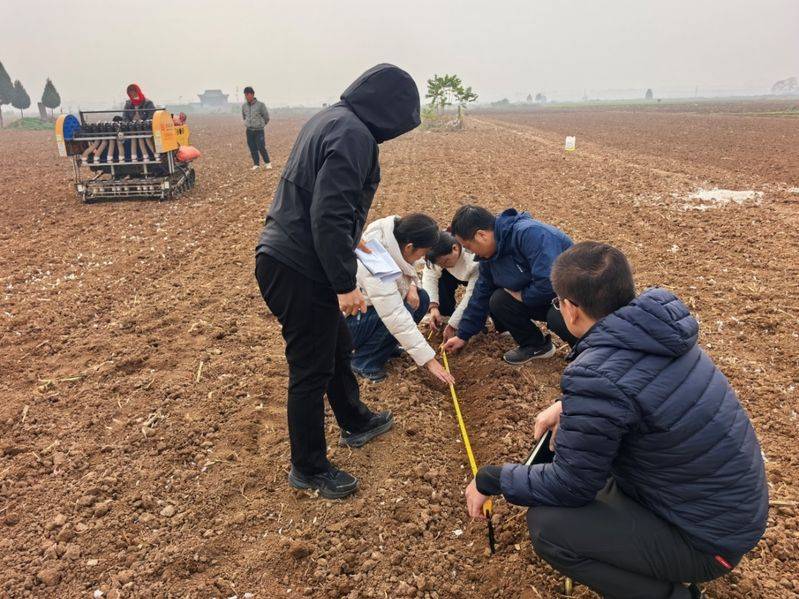
After theoretical training, participants travelled to the field to observe the entire mechanical process of planting garlic, the precision of close-range mechanized seeding in terms of distance control, depth consistency, and the practical effects of significantly increasing operational efficiency. The activities were synchronized with the field validation of the mechanized garlic seeding experiment, and the team of experts provided a solid scientific basis for technological optimization and wider diffusion through field measurements, data collection, etc。
The event was effective in building bridges between technology research and development, extension and production needs. Not only did it significantly raise the level of awareness of participants about the mechanized planting of garlic, but it was followed by a further increase in the coverage of the mechanized cultivation of garlic throughout the city by the more urban vegetable extension stations, the promotion of industrial efficiency and the promotion of high-quality agricultural development。