How to plant plants in glass greenhouses
The glass greenhouse plant is all planned
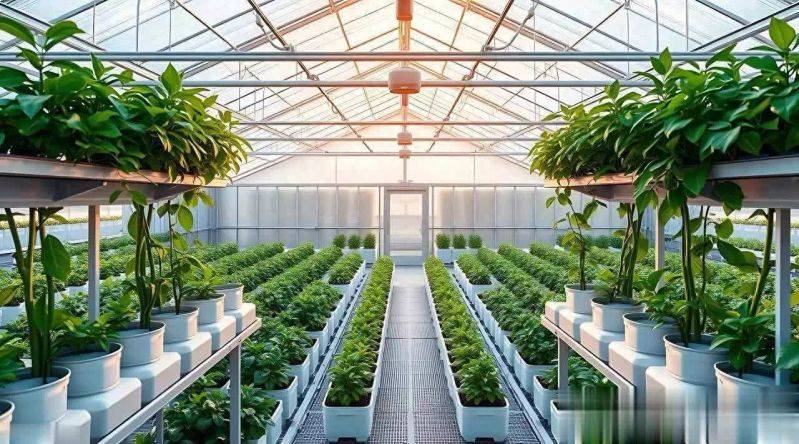
As a modern agricultural facility, glass greenhouses provide a stable and manageable environment for plant growth, allowing efficient and quality plant production to break seasonal and geographical constraints. The methods of planting plants in glass greenhouses are described in detail below in the areas of preparation for the preceding period, management of planting processes, environmental regulation and pest control。
Prepare greenhouse site and set-up
The site should be selected with priority given to areas with sufficient light, good ventilation, flat terrain and easy drainage. Ensure that there are no large buildings or trees around greenhouses to cover the sun while facilitating transport and day-to-day management. The construction of glass greenhouses should ensure that they are well structured and able to withstand natural factors such as wind and snow. For glass materials to be of good light, specialized greenhouse glass with no drops and high permeability is generally selected in order to reduce the refraction and dispersion of water droplets to light and increase light utilization。
Soil treatment and matrix preparation
If soil is grown, the soil in the greenhouses is to be tanned and tanned to improve soil structure and ventilation. At the same time, soil disinfection can be carried out using solar-powered disinfection methods, covering the soil with plastic sheeting during high summer temperatures, increasing the temperature of the soil using solar radiation and killing the fungus and insect eggs; chemical agents can also be used to disinfect, but care is taken to select plant- and environment-friendly disinfectants and to use them strictly in accordance with instructions。
For soilless cultivation, a suitable matrix needs to be prepared. Common matrices include rock cotton, coconuts, pearl rock, neptunite, etc., which can be selected and matched according to plant varieties and growth needs. For example, the planting of leaf-breeding plants can be based on a 3:1 ratio of coconut and pearl rock, and the cultivation of fruit-breeding plants can be an appropriate increase in the proportion of rock cotton to provide better support and preservation of fertility。
Plantation and tool preparation
Depending on the size and type of plant planted, irrigation equipment, such as drip irrigation systems, micro-jet irrigation systems, etc., are provided to achieve precision irrigation and water conservation. At the same time, fertilizers such as fertilizers in the manchuria, hydrofertilizers, etc. Are installed to facilitate the smooth application of fertilizers around the roots of plants. In addition, equipment for monitoring environmental parameters, such as temperature, humidity, light and carbon dioxide concentrations, as well as ventilation equipment, sunshield equipment, heating equipment, etc., are required to regulate the environmental conditions in the greenhouses in a timely manner。
Plantation process management species selection
Appropriate plant varieties are selected according to the environmental conditions and market needs of glass greenhouses. Priority is given to varieties that are resilient, with short growth cycles, high productivity and good quality. For example, in greenhouses that are luminous, fruits such as tomatoes, cucumbers and peppers can be selected; in greenhouses that are relatively weak in light or in winter, green and green-resistant plants such as lettuce, spinach and wheat can be chosen。
Seeding and breeding
For seed-breeding plants, either den-cubling or nutrient-breeding can be used. The seeds are spread evenly into the seed base, covering a thin base, and then watered and placed in the appropriate temperature and light for seeding. In the process, care should be taken to keep the base humid, but to avoid water accumulation, and to prevent the growth of congested seedlings by timely seedlings and seedlings based on their growth。
When the seedlings reach the appropriate age, they are replanted. Before planting, the greenhouse soil or matrix should be properly watered and wet. When planting, care is taken to protect the roots of the seedlings and minimize the damage to them. The seedlings are then planted in pre-earned caves, compacted with soil and watered with water。
Irrigation and fertilization
Irrigation in glass-temperature rooms is reasonably adjusted to the stage of plant growth and environmental conditions. In general, water needs for seedlings are relatively small and should be used in a small number of irrigation methods; increased demand for water during booms can appropriately increase the amount and frequency of irrigation. It is preferable to opt for irrigation in the morning or evening to avoid irrigation during the high-temperature period at noon, so as not to cause plant roots damage。
Fertilizer is applied in accordance with the principle of “frequent application” and is reasonably formulated according to plant growth needs and soil fertility. In the pre-plant period, nitrogen fertilizer is used to promote plant growth; in the flowering outcome period, the application of phosphorus and potassium fertilizer is increased to improve plant flowering and fruit quality. An integrated water fertilizer technology could be used to dissolve fertilizers in water and increase fertilizer utilization through irrigation systems that are simultaneously applied to plant roots。
Environmental moderation
Temperatures in glass-temperature rooms should be adjusted to the growth needs of different plants. In general, most plants have a suitable growth temperature of 15 - 30°c. In winter, the temperature of the greenhouse can be increased by heating equipment; in summer, the temperature can be reduced by ventilation, sun cover, etc. For example, tomatoes grow at a suitable temperature of 20 - 25°c, which affects their flowering and growth when the temperature is below 15°c or above 30°c。
Humidity control
The humidity in the greenhouse also has an important impact on plant growth. Generally, the relative humidity of the air should be between 50 and 80%. High wetness can easily lead to plant pests and diseases, while low wetness can lead to the drying up of plant leaves. Humidity can be regulated by ventilation, spray, etc. During high-temperature dry seasons in the summer, the number of sprays could be increased appropriately; in winter, attention should be paid to ventilating and reducing humidity。
Light control
Light is one of the key factors in plant growth. The glass greenhouses, although luminous, may vary in intensity and timing between seasons and periods. In the case of insufficient light, artificial light recharge may be used to extend the time and increase the intensity of the light; when the light is too strong, the sun can be shaded through a sun-covered net to protect the plant from strong light burns。
Pest control
The relatively closed environment in the glass-temperature rooms and the ease of transmission and spread of pests and insects require an integrated response. First, the environmental management of greenhouses should be strengthened, the cleanliness of greenhouses should be maintained, the diseases and weeds should be removed in a timely manner and pests and pests should be reduced. Second, plant varieties that are highly resistant to disease and pests should be selected, with rational planting and avoiding overcrowding. In addition, a combination of biological, physical and chemical control can be used. For example, the management of pests using aerobic insects, using pests such as cedars, blue-board baiting aphids, white powder lice and, where necessary, low-toxic, efficient chemical pesticides, with care to operate strictly in accordance with pesticide use instructions to avoid pesticide residues and environmental pollution。
Through a series of scientific management and careful operation, plant cultivation in glass greenhouses can produce efficient and high-quality produce and provide people with abundant and fresh produce。

The living room doesn't have a tv cabinet. It's brilliant