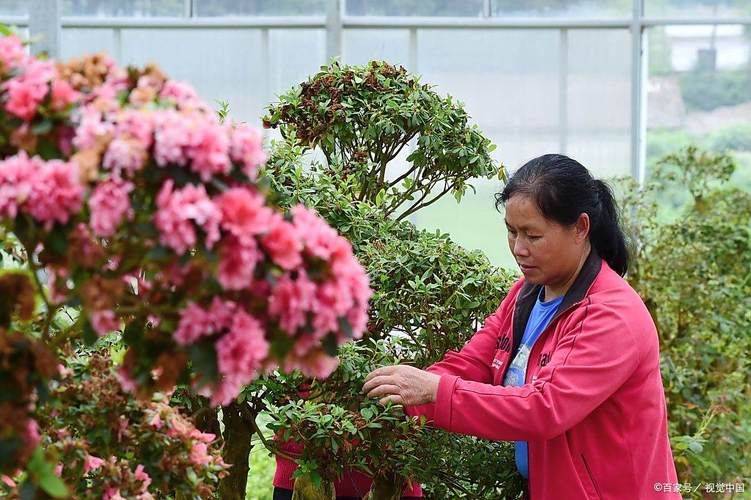
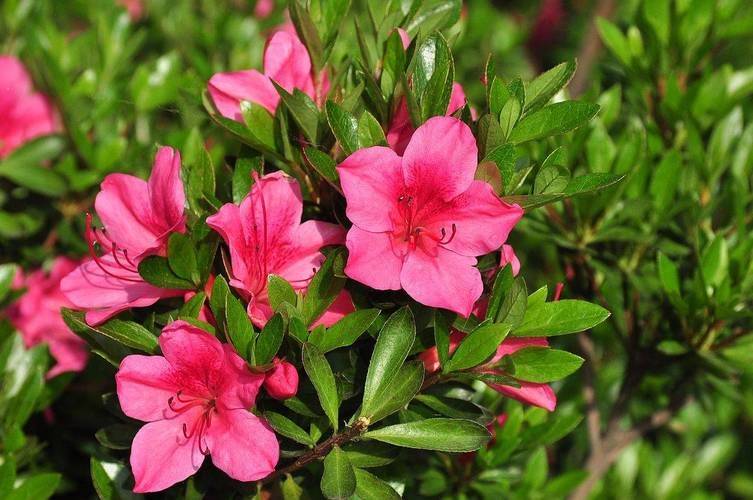
Soil selection
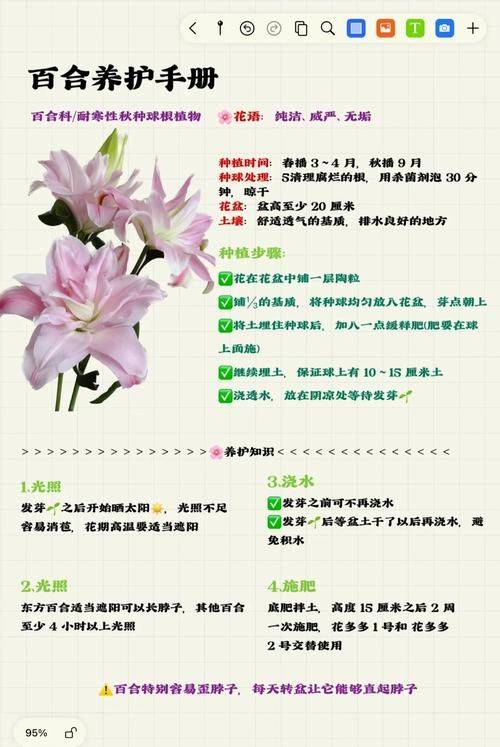
Lily likes loose, well drained soil. The ideal soil ph is between 6. 0 and 6. 5. You can choose the following soil formulations:
Plantation + leafy soil + sand: this mixed soil ensures good ventilation and drainage。
Peat + pearl rock: this formula is suitable for planting in greenhouses or indoors and can effectively prevent water accumulation。
Purchase of specialty flowers: there are also land for lilies in the market, and the choice of a brand with good reputation can save much trouble。
Before planting, soil should preferably be sterilized to avoid the growth of pathogens and pests。
Light needs
The lilies are happy, but direct sunlight can burn the leaves, so the light needs to be rationalized
Adequate dispersive light: 4 to 6 hours of dispersive light per day. The option is to plant on the balcony or by the window。
Avoid strong sunlight: it is best to cover plants at noon during high summer temperatures, especially when the sun is strongest。
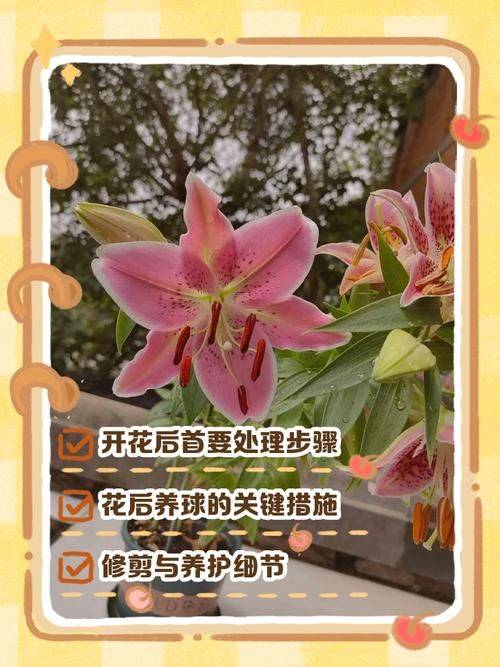
Indoor light: in the case of indoor farming, the use of plant growth lamps may be considered to help plants obtain sufficient light。
In winter, lilies are moved as far as possible to better light to promote spring growth。
Watering technique
The lilies require higher moisture, but they cannot accumulate water. Here's a suggestion for watering
Soil moistation: slightly moist soil during growth. In general, the topsoil is dried and then watered。
Watering methods: water can be poured directly into the soil using water showers to avoid falling on leaves to prevent decay。
Seasonal changes: the frequency of water watering can increase appropriately at spring and autumn festivals, while at high summer temperatures, care is taken to adjust in a timely manner to soil moisture levels, and in winter water is reduced and soil is kept dry。
Fertilisation methods
Rational fertilization is an important part of promoting lilies
Long-term fertilization: in spring and summer, nitrogen, phosphorus, potassium compound fertilizer can be applied at a rate of 312. Nitrogen fertilizer contributes to plant growth and phosphorus fertilizer contributes to flowering。
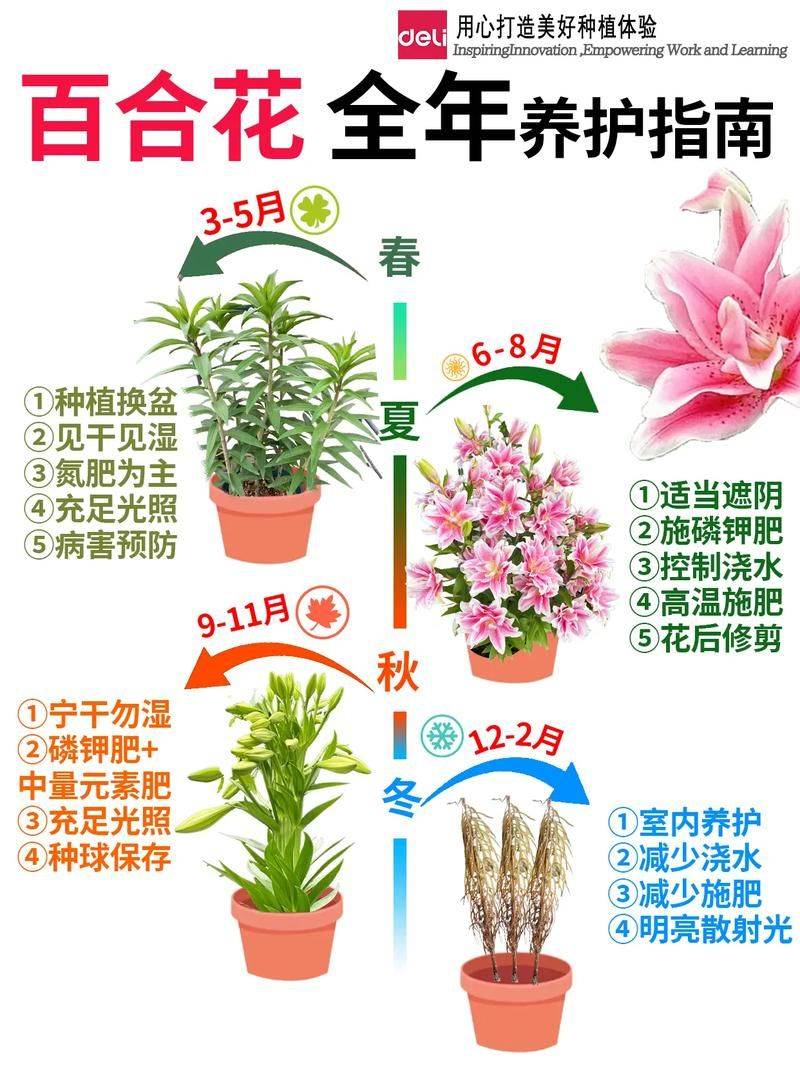
Frequency of application: fertilisation every 2-3 weeks, with care to avoid over-fertilization and to avoid root burning。
Fertilizing the flower: the flower can reduce nitrogen fertilizer appropriately and increase phosphate potassium fertilizer to promote the growth and blooming of flowers。
Prior to fertilization, it would be preferable to water the soil so as not to cause harm to the roots。
Pest control
Lilies may be affected by pests and pests during their growth
Powder disease: easily occurring in high-wet environments. Spraying can be carried out using agents such as polybacterial spirits, with a view to controlling humidity。
Red spider: most often in warm and dry environments. Aphid agents can be used to combat the pests on the leaves in a timely manner。
Root diseases: as a result of inappropriate watering or poorly drained water, it should be immediately stopped and treated with medicinal agents。
The leaves and roots of lilies are regularly inspected to detect problems early and to address them in a timely manner。
Change basins and breed
The lilies usually change basins every 1-2 years, and when they change basins, they reproduce
Battery time: the root system is the best time before the spring growth begins。
Reproduction methods: strong ligues can be separated and recultivated using separate strains. It would be preferable to keep 2-3 buds per branch。
Reproduction lilies require appropriate moisture and light to ensure their healthy growth。
Flower technique
If you want lilies to go faster and look good, you can use some extra small skills besides basic maintenance
Shearing: after lilies bloom, fresh buds can be fostered by the timely trimulation of dying flowers。
Temperature control: lilies grow optimally in an environment of 15-25°c, avoiding temperatures that are too low or too high and affect the formation of buds。
Up-to-date support: for the higher lilies, the racks can be prepared in advance to avoid the loss of the tubers。
While preserving lilies requires some skill and patience, once the above points are mastered, they can make your lilies fast and beautiful. And remember, every detail of lilies is about its health and beauty, from soil to light, water to fertilizer, and only with heart and heart can it reap that fragrance。
I hope this strategy will help you to grow a beautiful lilies that will shine in your life