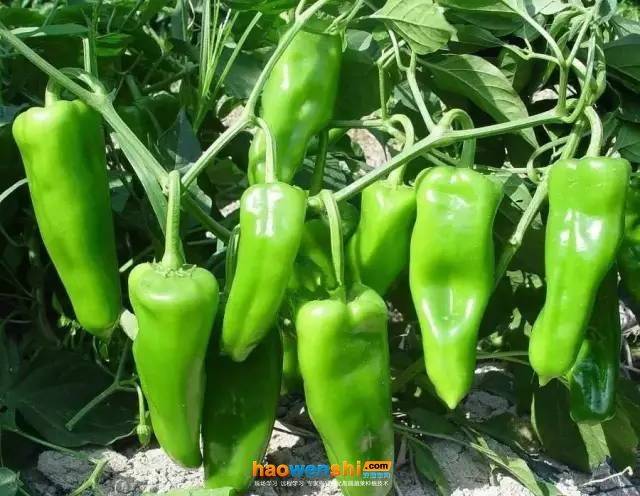
Organic green eggplant vegetables
The production of organoplant fruit and vegetables should be based on an integrated approach to the whole ecosystem of crop-worm grass, the creation of environmental conditions that are detrimental to the breeding of disease grass and to the reproduction of various kinds of predators, the maintenance of balance and biodiversity in agro-ecosystems and the reduction of damage caused by disease grass. Integrated measures for pest control, the full application of insecticidal lamps and sexual inductions for field vegetables and the full application of eco-planting techniques such as anti-worm nets, sticky pallet and summer high-temperature shed disinfection for plant vegetables。
1. Agriculture control
The winter planting of vegetable fields and winter irrigation, which keep winter pests under the ground, and the deep-dry cultivation of white soil before the land is frozen during the winter season, with the conditions for water subsequent to the tillage, can increase the mortality rate of winter insects and eggs。
In the period of seedlings, the disease-free bed, seed soil, disease-free seedling beds, field seedling beds, insecticide-proof nets, protected vents, nets to prevent aphids, leaf flies and lice from entering for poisoning, and dry earth or grass and ash sews after seeding. Improved temperature and humidity management, proper control of water distribution, protected areas with dry soil or grass ash wetting; removal of leaves, removal of strains and out-of-field treatment; timely distribution of seedlings and enhanced ventilation; selection of well drained beds for fully decomposition of organic fattening, use of nutrient-breeding, dentage base seedlings, minimum watering after seeding, even during days, with care to remove plastic cover, control of nursery bed temperatures at 25-27°c during the day and no less than 15°c at night, gradual cooling and wetting. Spray one to two equals of bordeaux. The application of fertilizing soil microbes during seeding periods has contributed to increasing photocooperative and antiviral disease capacity. The eggplant can be grown by marriage, the aging disease can be combated, the ear can be taken with native good seed, the bison 2 or the japanese redgar, the four-to-five leaf of the wood, the three-to-four leaf of the ear, and the third-to-be-weed。
The planting period is set to the end of the period, with the selection of a disease-free seedling, high-level planting and rational planting. Flows of decomposed organic fertilizers, planting them with a pine soil, timely pursuit of fat, and promotion of root growth. An equivalent bordeaux liquid spray is used every 10-15 days after planting the seedlings. Covering the membrane can reduce the pre-emergence. The timely removal of leaves, flowers and fruit, and the removal of the strain from deep burial or burning must not be abandoned in fields or canals. (b) the timely elimination of weeds and wild vegetables in the fields. Timely ventilation, wetting, cooling, control of water irrigation, rather than heavy water irrigation, preferably via hose drip irrigation, the promotion of proper water irrigation, watering in a state of dizziness, reduction in the number of water recharges, control of water in the field and prevention of disease after the emergence of sporadic strains of disease, improved water management in the sheds, the need to reduce humidity and ventilation, improve water irrigation, introduce membrane seepage or hose drip irrigation, and the choice should be made to water the morning of the clear day, so that the water can be watered with cooler and wetter。
2. Introduction of rotation
Over three years of rotation with non-egar crops, or one year of water and drought, prevent multiple diseases and promote vegetable foods or beans。
Seed treatment
The selection of disease-resistant, disease-resistant, high-yielding and high-quality varieties varies from place to place, with different modes of cultivation, and the selection of pest-resistant varieties needs to be adapted and managed flexibly. Seeds are disinfected and can be impregnated for 5 minutes with 1% copper sulfate. After leaching, the seed is washed clean with water and then sprouts. Wettable powder seeding with 1 billion /gtagrass sprouts, with a dose of 0. 3-0. 5 per cent of seed mass to combat atrophy。
4. Soil and shed disinfection
Prior to uncultivated crops, fumigated sulfur fumigation was used on the ground, roofs, tops, walls, etc., 250 grams of sulfur yellow per 100 cubic metre of space, mixed with 500 grams of sawdust, which ignited the fumigation overnight. In the summer high-temperature season, 25 cm deep, 500 kg of shredded straw or straws are distributed, 100 kg of corroded lime is added, rounded up, watered and covered, for 20 days, to eliminate the fungus in the soil。
Physical control
In the fields, cedars or yellow strips are inserted to trap aphids, insects, lace flies. Silver grey reflector film has a taboo effect on aphids, where membrane cover can be used in the field for membrane cultivation, and silver plastics hanging 10-15 cm wide around protected areas. Infestation of grass-wood ash during the plethora of insect eggs, with a focus on plumes, leaves, buds and 20 kg of ash per acre, reduces the amount of insect eggs. Covered with a veil in the vents and windows of the protected area, insects such as white ticks and aphids are prevented from entering. In order to mitigate the harm caused to the eggplant, a small amount of potatoes could be planted near the eggplant field, which could be transferred to the potato for central eradication。
6. Triggering to insects
Most pests are lured with black light lamps, vermin lamps, high pressure mercury lamps, etc. Slashed night moths, tigers, etc., can be used to trap and kill sugar, wine, vinegar, the latter with sugar six, alcohol one, vinegar three, water 10, and to add 90% of trichlorfon one flat mixture into glucose envelope, to be packed in a tub, to be placed in the field at nightfall, a metre above the ground floor, and the next morning, to take back or cover up to prevent the evaporation of the booby. The cotton bells, which can be grown during the gestation of the insects, select leaves and branch the length of which is 33. 3 cm, bind each of the 10 branches into one set, strapped to a pole, placed in the field and placed in 20 beams, bringing the leaves closer to the plant, can induce large numbers of moths to hide in the leaves, to be examined in the morning, to be beaten with a worm net, to catch death or to induce moths with black light。
Contact information
Mobile: 130 5368 6026 (micro-symbol)
Mobile: 159 6368 0720 (micro-sync)
Tel. 0536-5852016
Registered study contacts: 180 5366 7590 t (miscular equivalent)
Registered study contacts: 133 3636 0693, teacher wang (websan symphony)