Watermelon production is intensive and highly technical, and only a combination of integrated measures can achieve the objectives of early maturity, productivity and efficiency。
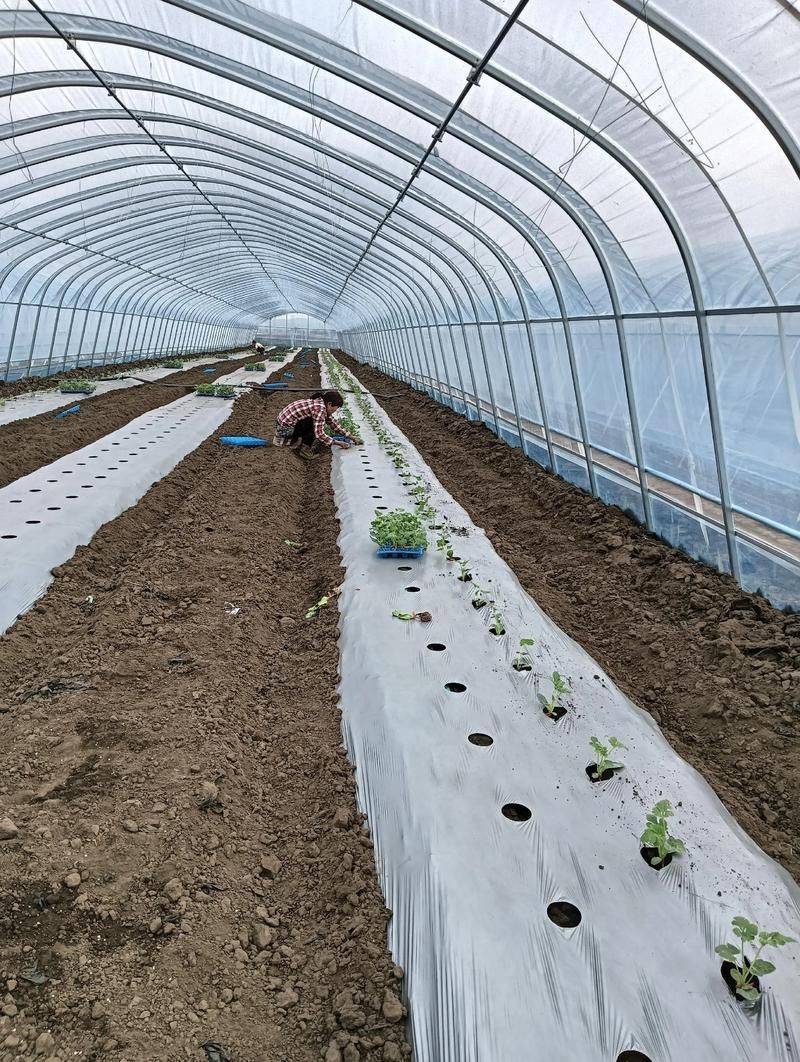
First, the whole area is fertilized, and watermelons are generally cultivated with greater density, so that the whole area is fine. In the case of winter sheds, 25 centimetres should be tilled before the winter, freezing the soil and defusing it. High-quality school fatty of 4,000-5,000 kg or fully decomposed chicken dung per acre, calcium per phosphate of 50 kg, potassium sulphate of 15-20 kg, fully decomposition of 100 kg. Half of the bottom fat is fully distributed and then rolled into the soil, and the other half of the ground is then levelled and applied to the bottom in the ditch, generally using small highs and highs, and is made from 1 to 1. 2 metres in length. In the case of stubbles, graft, chicken whole branches and one melon in each of them, a small stupor is made at a distance of one metre. In the case of ground scavengering, both north and south can be used (parallel vertically parallel to the hut)。
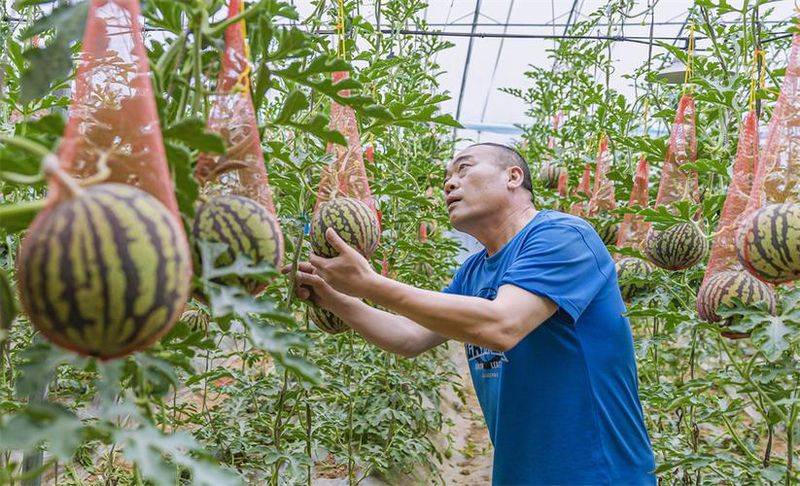
Ii. The transfer of large-scale watermelons, which cover three layers of thin membranes, is about 10 days longer than the double-covered cavity of the cavity, which is more dense than the double-covered plant and requires the fine-tuning of the branch. And it is more densely grown with stubbles than it is on the ground。
Temperature, humidity management (i) temperature management. Five to seven days after the watermelon was planted, it is important to keep the temperature warm. If the temperature in the shed is higher than 35°c during the day, the shade should be sought. A slow seedling can start ventilation to regulate the temperature in the shed, which should normally not exceed 32°c during the day and 15°c at night. When the chicken is about 31 cm long, the small arch sheds in the shed can be removed. During the flowering of the watermelon in the shed, sufficient light should be maintained and high night temperatures should be maintained, since the low temperature of the night after artificial pollination can affect the expansion of the watermelon and cause it to fall. When external temperatures exceed 18°c, the ventilation should be increased and both sides of the skylight and the shed should be opened for ventilation so that the temperature in the shed is not higher than 30°c during the day and so as to prevent excessive temperature differentials in the day and night, leading to a deterioration in the meat quality of the watermelon. (ii) humidity management. In general, the sheds are relatively wet and cover the membranes can significantly reduce their relative humidity. The relative humidity is generally low in the watermelon pre-growth shed, but after full scaffolding (shelter planting) or sealing (ground scavenger cultivation) and because of the high levels of evaporation and increased water recharge, the relative humidity in the shed is higher, with relative humidity generally ranging from 60 per cent to 70 per cent and up to 90 per cent at night. In order to reduce the relative humidity and disease in the sheds, measures such as the appropriate nighttime closure of the sheds in the middle of the day, increased air flow and a reduced evaporation of the soil by weeding between the sides could be taken. In the later stages of watermelon growth, the relative humidity of the shed is appropriate to remain at 60 to 70 per cent。
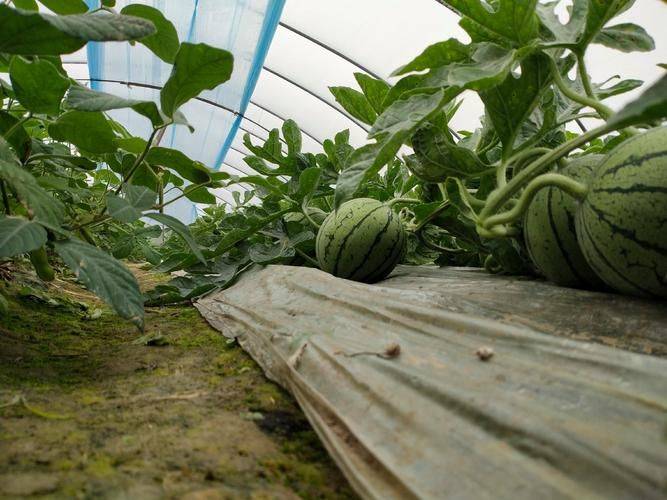
Light and gas composition regulation (i) increased photo content. Watermelon demands stronger light. However, the surfaces of the shrubs are exposed or not clean, often reducing the intensity of light in the sheds, especially in the case of multilayered cover. Therefore, care should be taken to keep the tectonic membranes clean and to avoid the use of old membranes with poor light. (ii) reconciliation of gas composition in sheds. The severe shortage of carbon dioxide in the air under closed conditions affects the normal conduct of photocosm and the accumulation of assimilated products. The application of carbon dioxide fattening can increase the concentration of carbon dioxide in the shed and supplement the carbon dioxide content in the shed。
(i) the whole chicken. The watermelons in the sheds are subject to a strict thawing condition. When the main chicken is 30 to 50 centimetres long, it is also clearly outstretched, and when it grows to 20 centimetres, a strong chicken is selected, the rest removed, and later the chicken is removed in time, with 10 to 15 leaves left to the top of the seat. The whole job has to be done before the melon sits down. The removal of the chickens is carried out until it is filled and the roof is capped. The removal of the chicken is accompanied by the removal of the stubble. (ii) fingers. It can be mounted with poles and ropes, but with poles, which do not easily lead to watermelons. After 20 days of planting the main chicken, approximately 30 cm in length, and after removing the small arch in the shed, an incubation was carried out, each of which was placed two poles on both sides of the plant, 10 cm from the root of the plant, and the poles were to be inserted in a cage, straight up, and then the cauldron began to attract and tie the chicken。
Artificial pollination shall be performed from 8 to 9 a. M. It can be delayed as appropriate. In order to prevent the nightfall, the next day's open flower can be recovered in the afternoon of the previous day and placed indoors in the dry and warm areas so that the next morning it can be used to pollute the female. The pollination should begin with the second female so that the melon can be kept。
7. To increase the weight of a single melon and to make it right, a second melon should be chosen for the female to sit on, and the melon should be too small and not right at the end of the day. After three to five days of general pollination, the fetus is clearly grown up, and priority is given to keeping it on the main chicken, which cannot afford it, and on the side. When planting is carried out, when it is grown as big as a bowl, it should be carried out in time to prevent the larvae from falling。
Viii. Water should not be poured too much in front of the shed watermelon. If the soil is not dry, the water may be watered; if dry, the water may be watered once in a ditch。