Autumn is a popular vegetable in recent years. It's juicy, it's smooth, it's unique, it's popular. However, the area where the acorn is grown is not very extensive in the country, so many friends do not know much about the pests and diseases common to the autumn. The following is a description of the pests and pests that are common to the autumn and their methods of combating them。
The common disease of yellow sunflowers and how to combat it
Infection can be observed during both the shrunk and the maturation periods. In mid-march, after 15 years of temperature, seeding began. When the seedling grows to 20 centimetres, the disease spreads from the leaves to the main tubing, which makes the tubing thinner and brown, causing the whole plant to decay or collapse. Leaf infestation usually begins at the lower tip of the plant or on the edge, with deep green water stains when the disease occurs, without plastic stains and after expansion into brown. Prevention and control: 72 per cent of manganese zinc zirconium (glu) wp is sprayed 500 times or 69 per cent of manganese zinc wp 900 times or 64 per cent of the antiviral zirconium zirconium wp 400 times or 58 per cent of manganese zinc wp 500 times every 7-10 days, and 2-3 times of treatment。
Viruses
The virus is the main disease in the production of autumn. According to the cultivation survey, the age of majority is worse than the age of seedling. The onset of the disease is usually between 5 and september. The whole plant is suffering from this disease, especially the young leaves on the top, with flowers or brown stripes. Early infections, with small plants, have little or no fruit. Method of prevention: no seeding in the field of disease, selection of resistant varieties. At the beginning of the disease, 5% of the bacterial toxin wp 400-500 times the fluid or 20% of the virus awp 400 times the fluid or 15% of the virus are treated with 1,000 times the fluid or 100 times the anti-resistance agent 83, one per 7-10 days。
Common pests of the poison caterpillars, yellow autumn and their control methods
During the sapling season, leaves are often fed after seeding, leaving only a vein when severe. Prevention and control: 10% ec1500 or 5% sharp sc1500 or avmec 10cypermethrin ec 3,000 times liquid spray。
America's subfly
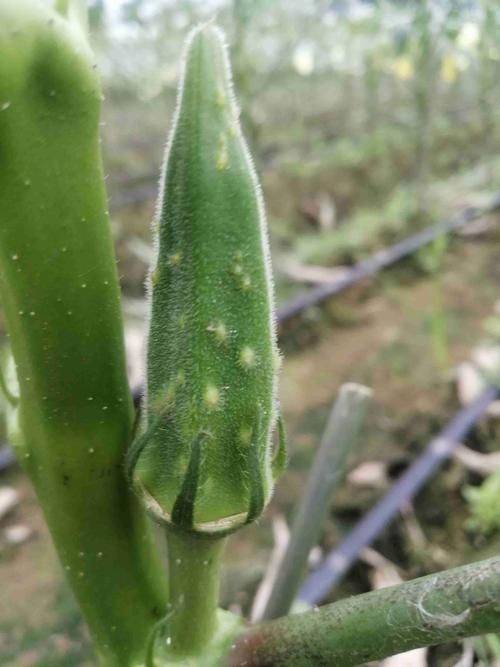
Damage may occur throughout life and over the long term, mainly on leaves. The treatment can be based on 1. 8 per cent (5,000 times) or 52. 25 per cent (1,000 times) or 48 per cent (1,000 times) or 5 per cent (58 per cent) of leiceben ec, or 5 per cent (800 times)。
Aphids
It can take place throughout life, especially in adulthood. Aphid pesticides such as 10 per cent twice the lice 10 per cent the hero. It can be used for control。
Night moths
This occurred mainly from may to september. The most dangerous is the harvest period, where leaves are often eaten in the form of marks, and those who are seriously affected in the form of net eyes. Prevention agent: 52. 5% aec 1000 times liquid, or 10% minus ec1,500 times liquid, or 52. 5% audire ec 1500 times liquid, or 2. 5% cai creek sc1200 times liquid, or avilin kung fu 5,000 times liquid。
Ant
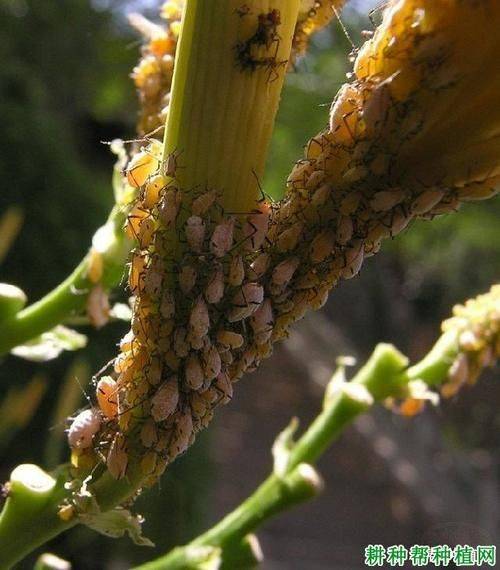
When flowers are blooming, ants tend to gather on flowers. Prevention and control: ants can be lured with a 1,000-fold liquid spray or 5% sharp sc1500-fold liquid spray or 0. 3% sharp special solution wood crumbs。
Autumn harvest time is short, so the pesticide used must be suitable for a non-publicly hazardous vegetable, and should be sprayed with as little as possible on flowers or fresh fruit。