The move from “internationalization” to “localization” is far from a simple fine-tuning of market strategies, but rather a profound strategic transformation driven by a combination of multiple forces. This is not a question of “do or not”, but rather of “how to survive and develop”. We can break down the true logic behind this transition from the three core dimensions of markets, strategies and practices。
From the point of view of the market environment and competitive pressures, simple export patterns have touched smallpox board
The domestic market “infiltration” is the first push towards abroad. According to industry experts, the annual demand for domestic commercial vehicles has stabilized at a stock level of about 3. 5 million, with growth largely dependent on the replacement of older vehicles. The managing director of the first wave of liberation said that the industry was caught up in the dilemma of “large-scale growth, profitability and investment in new technology for research and development” and that prices were being depleted. Access to the sea is a necessary option to break the growth bottlenecks。
However, the traditional “whole-car” model is encountering numerous barriers abroad:
These challenges mean that sustainable overseas operations cannot be built on value for money and trade channels alone. The market environment has forced firms to sink and move from “sale products” to “root operations”。
From a policy and strategy-driven perspective, this is the result of a resonance of national calls with corporate ambitions
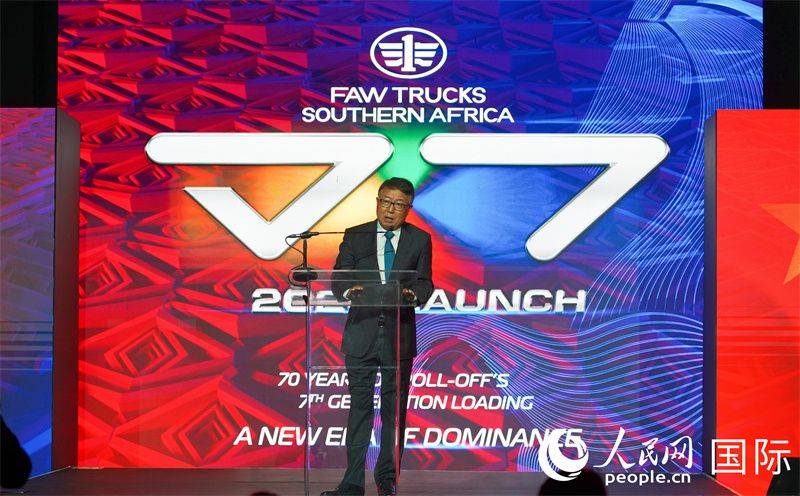
The “one zone” initiative at the national level provides a clear road map and policy dividend for businesses to go to sea. The president of the free board, li sheng, has made it clear that he wants to seize the development opportunities of china and indonesia to build a destiny community. In south africa, the emancipation of the j7 listing was identified as a key initiative for “implementing a high-level national open-door strategy”. This provides top-level design support and endorsement to enterprises。
At the same time, a steam release itself has issued a clear strategy for internationalization of the sprint2030, with a quantified target of 180,000, or 36 per cent, of overseas sales by 2030. To achieve this goal, a number of key organizational changes have been undertaken by enterprises:
The judgement of corporate executives is central to strategic transformation. Wang jianwoo, deputy director-general for liberation, stated: “systemization is the path to long-term survival”. This suggests that the shift to localization is not a stopgap measure, but a core strategy based on long-termism and building global competitiveness。
Localized operations have demonstrated significant advantages from the point of view of practical effectiveness and value validation
The success of the south african and indonesian markets provides the strongest evidence of localization strategies。
In south africa, a break-in that entered in 1994 and invested in construction in 2014 resulted in a transition from exports to deep localization. The results are directly reflected in market shares, which reached 18 per cent in 2024 and 19. 8 per cent in 2025, respectively, and ranked first in the local market for two consecutive years。
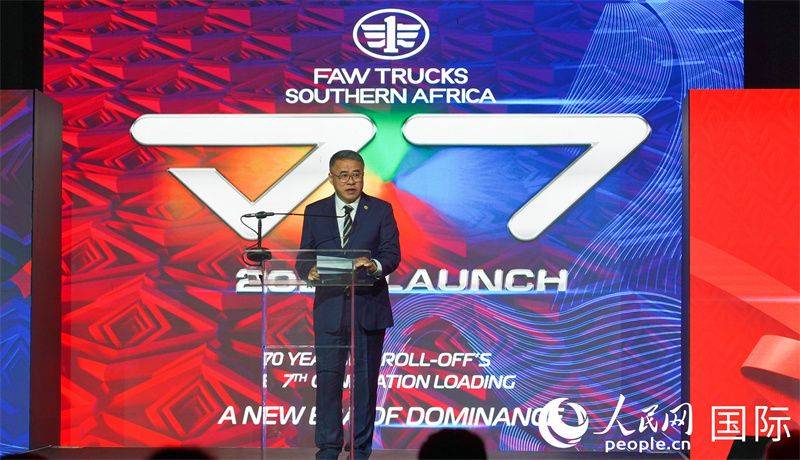
More crucial is the value of users, whose high-end weight card j7 can save users about 750,000 south african rands (approximately rmb 320,000) per year by optimizing long-range transport. Localized production has also led to employment and industrial chain development, which has been recognized by the south african government。
In indonesia, after 20 years of deep tillage, the first-ever release has become the local brand of the best certified, medium-sized road vehicle sales. The precision matching of products with demand was achieved through the establishment of kd plants in partnership with local partners and the development of customized models for special conditions such as oil transport in indonesia。
In contrast to simple export patterns, the advantages of localized operations are clear:
Integrated judgement: qualitative changes from “products going out” to “system going out”
In conclusion, the internationalization of a wave of liberation towards localization is a rational decision made by a combination of external pressures, internal strategies and proven successful paths. It is not a simple paradigm switch, but rather an upturn from “trade thinking” to “industrial thinking”。
From a single product output, upgrade to a localization of the whole value chain covering r & d, production, marketing, services, supply chains。
The central logic behind this is that sustainable growth and brand premiums can only be achieved in global commercial car market competition, especially in response to the centuries-old barriers accumulated by the giants of europe and the united states and the complex and changing regulatory environment of emerging markets, through deep integration into the local economy and social fabric and the building of systemic capacities that are difficult to replicate。
As a result, the shift towards liberalization provides a model for china’s high-end manufacturing industry to go out to sea: globalization is not simply a marketing map expansion, but a deep construction of localized survival and growth。