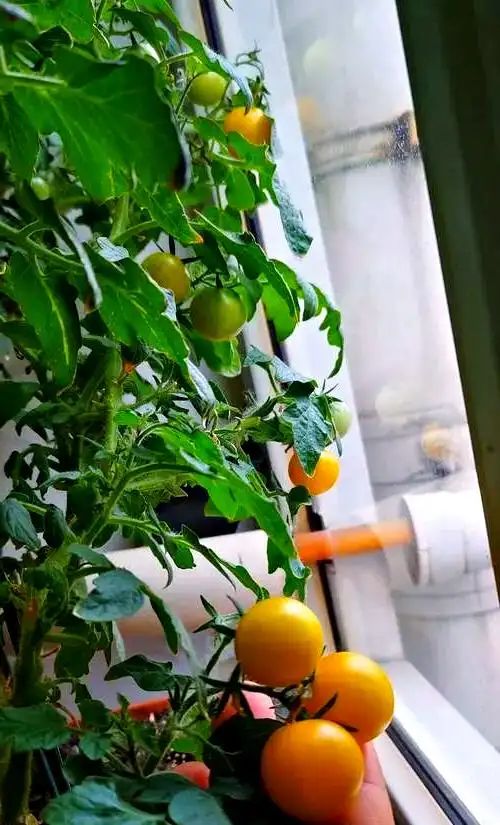
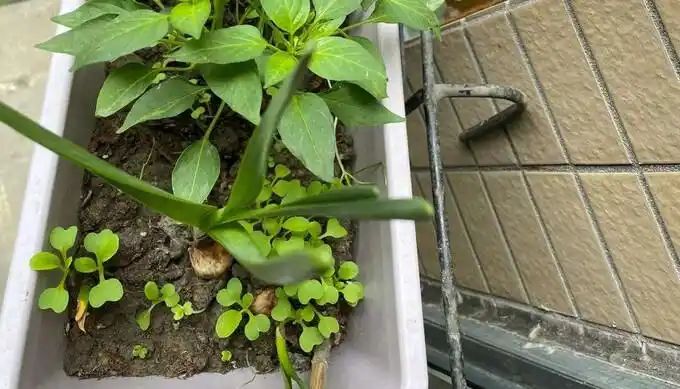
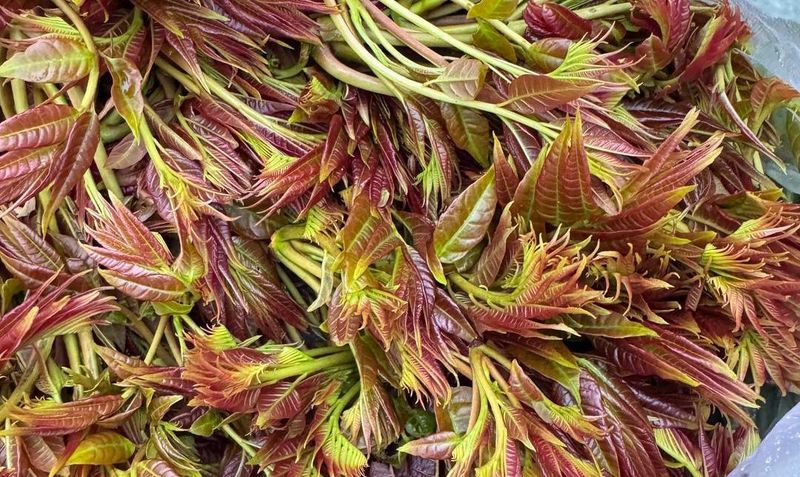
“as a result of growing beans, the oscillating horses could not die in the flowers, they could only add pesticides over and over again, fearing that agricultural residues could not be sold over and over, but also painfully costly; now, using new technologies such as `spray, shake, and suck', chemical pesticides are half as much used, and soybeans are overloaded with `green control' labels, at a price 20% higher than previously. The owner of the vegetable base of the bogus company in tianjin city, while operating a suction machine to clean up the flowers in the field, counted the changes brought about by green control techniques。
In recent days, experts from the agricultural rural commission of tianjin city organized an on-site inspection of the green control project for the soybeans, herbs and celery “three-trees” pests and diseases of the city agricultural institute, which the group agreed to adopt. Following the validation of multiple scenes in wuqing, bao chiang and shizuhai, the “three dishes” collected at the project demonstration site were used with zero chemical pesticides, and monthly district-level spot checks were conducted without agricultural residues, marking a breakthrough in the green control of priority vegetables by tianjin and providing a practical sample for the implementation of the twin deployments of the ministry of agriculture and rural women's “best foods” conservation and agricultural disability management。
Targeting hard: breaking the pains of table owners
The pest control of these three vegetables has long been a problem for farmers. “the selection of these three varieties as the focus of green prevention and control is precisely because they are `problemed and wide-ranging', directly related to table safety and sustainable agricultural development.” liu bea ming, director of the municipal agricultural institute, presented。
The problem with bean beans is that, during the same period, conventional pesticides cannot penetrate the petals in pests such as parrots, and some growers are forced to increase the amount of drugs to create the risk of agricultural disability; beryllium is a victim of larvae, which larvae in the soil eats the runners, and the chemical rooting is not effective, leading to a vicious circle of “increased drug use — increased resistance”; the main problem in celery production is the cotrimoxosis of the root disease, the complexity of the pathogen and the long duration of the incubation, which, in the event of an outbreak, results in large areas of scavengers, often leading to extinction。
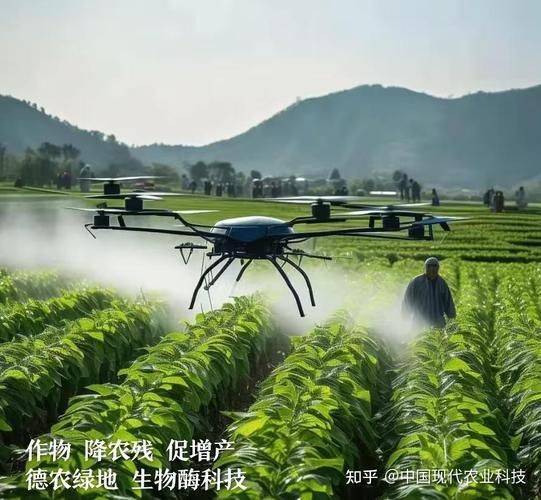
In june 2025, tianjin launched the green control project for key vegetable varieties, which explicitly establishes demonstration points in three locations, with the goal of reducing the use of chemical agents by 10 to 50 per cent and creating exclusive technical norms to keep the “three vegetables” both productive and safe.” our central idea is to "a key to a lock" and to form a dedicated technical team to conduct precision clearances for each vegetable's pest properties." according to liu, the project establishes a synergy mechanism for “government guidance, scientific support, business participation and farmers' benefits” to ensure that technological research and development fit into production。
Field innovation: three techniques to recast planting logic
At 7:00 a. M., the bovine vegetation base, the fog's not over. The bean vines, the pink petals falling, were then driven by a suction machine, and the flowers were taken away. “this is our technique of `jet, shake, suck-triple,' specializing in the practice of `stealing up day and night, hiding flowers'.” liang peng, head of the technical department for the prevention and control of beans and deputy director of the agricultural insect research unit of the municipal agricultural institute for agricultural research, was confined to the field to explain the situation。
The innovation in this technology lies in precision control of the pattern of pests and pests: the application of the green fungus cqma421 microbial agent before the flower season, which pre-presses the base number of parrots; and the swaying of the vines by 7 a. M., causing the flowers to fall off and the flowers to be removed from their source by a suction machine. " green fungi is a parasite in insects that is not toxic to human animals and crops, but is chemically pesticide-like and highly effective insecticidal activity and has a long lifespan.” leung peng described a 60 per cent reduction in the incidence of bean disease and pests at the demonstration sites and a significant reduction in the use of chemical pesticides, combined with physical barriers in the 60 worm net sheds。
In the wuqing district, the anti-verbicide network in the cabbage field became a unique landscape. “the former rooting with chemical agents cost $560 million for an acre of land, and the soil is over 2,000 pounds of cauliflower acre production. The head of the farm pointed to the 80 worms in the ground and said that the anti-worm nets were now being prepared within two hours of harvesting using the “post-repeated net + micro-organism” technique, with the edges plunging to more than 10 centimetres, blocking the path of the vermin to spawning, and spreading the fungus sprouts to improve the soil。
"this technology seems simple, but it solves the big problem." mr. Zou deok-yu, head of the technical department for the prevention and control of conservancy and head of the insect biological research unit of the municipal agricultural institute, described the team's repeated tests of overturning time and the number of anti-worm nets, which resulted in the determination of the parameters of the “emergence of extinction, 80 worm prevention network” in conjunction with the 3-body control of the thin fly of the natural insect insects — insect predators the maggots, the larvae, can feed more than 200 larvae per day in the soil, creating a “preventive, integrated treatment” closed ring. Today, farm acre production has increased by 500-1,000 pounds, the cost of medicines has been reduced by 200-300 dollars, and the price has been increased by more than 30 per cent with the advantage of zero agricultural residues。
In response to the problem of celery root decay, the technical team began with soil to construct a “sterilization + rehabilitation + prevention” system. “we first identify the pathogens and disease patterns of the root causes of the disease and find that planting after the end of september will be effective in reducing the incidence of celery roots.” the director of the celery prevention and control technology and the technical manager of the unit for research on the diseases of shrimp plants at the municipal agricultural institutes have been given a presentation on the use of biobacterial agents to supplement the useful micro-organisms for the suppression of pathogens, while optimizing temperature management and cutting the spread of the disease from its source. There has been a significant reduction in the death of celery at the demonstration point, an effective mitigation of obstacles and a significant increase in acre efficiency。
Science and technology empowerment: from field landing to industrial upgrading
"technology works. The grower says so." according to liu, the project establishes a three-tier mechanism for “laboratory r & d - demonstration site testing - field extension” to ensure that scientific and technological results are available, operational and effective. Laboratory focus production pain sites conduct basic research to address “technical feasibility”; demonstration sites perform field validation and fine-tuning of technologies to make the process more “ground-to-ground”; and finally, mature technologies are channelled to farmers through agricultural extension stations, cooperatives, etc。
In order to enable growers to quickly master technology, the team developed three green-control technical protocols for vegetables, which were designed to sequence key measures such as agricultural control, physical control and biological control in order of planting, so as to “see-and-see” operations. More popular is the “field classroom”: before planting the key nodes, technical directors such as leung, zou deok-yu and goe-seok will come directly into the shed to present the operational points on the ground; farmers will encounter problems and will be able to contact specialists on mobile phones at any time, and the problems will be addressed as a case in follow-up training. In addition, the range of technological radiation has continued to expand through open classes such as “zinko support farmers”。
The director of the zirqa family farm has now become a “technical promoter” and has led to the adoption of new technologies for the cultivation of more than 10 beryllows in the surrounding area and over 300 acres of beryllium. “before afraid of technical complexity, now do it with director zou, so that the nets can be laid and the fungus distributed clearly, the costs are down and the income is high, and everyone is willing to try.” he said that the intensive prevention and control model addressed the supply of materials, and that microbicides and anti-worm nets were procured and distributed by cooperatives in an integrated manner to ensure quality and reduce costs。
Sales continue to climb after the “green-control” labeled direct supply of beans at the bopo vegetable base. "consumers now buy vegetables, with safety paramount." according to the director of the base, green food certification is being actively announced and an autonomous brand is being developed using the technical advantages developed by the liang peng team. According to statistics, since the project's implementation, more than 500 acres of vegetable growing around the area have been driven by green control techniques that have resulted in replicable and replicable models of tianjin。
“the successful application of the `three dishes' green control technology has not only addressed the mono-cropping challenge, but has provided the idea of upgrading the vegetable industry in more northern facilities.” researcher xu jianpo, a receiving and inspection expert, assessed that the technology took due account of the climate characteristics of the north, and demonstrated that it was more adaptive in its extension — the “triple” technology of the liang team could be streamlined through the installation of vegetables in the north, the zou deokyu team's cauliflower control techniques could be applied in the north and south of china, and the gore team's celery root disease prevention and control model could be used as a model for linking vegetables。
The next step, as indicated by liu, will be to expand the dissemination of green prevention and control technologies and to increase the participation of farmers in green farming through policy support, technical training and material security. At the same time, the three-way mechanism of technology + policy + services has been continuously refined to promote deeper cooperation between scientific research institutions and agribusiness and cooperatives, and to optimize the technological achievements of experts such as leung, zou deokyu and goere, with a view to reducing application costs and making green controls the “coding” for quality development of the vegetable industry。
The green revolution of tianjin's “three vegetables” is a vivid picture of technological renewal in rural areas. Growing numbers of vegetables have achieved “zero farming, high quality and good returns” through green control techniques, not only protecting people's table security, but also giving growers a taste of the sweets of ecological cultivation and a lasting impetus to sustainable agricultural development. As one old grower said: “the land that was planted was based on `medicine' and now on `technologies' is the way to secure the harvest and protect the land.”