"sir, your computer, though a bit bad, is not a malfunction." mr. Rue was very upset by what he said。
At the end of march this year, mr. Roux purchased a computer with a thought laptop and in may this year found two black spots on the computer screen, in the middle and upper right corner of the screen. Mr. Lu contacted a prospective after-saleser and was told that “less than three bad points cannot be secured”. According to mr. Roux, after the sale, two documents on computer product norms were thrown out of the gb/t 9813-2000 generic code for microcomputers and sj/t11292-2016 general code for lcd displays, which were used as a basis for the non-facility of screen failure and led to a dispute between the parties。
In response to mr. Lu's comments, consumer report sent an interview letter to the consortium, where the relevant head of the group's public relations department indicated that it would reflect the situation to the after-sales department and help users resolve problems. The group had not responded to questions about the basis for the initial refusal of the united nations after-sales personnel and whether the consortium would improve after-sales safeguards related to computer screens。
Two months of new computer screen damage
On 27 march this year, mr. Lu purchased a computer linked to the thinkpad e15 laptop. On 15 may, mr. Roux discovered two black spots on the computer screen and questioned the screen for failure。
“the computer is used mainly in the office and has not fallen, and it does not know why the screen will have black spots.” mr. Lu indicates. As can be seen from the photographs provided by mr. Lu, the two black spots appear in the middle of the screen and in the upper right corner. Although the black dots are small in size, they can be seen if the computer is turned on。


Mr. Lu's computer screen has two black spots
"there are two black dots on this new computer screen, which are very uncomfortable." in order to understand the reasons for the black spots on the screen, mr. Lu sent his computer to a local after-sale centre for testing. The test results showed that mr. Lu's computer looks good and that two negative points did occur on the screen, although no clear cause of failure was detected. At the same time, mr. Roux's warranty request was rejected by the isp。
“the staff member of the organization told me that my computer screen was not three bad enough to be maintained according to the relevant national and industry standards.” mr. Lu does not agree with such an explanation. Mr. Lu then made several calls to the official customer service call, one of which responded in the same way as the employee who sold the back door: “sir, your computer, although it was bad, was not a malfunction”
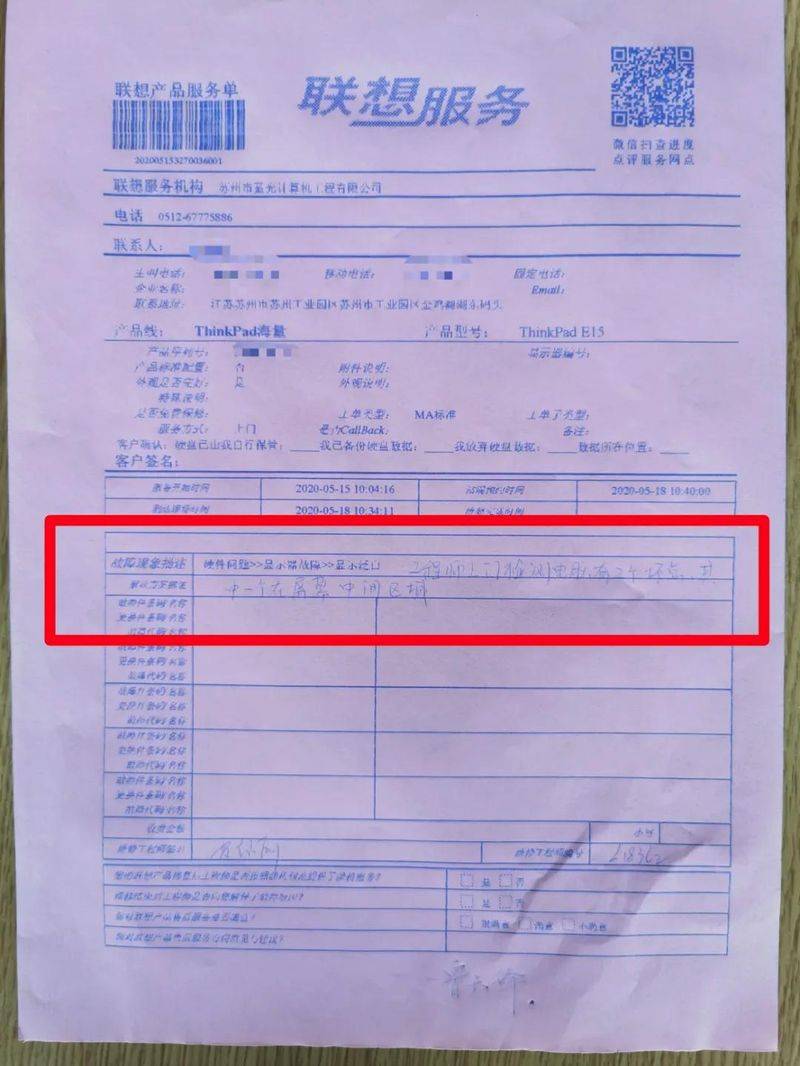
Mr. Lu's post-sale inspection documents
“the black spots on newly purchased computer screens should be covered by warranties and it is not clear why after-sales services cannot be provided.” in mr. Roux's view, in cases where improper human use caused a screen failure, the conjecture could be explained directly, rather than directly denied warranty without clear reasons for failure。
Country and industry standard dispute over bad computer screens
In fact, the issue at issue focused on the problems mr. Roux encountered and whether they fell within the scope of the determination of screen failure in national and industry standards for computer products。
The national and industry standards for computer products mentioned to mr. Roux by those who wish to sell them are the general guidelines for microcomputers, gb/t 9813-2000, developed in 2000, and the general guidelines for computer crystal displays, sj/t11292-2016, published and implemented in 2016。
For computer screens with pixels of 1024 x 768, there are black spots of “three points and more than three points” or continuous black spots of less than 5 mm in order to be considered as faulty。
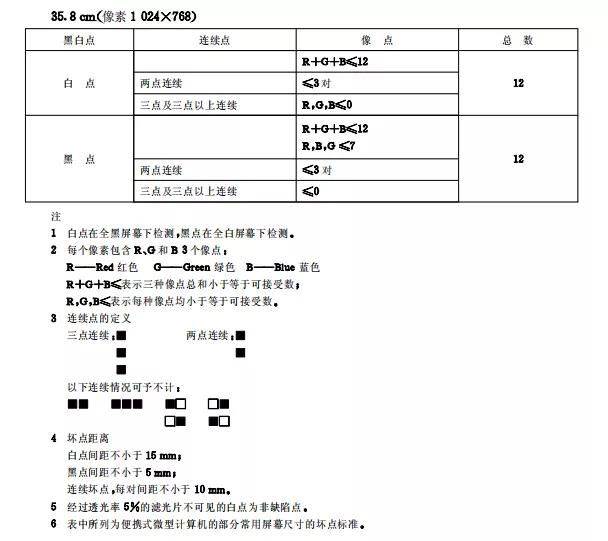
A description of the negatives on the screen in the general computer code
In addition, the general instructions for computer lcd displays set out the pixel defects level of the computer lcd screen, in which it is also specified that at least two black dots are present before the deficiency standard is met with regard to black spots on the screen。
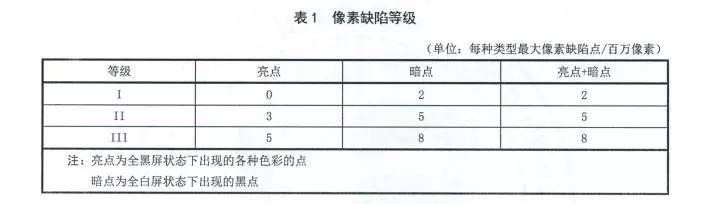
Description of pixel defects in the general instructions for computer lcd displays
Computer product engineers told consumer reporting that the two standards were originally designed to clarify the failure standards of computer products and, in essence, to safeguard both consumer and business interests。
At the same time, however, the engineers said: “people now work, live and learn on computers, computer products are being updated very quickly, consumer requirements for product quality and use experience are increasing, and many national and industry standards on the quality of computer products are lagging”
In an interview with consumer report, the senior partner of yingko (guangzhou) law office in beijing noted that the two standard documents on computer products mentioned above had been drafted mostly by computer-producing enterprises. Although the above-mentioned units are more specialized in the determination of the relevant technical standards, there is also a greater tendency to assert their own interests. From the perspective of the rapidly growing computer industry, there is already some lag and standards for the products need to be updated in a timely manner in order to fully safeguard the legitimate interests of consumers。
“what national standards set us out to do, i don't have a problem with that, but the newly purchased computer has a malfunction, and it is assumed that it is responsible for quality. In the first place, it is important to improve the quality of the product, to ensure that the screen does not fail and to provide the corresponding after-sales service, rather than to use the various rules that consumers do not know to set aside their responsibilities in the event of a breakdown.” mr. Lu said。
In response to mr. Lu's comments, consumer report sent an interview letter to the consortium, where the relevant head of the group's public relations department indicated that it would reflect the situation to the after-sales department and help users resolve problems. The consortium did not respond to questions about the basis for the initial refusal of the united nations to provide warranty and whether the consortium would improve after-sales safeguards associated with computer screens。
By the time of the release, with the help of the consumer report, mr. Roux had indicated that he had agreed to replace his computer free of charge. However, national and industry standard disputes over the bad aspects of computer screens continue, and better after-sales services for consumers should be of interest to the enterprises concerned. There are more industry standards and regulations that are outdated, and their improvement requires the participation of all in order to fully safeguard the legitimate rights and interests of consumers。