A seven-dollar bottle of song's grapefruit, the founder of which justified its pricing: “a grapefruit fruit is sold to 7 euros in europe”. This phrase, like a fine marketing curtain, opens a narrative about “precious raw materials” and “high value” in front of consumers。
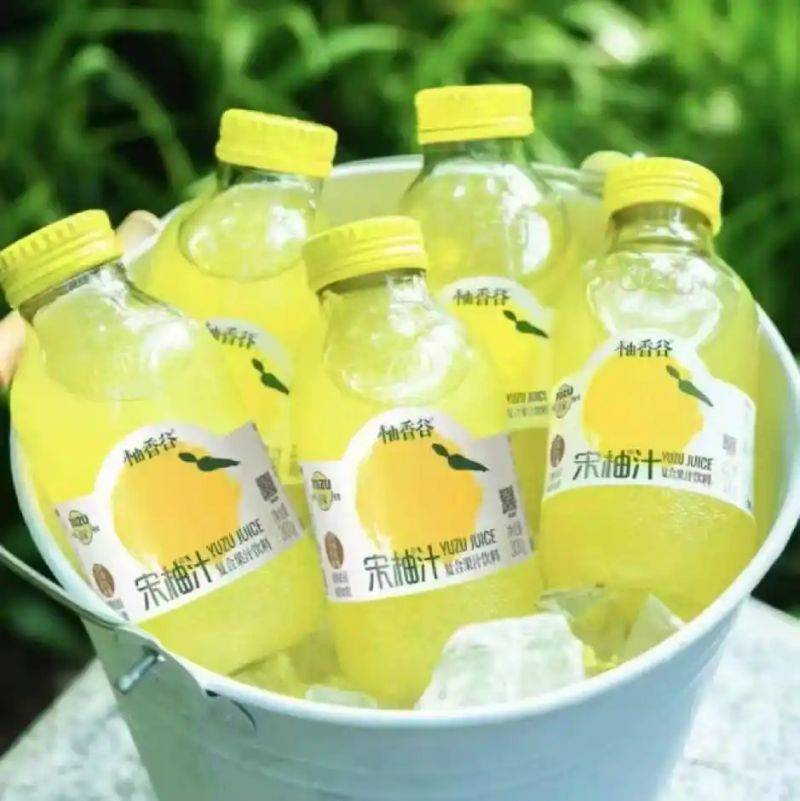
However, what do we find when we look closely at the billion-dollar net drinks that we sell this year? In a bottle of 300 grams of somfruit, only 6. 3 grams of real grapefruit and 1. 8 grams of grapefruit combined, only 2. 7 per cent of the total weight. In other words, consumers spend money on pure juice and buy a bottle of grapefruit。
What is the business logic behind the pricing of this bottle? From cost dismantling to premium analysis, from brand positioning to consumer psychology, we have come together to unlock the sugar and water business of red drinks。
A price-fixing puzzle between a seven-euro grapefruit and a bottle of drinks
“prices are determined by cost and brand positioning.” song wei, the founder of yuzu valley, said so in response to the pricing challenge. The central argument he gave was the high cost of the raw materials: “a grapefruit is sold to 7 euros in europe”. This sentence precisely strikes consumer recognition of value — high-end raw materials should naturally correspond to high-end prices。
But is that true? Let's figure it out。
According to the product indication information, the amount of grapefruit added per kilogram is 21 grams. Even on the basis of the “one grapefruit 7 euro” claimed by the founder, the cost per gram of grapefruit raw material is approximately €0. 047-0. 07, or rm$ 0. 37-0. 55, given that the weight of a grapefruit fruit is about 100-150 grams。
A bottle of 300 grams of grapefruit contains 6. 3 grams, which means that the cost is between $1. 35 and 2. 31. Even when added to the 1. 8 grams of grapefruit (which are usually far below the price of imported grapefruit), the cost of raw material for the whole bottle of beverages may be only in the 2-3 mesh。
However, the market retail price for song juice is generally around $7. So the question arises: can a "7 euros grapefruit" really support the high premium for a bottle of drinks? Or is this just a “material story” used in net red drinks to distract consumers from the nature of the product
Cost-dismantling -- where's the money for a bottle of song's grapefruit
Source cost: how low is the share of grapefruit
Let us first look at the “soul” of this drink — the grapefruit component. The product distribution table shows 21 g/kg for grapefruit juice and 6 g/kg for grapefruit juice, for a total of 27 g/kg. What does that mean
In 300 grams of beverages each, the actual amount of the grapefruit is 6. 3 grams, the amount of the grapefruit is 1. 8 grams and the total amount of the grapefruit is 8. 1 grams. This represents only 2. 7 per cent. As required by the national standard gb/t31121-2014 " fruit and vegetable juices and their beverages " , complex juice beverages should contain 10% juice. In order to meet this standard, song juice is actually a measure of the content of the juice by adding apple concentrate。
According to the distribution table analysis, the addition of apple juice may contribute more than 7 per cent of the juice to meet the 10 per cent total juice requirement. This means that this beverage, named after the grapefruit, actually comes from the grapefruit and consists of less than one third of the juice, with more than 70% of the juice coming from the apple juice。
Inhibited cost main: sugar, water and additives
The top three rankings on the distribution table are water, fruit and lusp syrup and white sugar. These three components constitute the bulk of the beverage and the relatively low-cost component of the structure。
As a commonly used sweetener, the market price is usually between rmb 4700 and rmb 5800 per ton, or about rmb 4. 7 - 5. 8 per kilogram. Prices of white sugar are relatively higher, but still fall within the base material category. The cost of water is almost negligible。
In contrast, the ration table for the other main game in the equivalent valley is more interesting. The formulation, which is shown as water, rhesus sugar, carbon dioxide, lemon acid, sodium carbonate, salt for consumption (sea salt), sugar trichlorfon, fragrance for consumption, is only marked below the packaging as “the core raw material of perfume: irritation (yuzu) coolly polished oil”. This means that this "fruit soda" does not actually contain any grapefruit juice composition, but only simulates the grapefruit flavor through perfume。
Packaging and marketing: “doorside expenses” for internet red drinks
Packaging and marketing have often become an integral part of the cost structure for web-based red products such as grapefruit。
The first is the cost of packaging. The use of bottled bottles for simulgar also implies higher transport costs, which are higher in cost and weight than the normal pet plastic bottle. Additional design inputs are also required for label design and bottle-shaped art sense。
The second is marketing promotion costs. The nationwide advertising, social media promotion, kol collaboration, etc. Of the song juice constitute the “face-to-face expenses” of the brand. According to the china beverage network red marketing strategy and the kol cooperation model report, the size of the chinese network marketing market in 2022 exceeded rmb 800 billion, of which the beverage industry accounted for about 15 per cent. The costs of co-operation vary significantly between the head and the waist, but this part of the total is important in the cost structure of net red drinks。
How do cost structures support “high-end narratives”
Taken together, the cost structure of song juice is characterized by a “low share of the cost of raw materials and a negative major cost of packaging and marketing”。
Through the story-packing of “high-priced raw materials”, brands have succeeded in diverting consumer attention from the real content of products. The actual grapefruit content was only 2. 7 per cent, but the high-end image of the product was built through the narrative “7 euros per grapefruit”. At the same time, low-cost raw materials such as apple concentrate juice and sugar water form the bulk of the product, while “facework” such as packaging, marketing and so forth are key factors supporting the premium。
This “low-cost raw materials + high-price story” profit model is not uncommon in the net red beverage industry. Through cost transfer and narrative construction, products are able to gain premium space in competition over feedstock values。
Price analysis - how high is the “identity tax” for net red drinks
Horizontal comparison: price ranges for the same type of mixed juice beverage
The retail price of 300 g of song juice is generally around $7, or approximately $2. 33 per 100 ml unit. What is this price in the juice market
Let's make a horizontal comparison. For the nfc (non-enrichment reduction) series of fruit juices, the price of 300 ml is usually between $8 and $12, i. E. $2. 67-4 per 100 ml. The daily series of juices is usually priced at $10-15 per bottle (300-450 ml), or approximately $2. 2-3. 33 per 100 ml。
It needs to be noted, however, that these products are usually 100 per cent pure or nfc juice, which is much higher than song juice. The same product is a composite juice beverage, such as some branded mixed juice, which is usually at a price of $1. 67-2. 67 per 100 ml for 300 ml。
From this perspective, it is true that the price of song juice is higher than the market average. This premium is even more evident, especially when considering that its actual grapefruit content is only 2. 7 per cent。
Composition of the net red tax: emotional premia and social currency
A large part of the high premium for grapefruit is the “net red tax” paid by consumers for “social currency”。
In the age of social media, beverages are no longer merely a drink of thirst, but also identity tags and social tools. A bottle of well-designed, uniquely packaged beverages can be used as cardboard material in the circle of friends, reflecting consumer taste and fashion. This “high-end sense” and “social attributes” have been successfully created through the northern wind and very simple packaging designs。
Strategies such as time-bound marketing, co-financing and hunger marketing have further pushed up product premiums. According to the information, a combination of beverage brands and phenomenon-level ips can sometimes create miracles of sale. Although a large-scale joint operation has not yet been seen in song juice, both the “scarce sense” and the “uniqueness” implicit in its marketing strategy are elements supporting the premium。
The channel adds: the pricing logic from the grass growing on the line to the convenience store below the line
The layout of song's juice also affects the final sale price. Products are sold at higher prices in places such as hotels, reflecting the logic of channeling。
End-sale outlets such as convenience stores, supermarkets and so forth usually offer a certain price increase for commodities. For products with a “net-red” lightring such as song juice, the channel may be more open to higher import prices, as consumers are willing to pay a premium for them。
Each ring of the entire consumption chain adds value to the product from seeding on to below the line. Online marketing builds awareness and expectations, while offline purchases meet immediate needs and social displays. This whole-channel layout allows song juice to maintain its “high end” positioning in different scenarios。
Brand positioning trap - “high-end image” versus “sweet nature”
Naming and advertising: how to create health hallucinations with the word "fruit"
The name "song jeong juice" itself contains a clever marketing strategy. The use of the word "fruit" reminds consumers of the fragrance and health properties of the grapefruit. In the commercial, the words “fruit! Fruit。
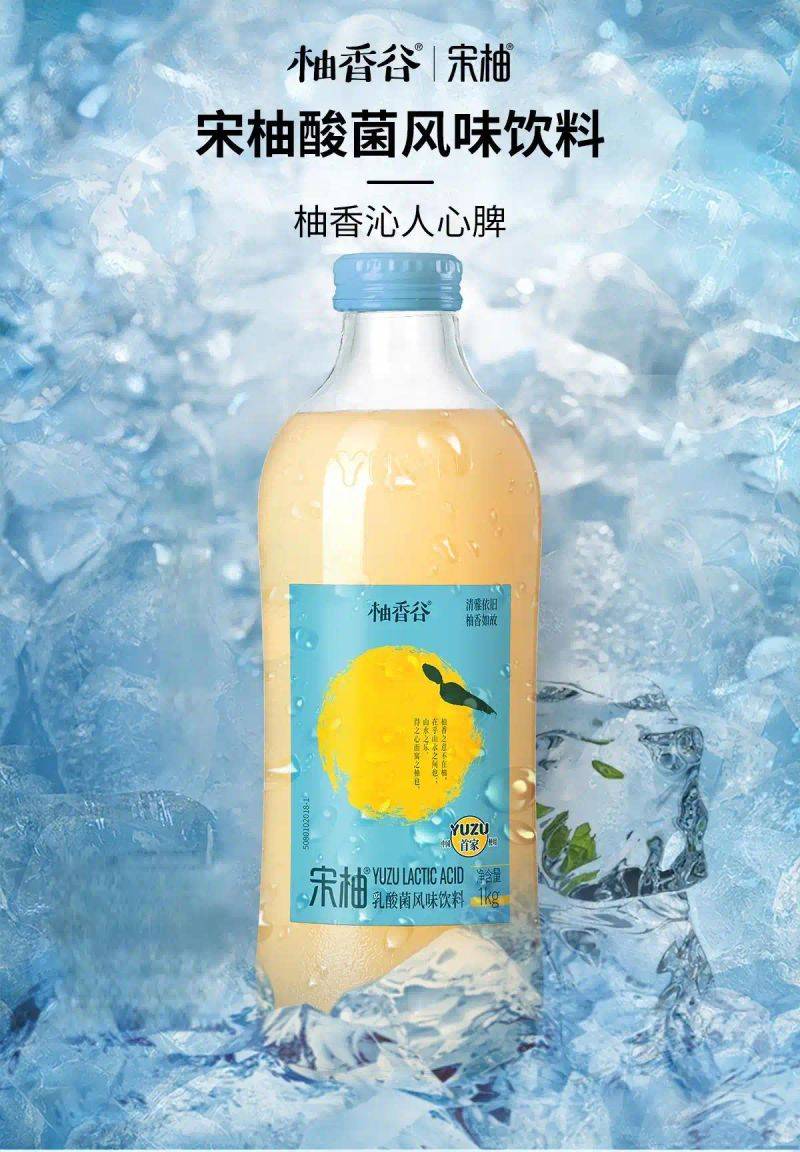
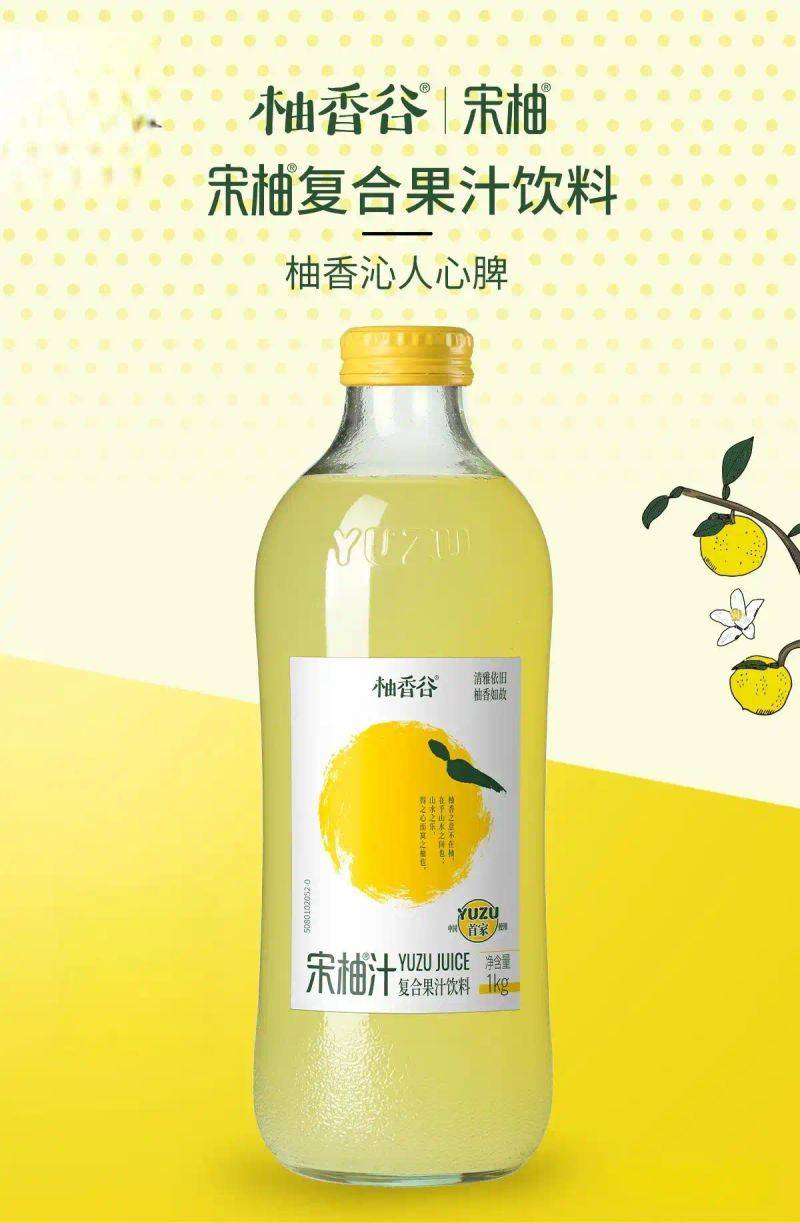
The packaging of products is based on the northern wind and very simple design, which further creates a “natural” “pure” visual perception. This systematic design, from name to packaging to advertising, co-builds the consumer's cognitive framework: this is a healthy drink with grapefruit as its primary input。
However, when consumers look at the ingredients table, the perception gap arises. Water, fruit lusp syrup, white sugar are in the top three ranks, while the true grapefruit composition is in the fourth and sixth places. This contrast is the manifestation of a conflict between brand positioning and actual composition。
Table game: hide sugar and highlight the natural key word
In the beverage industry, it is a matter of learning how to label components。
Song juice uses the specialized term “polymers” in the distribution table, rather than “white sugar”, which is more familiar to consumers. Although both are sugar, the “polymers” sound more “technically” and, to some extent, dilute the direct association of “sugar”。
At the same time, specific additions of grapefruit (yuzu) and grapefruit are specifically indicated in the fabric table, which meets the requirements of the regulations, but may be interpreted in the marketing context as a manifestation of “transparent composition”. In fact, 2. 1 per cent and 0. 6 per cent of additions are far from what consumers expect from “fruit juice”。
The combination of aroma and trace juices together build the “real taste” of the product. The branding has resulted in the simulation of a lavish grapefruit flavor with a small amount of grapefruit and a proper amount of perfume. This technology is not uncommon in the food industry, but may be controversial in products where “natural” “health” is the selling point。
Conflict mask: how does the brand respond when consumers discover the truth
In the face of consumer questions about the nature of sugar and water, brand responses are interesting。
In its information note, the graffiti valley emphasized that “the product, yuzu, is 21 g/kg for fruit and meat, and 6 g/kg for fruit and fruit, which is a mixture of juice drinks”. While recognizing additions, this expression emphasizes the class attributes of “complex juice beverages” and attempts to explain the reasonableness of the product within the regulatory framework。
The founder of the video, song wei, responded from a technical point of view: “the addition of more than 20 grams of grapefruit raw materials per kg of product is not intended to save costs, and the use of more drinks is not possible, because the raisins are bitter and the raisins are sour, so the material needs to be allocated, in full compliance with national laws and regulations.”
This response strategy, from the emphasis on “compatibility with national standards” to the interpretation of “favouring” needs, actually shifts consumer challenges from “component authenticity” to “technical reasonableness”。
However, when branding is more intense, different strategies are adopted. It was reported that consumers had received a lawyer's letter from the lawyer's office in the gorge of yushu valley, who had read the recipe form and expressed their personal views, stating that its presentation was distorted and derogatory. This practice, while it may silence negative voices in the short term, may in the long run trigger even greater rhetoric。
The nature of the internet red beverage business and consumer rationality have returned
The case of song juice reveals a common pattern in the internet red beverage industry: product pricing is not largely determined by the value of raw materials, but is driven by a “brand story + social attributes + channel strategy”。
In terms of cost structure, the combination of low-cost raw materials (sugar water, basic juice) and high-price marketing (packaging design, advertising) constitutes a typical “low-cost, high-price premium” model. In terms of marketing strategies, it is common practice in the industry to package common raw materials into high-end products through carefully constructed brand narratives. Consumer premiums for “social currency” and “identity labels” tend to outperform the functional value of the product itself。
This model is not unique to song's grapefruit. Similar cases are not uncommon in the beverage market. Names such as “porn eggs” in the mountains, “hand-to-face”, also take advantage of consumer cognitive deviations and emotional associations。
For consumers, how can rational choices be made in this complex information environment
First, it's a habit to look at the ingredients table. The distribution tables are arranged in order of content from high to low, and the top three components tend to determine the nature of the product. When water, syrup and white sugar are seen in the front row, the “natural” “health” label of the product should be monitored。
Second, focus on unit prices rather than total prices. A horizontal comparison of the prices calculated per 100 ml provides a clearer picture of the true value of the product. If the actual content is valued at $2-3 for a bottle of beverage of $7, the premium is paid for the brand story。
Third, a distinction is made between “real needs” and “social needs”. Buying a bottle of drinks to cure thirst, or taking pictures and cards? In the case of the former, components and value for money are more important than in the case of the latter; in the case of the latter, the premium paid for packaging and design is not excessive, but it needs to be clear what it is that it pays。
Finally, critical thinking about marketing information is maintained. When brands emphasize “precious raw materials”, it may be asked: what is the share of raw materials in the final product? When the brand claims “health”, look closely at the content of the sugar. What are the additives
The proliferation of red drinks reflects changes in the consumer market and the evolution of marketing techniques. However sophisticated the marketing method, the true value of the product eventually reverts to its composition, taste and function. Consumer awakening and rational return may be important forces for the healthy development of the industry。
Do you think the drinks are expensive? What factors affect your purchasing decisions most