(iii) key issues facing the pricing of multiple characteristics of enterprise products
1. Pricing theory is not adapted to current multi-characteristic enterprise product pricing needs
Products and markets are inextricably linked, and the production of products is designed to meet market demand, while changes in the market environment affect the production and marketing of products, etc. In recent years, there has been a growing number of start-ups and increasing competition in markets, placing higher demands on product innovation. In addition, strategic consumers in the market are concerned not only with the short-term benefits that products can bring but also with their future profitability. The outbreak of the new coronary epidemic has made businesses more competitive and consumer consumption more prudent. In competitions between businesses and consumers, pricing issues often lead to the detriment of one or both parties ' interests, making transactions unsustainable, and therefore enterprises need to strike a balance between profits and risks and to make scientifically sound pricing of products. But different products apply different pricing theories. Currently, the commonly used pricing theories include economic efficiency, consumer selection and value theory, but they are simply based on a product- or market-based perspective and do not combine them into a systematic study that is not adapted to the current demand for multi-characterized enterprise product pricing。
2. Increased complexity of impact factors for multi-identified enterprise product pricing
The multiple characteristics of enterprise products are the requirements for innovation in the products of the enterprise and the demands of the market. The multiplicity of characteristics of the product has caused some difficulties in the pricing of the product, making it more difficult. In addition, the outbreak of new outbreaks has made consumer consumption more rational and strategic. The multiplicity of enterprise products and the rapid changes in consumer markets have led to an increase in the complexity of the factors influencing product pricing. The main factors affecting the pricing of multi-characterized enterprise products are production supply, consumer demand, circulation and investment, as shown in figure 1. 1。
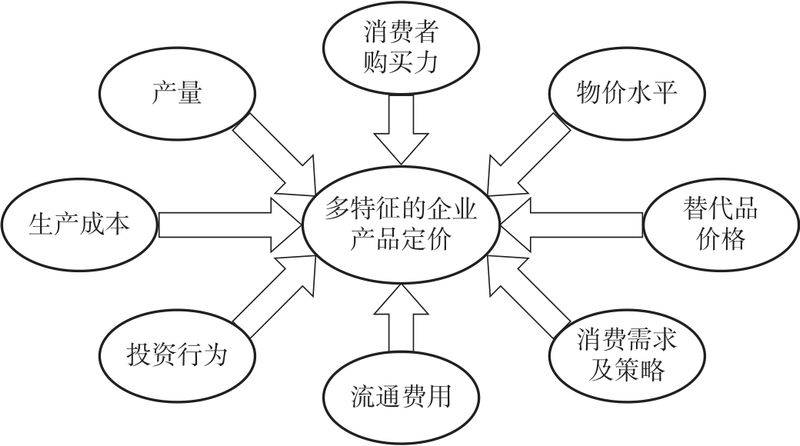
Figure 1. 1 multi-characterized factors affecting the pricing of enterprise products
(1) factors affecting the pricing of products of enterprises with multiple characteristics in the production supply perspective
The price and quantity of input elements are the determinants of the production cost of the product, and their variations determine the high and low cost of production, which is the main component of the price of the product, and the higher the cost of production, the higher the price of the product, the less the competitiveness of the product. Production costs consist of material and labour costs (fung li, 2016). The production of products is reflected in the scale of their production, which leads to price volatility by influencing market supply and demand. The higher the output, the greater the supply, the lower the product price; the lower the production, the “frequently expensive” price. For ordinary products, production costs are easier to measure, but are more complex and difficult to calculate because of the multifunctionality and properties of a multi-characterization enterprise product。
(2) factors affecting the pricing of products of enterprises with multiple characteristics in the context of consumer demand
Consumer purchasing power influences product prices by influencing product demand. The greater the purchasing power of consumers, the lower the price sensitivity of products, the higher the acceptance of high-priced products. Price levels reflect the price levels of products, which are commonly measured by cpi. Prices of alternatives affect the demand and price of products. When alternatives are less expensive, people increase their purchases. There are short-sighted and strategic consumers in the market. Short-sighted consumers make purchasing decisions based on current consumer demand and do not take into account the future value of the product; strategic consumers take into account not only the current price of the product, but also the future price of the product, etc., in order to maximize their own benefits. For short-sighted consumers, firm product pricing is easier and does not need to take into account consumers ' transient selection behaviour; for strategic consumers, it is often bought at lower prices, and competition between firms and consumers requires firms to be strategic in product pricing。
(3) factors affecting the pricing of products of enterprises with multiple characteristics from a circulation perspective
Circulation is a bridge between product production and market consumption. The flow of products involves many links and, as the flow chain increases, the cost of the product increases, but this can also generate profits for the main players in the flow chain. The main players in circulation in the market are complex, have different chains of circulation and do not have uniform standards and forms. In general, the simpler the product is produced, the fewer its circulation links and the fewer it involves; the more it becomes, the more it becomes, and the more it becomes, the more it becomes, and the greater the impact on the price of the product by ensuring that its interests are maximized. In addition, different modes of circulation can lead to different costs. Businesses adopt online marketing models, in part because of the reduction of firm fixed-cost inputs; different modes of product delivery generate different transaction costs, such as the need to deliver fresh products in a timely and rapid manner, thus placing higher requirements on the mode of delivery, which intuitively increases the transaction costs of the enterprise。
(4) factors affecting the pricing of products of enterprises with multiple characteristics from an investment perspective
Strategic consumers not only consider the current price of the product, but also focus more on the future price trends of the product and the gains that it can generate, thus there is a certain investment behaviour — buying it when the price of the product is lower, selling it when the price of the product is higher, in order to earn the difference. Moreover, due to the awakening of private financial awareness, consumers have a portion of their idle funds available to invest, and when selecting investment products, they tend to compare the return on investment with the fixed income of banks, thus investing in products with higher returns. The growing variety of investment products in recent years has not only provided investors with more options, but has also given them a boost in investment enthusiasm, so that enterprises should also focus on the needs of strategic consumers and increase the value of investment。
3. Multi-characterized enterprise product pricing methods are not adapted to dynamic and volatile market demand
As product characteristics and the market environment evolve, the intelligence and timeliness of product pricing need to increase. Currently, the pricing of most enterprise products is based on basic pricing based on cost analysis and reasonable profit formation, and prices can be further adjusted in the light of changes in market supply and demand, taking into account the playing relationship between business and consumers. As product functions and attributes become more abundant and production chains become more and more difficult to calculate, especially for products of investment value, the possibility of price bubbles is high. The break-up of price bubbles could lead to a collapse of prices, while traditional pricing methods could not predict risks and adjust pricing. Moreover, the reasonable profits of an enterprise are not determined by the enterprise side, and the pricing of products is subject to market demand, but most enterprises have more subjective and less intelligent factors to influence the pricing of their products. Although enterprises store large amounts of data, they are mainly client browsing and purchase records, which can be used for client analysis and product promotion and are not effectively applied to product pricing. Enterprises adjust their prices to market demand and supply, often after the fact, with some lag and blindness. As a result, multi-characterized enterprise product pricing methods are not adapted to dynamic and volatile market demand, and the introduction and application of smart pricing methods are imperative。