Snowfield's hydroponic vegetables。
The spring returns to the earth and the spring tillage is busy. On 5 may, journalists were informed of the groundbreaking progress in hydroponic techniques at the innovative base of ponytail sashimi seedlings, which has succeeded in achieving a large-scale production of hydroponic vegetables and injecting new scientific and technological energy into the production of spring cultivation。
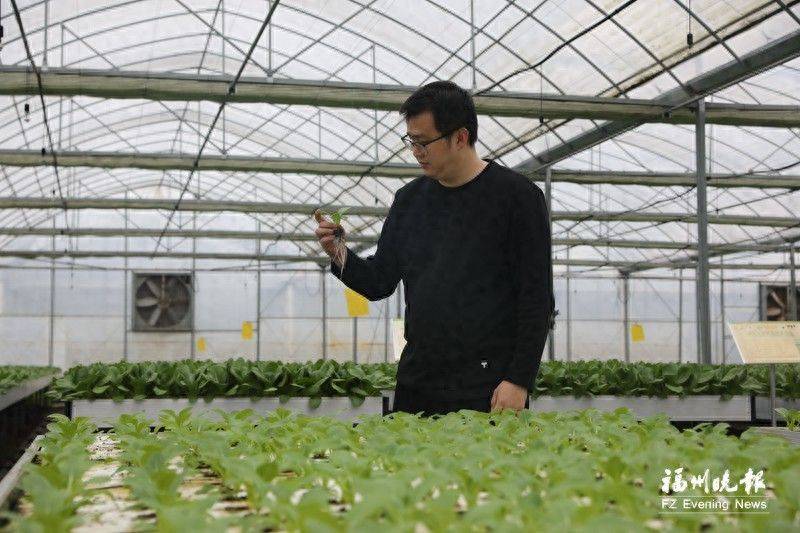
Compared to traditional soil cultivation, snow-based water production not only reduces the planting cycle from around 50 to 25 days, but also yields five to seven times as much as traditional cultivation, with one acre-based capacity equivalent to 5 to 7 acres of traditional cropland. At the same time, hydroponic cultivation has been effective in reducing the impact of diseases and pests through shorter growth cycles and periodic disinfection, and non-pharmaceutical operations have resulted in cost savings as well as quality protection for vegetables, which are favoured by local businesses in fukuzhou。
The base was busy and orderly during the raid. Shanghai-chai, rosa-green lettuce, rosa-red lettuce and fragrance products have been made available in bulk; tomatoes are full of branches and some of the fruits have been collected for sale. Currently, the daily supply of hydroponic vegetables from the base ranges from 2 to 5 tons。
It is known that the snow base is equipped with an advanced hydroponic centralized control system, which combines nutrient control, temperature light control, environmental information gathering, etc., into a digital integrated system, combining international leading technologies such as automated temperature and humidity control, deep-water currents and soilless cultivation, and achieving full-scale intelligent control and rigorous quality control of vegetable production. The base has also autonomously developed and optimized hydroponic technology, reduced the construction cost of the shed by two thirds and addressed core challenges such as water temperature control, which has been kept within the desirable range of 25 to 28 degrees celsius throughout the year。
The base is currently promoting high-efficiency cultivation, such as tomatoes, peppers and short-term green leaves to simplify soilless cultivation and introducing screening of highly resistant, heat-resistant vegetable varieties. (reporter mariqing, correspondent chen xiaoqing, paper / camera)