Aunt lee had been diagnosed with diabetes in the previous months and had been informed that, in addition to hospitalization, chronic diseases were covered by health insurance in outpatient clinics. Aunt lee was happy. But what is the rate of reimbursement for chronic illness? How do you apply? These questions are not clear to aunt li. Recently, in addition to aunt li, a number of insured persons have sent messages to consult on the policy relating to chronic diseases at the xian city clinic, for which reason journalists interviewed the staff of the xian city medical security board for a detailed account。
You can apply for eligibility for chronic illness directly at the point medical institution
How do patients apply for eligibility for chronic diseases? According to the staff of the medical insurance department of the city of xi ' an, those who had been certified as chronically ill prior to 1 january 2021 were directly entitled without having to reapply。
The following are those who apply directly for eligibility for chronic illness in the designated medical institution (i. E. The hospital), including the following: (1) who, after 1 january 2021, was admitted to a fixed hospital in my city at the second level and above, whichever is the time of discharge, apply directly for eligibility for chronic disease in the hospital; and (2) who, after 1 january 2021, is treated for a special type of outpatient disease at my fixed medical institution, can apply directly for eligibility for chronic disease in the hospital by using an outpatient special pathology certificate or file and a copy of the hospital's medical certificate。
Applications for eligibility for chronic diseases in health-care institutions (i. E., at all levels of health-care centres) include the following: (1), those who, by 1 january 2021, were hospitalized in my city's second and above fixed-care facilities, did not apply for eligibility for chronic diseases; (2), those who applied for eligibility for chronic diseases using information on hospitalization in the off-site second and above fixed-care facilities; and (3) those who applied for eligibility for chronic diseases using an outpatient medical record: developmental hormone deficiency in children, phenylketone urea, thyroid hyperactivity, thyroid decomposition, alzheimer's disease in the region, and the absence of in-patient information for patients with the five pathologies, provided copies of outpatient medical records for more than three years, relevant clinical examination reports, laboratory forms (original) and supporting material requiring continuous medication. 4. A review of a disease must be made within three months of the expiration of the entitlement to chronic treatment。
A total of 13 types of reviewed diseases are known, including thyroid decompression, thyroid hyperactivity, epilepsy, violet kidney inflammation, epidemiology (scientific disease), visual nervous atrophy, anomalous syndrome of bone marrow, systematic erythroacne, reduction of muscular mast, toy, chronic active hepatitis, tuberculosis (resistence to multiple drugs) and child growth hormone deficiency. The period of two years (in natural years) after the adoption of a review of a medical determination is subject to a review within three months of the expiry of the period of entitlement, and information on the review by the reviewer is collected by the unit or community and reported to the health-care provider to which the insurance belongs。
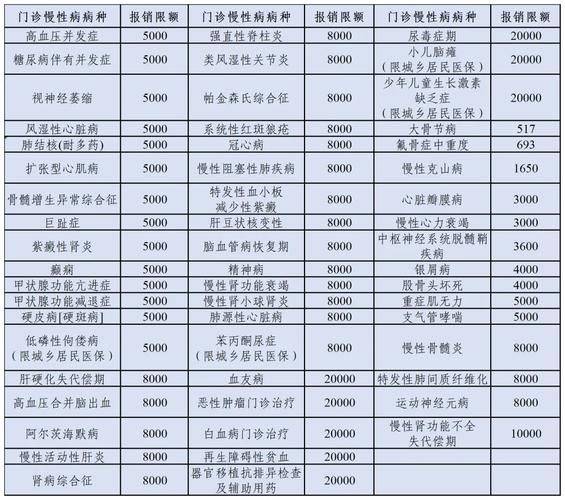
A number of patient consultations have taken place, “do you think it's okay to buy other pathologies for chronic diseases, which now identify only one?” in this regard, staff members stated that, in principle, beneficiaries of chronic diseases could only be reimbursed for medication related to the recognized disease and for examination and treatment (including medication for the identified disease). However, since prior to 2021 the insured could only apply for one disease, during the transitional period of the old and new policies, the coverage could be extended to 44 chronic diseases for which a single patient was found to have had 44 other chronic diseases. However, staff recommended that requests for additional diseases be made during the transition period, so as to avoid compromising the purchase of drugs for other diseases at a later stage。
70 per cent of the cost of the payment line for chronic diseases in urban clinics
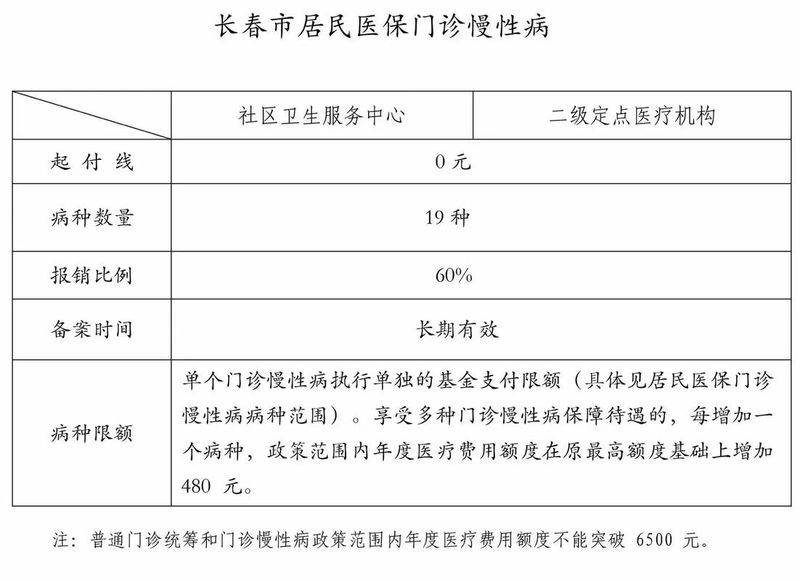
What is the rate of reimbursement for chronic illness? According to the staff member, the rate of reimbursement was 70 per cent for the payment line of $700 for the out-patient service of urban workers for chronic diseases, and $350 for the out-patient service of urban and rural residents for chronic diseases, compared to 65 per cent. The reimbursement for outpatient chronic diseases is subject to a certain limit, which is determined on the basis of the annual fee limit for the recognized category of disease, and the maximum limit for the number of outpatient chronic diseases。
Payment lines are the rates paid by the medical insurance fund, whereby the participants in the medical expenses actually incurred in the “three directories” (the list of essential health insurance medicines, the list of clinical projects, the standard of medical facilities) at the point are charged below the line, and the portion above the line is reimbursed by the medical insurance fund on a mandatory and proportionate basis. Within one year, the individual assumes a payment line, which is proportionally reimbursed when the amount of the settlement of chronic illness is accumulated at the clinic。
For example, zhang, who is a member of the employee's health insurance scheme, went to the point hospital for the first time in the year (1 march) to purchase medicines, at a total cost of $1,000, of which $600 is for a class a drug, $300 for a class b drug and $100 for a non-medical drug (i. E., self-funded drug)。
(note: drugs of class a are essential for clinical treatment, are widely used, are effective, and are low-cost in the same category. Drug type b is a drug of choice for clinical treatment that is effective and more expensive than a drug type a. When the insured uses “a” drugs, they are covered in full. When an insured person uses a “b” drug, the individual bears the burden proportionately, with the rest covered by the medical insurance fund
The amount covered by the health insurance reimbursement = total cost - out-of-pocket projects - out-of-pocket projects * 4%. That is to say, the amount of chang's inclusion in the health insurance reimbursement = total cost of $1,000 - self-financed project of $100 - self-financed project of $300 * 4% = $888. With a pay line of $700 for chronic illness at the employee clinic, $888 to $700 = $188, i. E. $188*70 = $131. 6, the employer is reimbursed $131. 6。
For the second time in the year (1 april), chang went to an outpatient retail pharmacy for medicines for chronic diseases, at a total cost of $1,000, of which $500 was for a class a drug, $350 for a class b drug and $150 for an out-of-patient drug (i. E., self-financed drug)。
Since zhang paid $700 for the current year's payment line when he first purchased the medicine on 1 march, no further payment is required for this time. That is, the amount of the second round of health insurance coverage = total cost of $1,000 - self-financed project of $150 - self-financed project of $350*4 per cent = $836. A pro rata reimbursement of $836*70 per cent = $585. 2 is payable for this period。
The costs associated with outpatient visits at all levels of the established medical facility are directly accounted for
How do you settle the reimbursement for outpatient chronic health insurance? Do you need to advance it? It is understood that the costs incurred in connection with outpatient consultations (testing fees, treatment fees, medications) can be settled directly at all levels of the established medical facility (including community hospitals), that the individual will only have to pay a portion of the individual's burden, which may also be covered by the personal health insurance account, and that the prescriptions issued by the doctor of the fixed hospital may also be used in the retail pharmacy of my city's outpatient chronic illness, or in real time through the electronic prescription platform of the pharmacy, that prescriptions will be prescribed by a remote online practitioner on the basis of the medical condition, and that the pharmacy's pharmacist will be present to buy and settle prescriptions for the same direct reimbursement policy without having to pay。
Insured persons who, for particular reasons such as taking care of a doctor in a different place, do not pay directly for the costs of chronic medical consultations at a fixed medical institution may be reimbursed in the following year by the participating unit (urban workers) or by the community (urban and rural residents) to the health-care provider, without reimbursement of the expenses paid by the health-care individual account。
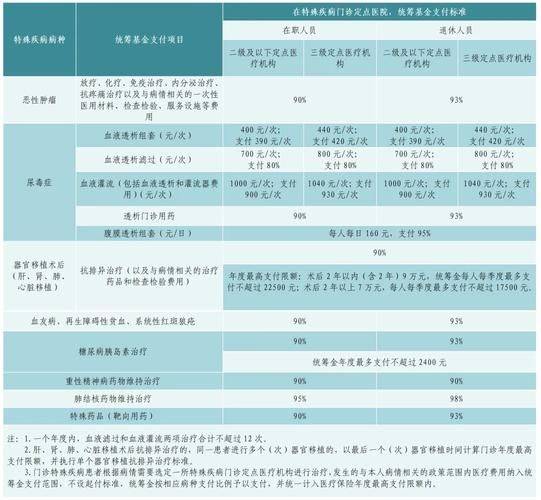
It should be recalled that participants are, in principle, required to account directly for the costs of chronic illness at the medical clinic's chronic disease point, and no longer receive occasional reimbursement for outpatient chronic disease benefits in 2022 and beyond, except in special cases such as expatriation。
What, then, is the information needed for reimbursement of the costs of chronic outpatient illness due to special reasons such as relocation? The staff member explained that access to medical facilities for chronically ill patients had to be preceded by an off-site medical check-up before the costs incurred could be reimbursed in the following year in accordance with the procedure。
The information required is as follows: (1) the originals, prescriptions and examinations, laboratory report forms (copys) of the medical clinics outpatient reimbursement union (lin) at the point (receipts or invoices); (2) the originals, copies of the prescriptions and cost details of the fixed reimbursing pharmacies (lin) at the reimbursing reimbursing shop (lin); (3), the personal reimbursing of the costs of chronic medical aids at the basic medical insurance clinic of the city of sian, which can be downloaded microby the medical insurance service officer in sian city; (4), the electronic information form for persons outpatients at towns, which is available in electronic form, as well as the paper version of the information form for persons compensating chronic medical assistance to urban employees, which is printed and stamped with a printed stamp, and (6) the electronic invoice pledge is required to be downloaded by the service officer at the medical insurance centre in sian city。
There is also a recent consultation with insured persons, “does the cost of purchasing drugs in cash during the outbreak in 2021 include electronic invoices and online medicines, and can chronic diseases be reimbursed? It's not the same. The staff member's response is that if an electronic invoice is issued at the xian medical insurance pointed pharmacy and at the location of the medical institution, it is reimbursed by issuing an electronic invoice commitment, which is downloaded microby the medical insurance service officer in xian city; the purchase of medicines is performed at the point medical institution, such as the online purchase of medicines on the xian medical point line。
There is also a consultation with the insured, “why does a pharmacies need a prescription to buy drugs and reimburse for chronic diseases? For how long does the prescription take?” the staff member explains that, as required by the basic health insurance, employment injury insurance and maternity insurance directory (2021) in shaanxi province, the health insurance consolidated fund covers the costs incurred in connection with the medicines in the medicines directory, which must be prescribed by a doctor or in-patient, the costs incurred by the insured person in purchasing the medicines himself, paid for by the personal account or paid for by an individual. Therefore, the purchase of medicines at a fixed pharmacy and reimbursement of the costs of chronic diseases must be prescribed by a doctor. On the basis of the establishment of a chronic patient file at the stationary, the patient can purchase and reimburse the related chronic disease drugs on the basis of the first prescription. Prescriptions, etc., require semi-annual updates。
The press is all over the press