State council circular on the implementation of reforms in oil prices and taxes and fees for finished products
(nda [2008]37)
The people's governments of the provinces, autonomous regions and municipalities directly under the central government, the ministries of the state council and the direct agencies:
The state council has decided to implement reforms in the prices and taxes of finished products, with a view to establishing mechanisms and a regulated system of transport taxes and fees for the price of finished products, promoting energy-saving emission reductions and restructuring, fair burden-sharing and financing the maintenance and construction of transport infrastructure in accordance with the law. The following information has been communicated:
I. The need to implement oil price and tariff reforms for finished products
Our current policy of oil prices and taxes and taxes on transport has played a positive role in guaranteeing the supply of domestic oil markets for finished products, accelerating the pace of the construction of transport infrastructure and promoting the smooth and faster development of the national economy. However, as our oil demand grows, the contradictions between economic and social development and the resource environment become more pronounced; the disadvantages of taxes and unfair burdens are becoming more visible; and secondary toll roads are too large and poorly structured, and are increasingly in contradiction with local economic development and mass movement. There is an urgent need to rationalize oil prices and transport tariffs。
The recent fall in oil prices on the international market offers a unique opportunity to implement oil price and tariff reforms for finished products. To take advantage of the current favourable circumstances, to move forward with reforms in oil prices and taxes for finished products, to regulate government fee-making, to level the social burden, to promote energy-saving emission reductions and structural adjustment, to finance the maintenance and construction of transport infrastructure in accordance with the law, and to promote the stable and healthy development of transport。
Ii. Main elements of the reform
(i) reform on oil taxes and fees for finished products。
(c) increase the current unit tax on the consumption of oil for finished products, and refrain from introducing new fuel taxes, using existing tax systems, collection methods and regulatory instruments, in order to achieve an effective interface between the reforms related to oil for finished products。
One to cancel road maintenance charges, etc. The elimination of six charges for road maintenance, maintenance of shipping lanes, road transport management fees, road passenger and passenger freight surcharges, water transport management charges and water freight surcharges。
2 plays the gradual and orderly cancellation of secondary road charges. It is urgent to develop and implement a programme and a central subsidy support policy whereby the people's governments of the provinces, autonomous regions and municipalities directly under the central government, in accordance with their respective programmes and policies, will gradually and systematically eliminate the government's lending of secondary road fees. They can be eliminated in units of each province, or they can be phased out in different cases within the province. The implementation programme was developed by the national development and reform commission in cooperation with the ministry of transport and finance and was submitted to the state council for approval。
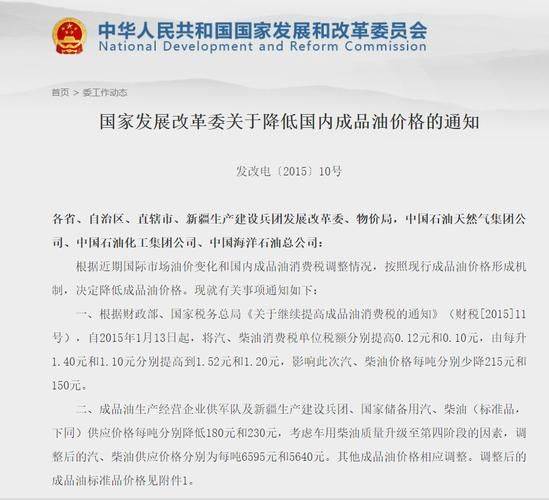
Three games to raise the unit tax on oil consumption for finished products. The unit tax on petrol consumption increased by $8 per litre, the unit tax on diesel consumption increased by $7 per litre, and the unit tax on other finished products increased accordingly. With the current unit tax, the higher unit tax on consumption of petrol, plaster oil, solvent oil and lubricants is $1 per litre and 0. 8 per litre for diesel, fuel oil and aviation kerosene。
4 collection authorities, collection links and measurement methods. The excise tax for finished products is a central tax and is collected centrally by the state revenue service (the import chain continues to be entrusted to customs). Taxpayers are units and individuals that produce, commission and import finished oil in our territory. The tax is paid at the production level (including commission processing and import). The method of calculation is based on a flat-rate scale and is charged within the price。
In the future, the consumer tax system will be improved and conditions will be created to move the excise tax collection chain to the wholesale and out-of-price collection in due course。
5 play the special-purpose oil consumption tax policy. The increase in the unit tax on the consumption of finished oils led to the resumption of the excise tax on imported halo. Until 31 december 2010, the national-produced tylene and aromatic oils used as raw materials for ethylene and aromatic products were exempted from the excise tax; imported ethylene and aromatics used as raw materials were returned. Air kerosene is suspended from the excise tax. Tax exemption for ethanol gasoline produced from out-of-pocket or commissioned processing; ethanol gasoline produced from home-made gasoline is taxed on the amount of gasoline consumed in the production of ethanol. Where petrol, diesel fuel is used for the continuous production of methanol and biodiesel from external purchases or commissioning, the excise tax on raw materials is deducted from the excise tax due。
6 on the distribution of additional tax revenues. The new consumption tax on finished oils, combined with the corresponding increase in value-added tax, urban maintenance and education fees, is earmarked for non-recurring fiscal revenue and does not take into account the base figure for existing expenditure-linked projects, with the exception of expenditures such as maintenance of alternative shipping lanes under a central level arrangement, all of which are allocated locally by the central treasury through a regulated fiscal transfer. The reforms have resulted in the maintenance of the financial attributes of transport, the use of funds, the local budgetary process and local authority. Specific transfer payments are developed and organized by the ministry of finance in collaboration with the ministry of transport and communications. Additional tax revenues are distributed in the following order:
The first is expenditure on six charges, such as replacement road maintenance fees. The specific amount is based on income from six fees in 2007, such as road maintenance, and is determined at a certain rate of growth, taking into account local realities。
Second, subsidies are granted to local governments to cancel secondary road charges. Each year, a certain amount of earmarked subsidy funds is allocated for such purposes as debt servicing, staff placement, maintenance management and road construction。
Thirdly, subsidies have been increased for food farmers, for some groups in need and for public goods, taking into account changes in oil volume and price levels, and supporting them through the matching subsidies in the mechanism for price formation of finished products。
Fourthly, incremental funds are allocated in accordance with factors such as fuel consumption and the equivalent mileage of transport facilities at the local level, reflecting the balanced development of transport throughout the country。
(ii) mechanisms for improving oil prices for finished products。
The price of crude oil produced on land continues to be linked directly to international markets. Domestic oil prices for finished products continue to be strategically and indirectly linked to international markets. The pricing of finished oils needs to reflect both the changes in oil prices and the production costs of enterprises on international markets and the relationship between supply and demand on the domestic market; the scarcity of oil resources, the promotion of resource conservation and environmental protection, as well as social affordability。
The price of the domestic finished oil is based on the price of crude oil on the international market, plus the average domestic processing cost, taxes and appropriate profits. When the average price of crude oil on the international market has changed over time beyond a certain level, the price of domestic finished oil has been adjusted accordingly。
Government pricing and government-directed prices for two games of steam, diesel fuel continue. (1) the highest retail prices are applied to the retail sale of gas and diesel fuel. The maximum retail price consists of the out-of-plant price and the circulation chain differential. (b) to reduce, as appropriate, the difference in the flow chain between the exit plant and retail. (2) the maximum wholesale price is applied for the wholesale distribution of gas and diesel fuel. (3) the difference between the wholesale price and the retail price is reasonably approved in respect of the price of licensed private wholesale capital and diesel. (4) prices for the supply of gas, diesel fuel for the army, xinjiang production corps and the national reserve, at the prices approved by the state for the exit plant. (5) reasonablely approved prices for the supply of gas and diesel fuel for specific sectors such as railways, transport, etc. (6) the difference is adjusted by the national development and reform commission in due course。
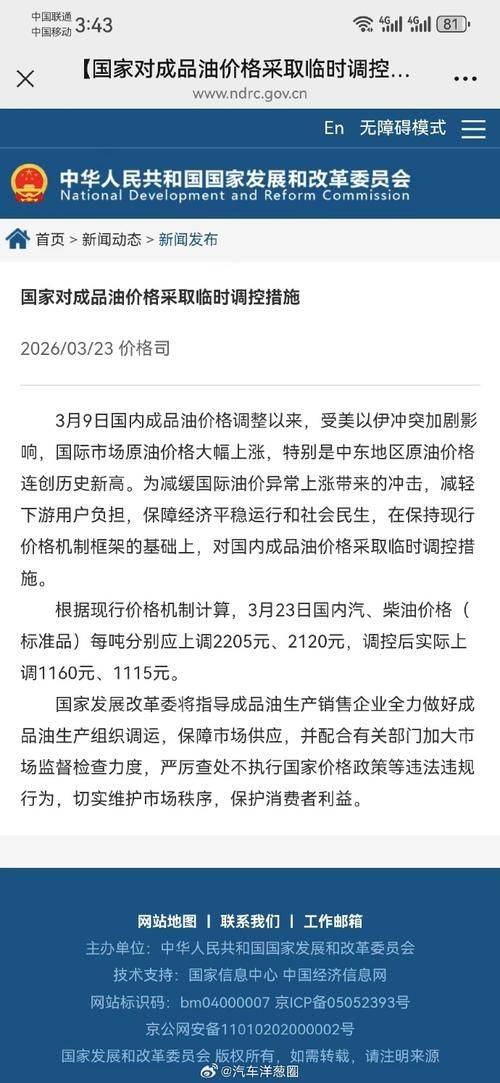
While crude oil prices continue to rise or fluctuate sharply on the international market, the price of gas and diesel continues to be properly regulated to mitigate its impact on the domestic market。
Prices of other finished products, such as aviation kerosene, continue to be managed in accordance with the current methodology. For liquefied gases read highest plant price management。
In accordance with the above-mentioned mechanism for the formation of finished oil prices, the national development and reform commission has developed a separate approach to oil price management。
(iii) measures to improve oil prices for finished products。
One game continues to function as a mechanism for regulating upstream and downstream interests within oil companies. When the prices of crude oil have risen dramatically on the international market, and when the state has implemented measures for the controlled adjustment of the gas and diesel prices, the crude oil processing enterprises will face temporary difficulties, and the central petroleum and china petrochemical companies will continue to reconcile their internal interests with those of the oil companies, balancing their internal interests and mobilizing the refining firms to produce and ensure market supply。
2 plays to improve price linkages in relevant industries. (1) rail freight prices are absorbed by rail transport enterprises at 20 per cent, depending on the increase in the cost of rail transport as a result of the increase in domestic diesel prices in the previous year, and the remainder is adjusted annually in principle by increasing the price of rail freight transport. The extent is determined by the ministry of trade and railways of the national development reform commission. (2) passenger transport prices on civil aviation domestic routes are first adjusted by the airline, within the floating mechanism, on its own initiative, for specific fares, and when fuel attachments need to be adjusted, the airline digests 20 per cent, depending on the changes in air kerosene prices affecting civil aviation transport costs, and the remainder is deduced by adjusting the fuel surcharge or base fare. The adjustment of standard intervals for fuel is in principle no less than half a year. The criteria for the specific receipt of fuel fuel are determined by the national development and reform commission in cooperation with the civil aviation authority in accordance with the above principles. (3) the price of taxis and road passengers, with a further improvement of the price linkage mechanism at the local level, shall be adjusted by a statutory procedure, depending on the evolution of oil prices。
- to improve the system of subsidies for food farmers, some disadvantaged groups and sectors of public interest. (1) food farmers. The increase in farmers ' income from changes in the prices of finished products and oil continued to be taken into account in the integrated consideration of subsidies under the policy on the direct supplement to agricultural resources. The total direct supplement to farmers who grow food is only increasing. (2) urban public transport, rural road passenger transport (including inter-island and rural water passenger transport), forestry, fisheries (including oceanic fisheries). The price adjustment for finished oils affects the increased costs of these industries, which are subsidized by the central treasury through earmarked transfers. The rate of subsidies is implemented in accordance with the current policy, and the criteria for subsidies increase or decrease as the price of oil in finished products rises or drops, with the specific subsidy being developed separately by the relevant departments of the ministry of finance. New subsidies have been implemented since 2009. (3) taxi. Prior to the adjustment, temporary financial subsidies continued to be granted because of the rising costs of oil prices. (4) low-income hardship groups. Locally, basic livelihood security for disadvantaged groups, such as urban and rural low-income groups, is continued, taking into account price adjustments such as finished oil, liquefied gas and market price variations。
The fiscal adjustment mechanism for oil-price rises continued. Special oil proceeds continue to be charged in accordance with the relevant provisions in order to rationalize oil price increases and to properly address the various interests。
(iv) addressing reform-related issues properly。
1 play for the proper installation of traffic fare surveyors. Proper implementation of the reforms involved the placement of personnel and was an important guarantee for the smooth implementation of the reforms on oil taxes and fees for finished products. The people's governments of the provinces, autonomous regions and municipalities directly under the central government shall be responsible for the overall requirements of non-replacement, no change in rank and no change in treatment. They shall be placed in multi-channel accommodation, with guidance, coordination and support from the relevant authorities to ensure that reforms are carried out in a sound and orderly manner. Locally, the number of billing personnel involved in the reform is to be targeted, strictly closed, and raids prevented。
Measures for the placement of road surveyors: first, internal transfers in the transport sector; second, receipt by the tax authorities; and third, coordination between local people's governments, with the reform of multiple channels of placement involving personnel。
Guidance on the placement of personnel is prepared by the ministry of transport and communications in cooperation with the central department of administration, the ministry of finance, the ministry of human resources and social security and the general directorate of taxation and is submitted to the state council for approval。
The study addresses the development of general road construction, particularly secondary road development. Locally, this reform should be used as an opportunity to use the support policies of the central financial authorities to consolidate existing resources and better use them for the development of secondary roads. At the same time, the relevant authorities are urgently studying the establishment and streamlining of the financing system for ordinary road investment, in accordance with the principle of the non-removable nature of the original funds。
3 plays to strengthen market regulation for finished oils. Increased monitoring and regulation of oil markets, a firm ban on irregular sales of oil, such as the issuance of invoices for tax evasion without the delivery of actual goods and the surprise sale of finished oil, and a severe crackdown on oil smuggling, fraudulent operations and contractual fraud to ensure stability in the market for finished oil。
(v) time of implementation. Refinement of mechanisms for the formation of oil prices for finished products and the rationalization of oil prices for finished products, to be implemented from the date of issuance. Reform of the oil taxes and fees for finished products was implemented effective 1 january 2009。
Iii. Effective implementation of reforms
The reform of oil prices and taxes for finished products is a major decision taken by the central party, the state council, and an important step towards the implementation of the concept of scientific development and the promotion of economic and social stability. It is important that all regions and departments concerned have a common vision, that they are fully aware of the need for and urgency of reform, that they effectively integrate ideas and actions into central decision-making, that they are well organized, that they are carefully deployed and that they work together to ensure the smooth implementation of the reform programme。
(i) strengthening organizational leadership. The inter-ministerial coordination group for reform of the prices and taxes of products and oil products, organized by the relevant departments of the state council, is responsible for organizing the implementation of the reform programme; the people's governments of the provinces, autonomous regions and municipalities directly under the central government have set up a leadership group for reform, headed by comrades, which is responsible for the overall responsibility for development reform, prices, finance, transportation, taxation, preparation and personnel, and for ensuring that reform measures are put in place。
(ii) ensuring a stable workforce and an effective financial interface. Local people's governments at all levels must effectively assume responsibility for the placement of personnel and the maintenance of stability, placing them at the forefront of the reform process, planning ahead of time, organizing them well and putting them in good shape. The financial sector at all levels is required to make arrangements for pre-, post- and post-reform financing and budget alignment; the central financial sector is required to ensure that the reforms are carried out smoothly and smoothly by pre-allocation of funds to the local level to ensure maintenance management and personnel funding needs。
(iii) ensure that a policy for the elimination of fees is in place and that there is a strict ban on excessive charges. In accordance with the harmonized programme for reform, six charges, including road maintenance fees, will be fully eliminated by 1 january 2009 at zero, pre-receipts will be withdrawn in a timely manner and inspections will be intensified to ensure that the elimination policy is realized. The provincial people's governments are required to inform society in a timely manner of the location and name of the secondary road points identified for cancellation, and to be subject to social oversight, while at the same time making financial clean-up efforts to prevent the loss of state assets and the evasion of bank debts. No place, department, unit or individual shall be allowed to continue to charge or to collect, under any pretext, charges expressly cancelled. Violations are seriously investigated and those responsible are held accountable. The national commission for development and reform and the ministry of finance, together with the relevant departments, are expected to prepare and issue supporting documents as soon as possible and to intensify their monitoring。
(iv) increased advocacy and interpretation. Through a variety of media, such as radio, television, newspapers and the internet, targeted advocacy and interpretation efforts are needed to gain popular understanding and support and to create an enabling environment for public opinion for the successful implementation of reforms. Local people's governments at all levels need to take into account local realities and strengthen public opinion guidance。
(v) ensuring social stability in general. The reform of oil prices and tariffs for finished products is extensive and complex. The market situation and social dynamics must be closely monitored, and responses to new developments and problems that may arise in the course of the reform process must be prepared in advance and properly addressed in order to ensure that the general situation of social stability is maintained。
Follow-up by the regions and departments concerned is reported to the state council in a timely manner。
Department of state
December 18th, '88