The 2026 cyber-security battleground will move away from the initial stage of “wall-building” to a full-scale game around “digital trust”。
Idc projects that by 2026 70 per cent of organizations will have combined ai with integrated generation, location, predictive and intelligent technology. While restoring productivity, ai's explosive growth has also created new threats, such as ai agent identity impersonation, api scale attack, aai browser and ai mobile phone “black box” risk, facilitating a complete shift from “boundary protection” to “trust rebuilding”。
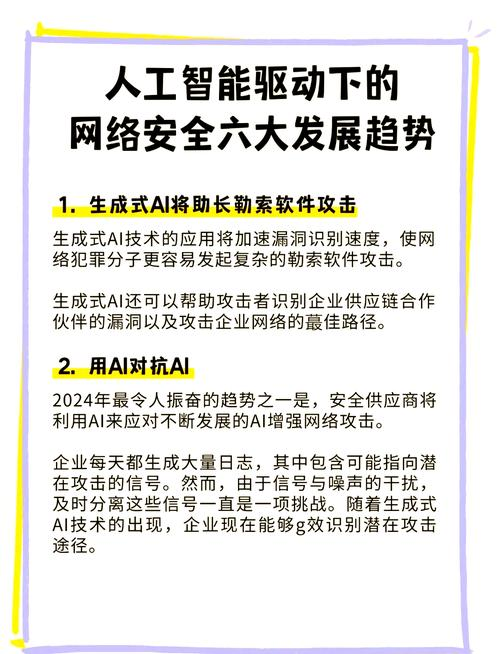
Trend one: the surge in ai traffic has made smart body defense a new battleground, and ai agent identification has shifted from “passive protection” to “active confidence-building”
The year 2026 became the first year of the “ai” economy, with ai agent with reasoning, memory, and the ability to collaborate autonomously permeating all aspects of the enterprise's operations, but increased autonomy also magnifies an unlimited identity security gap. These risks are concentrated in three areas: first, identity impersonation and deception, hacking of the agent identity to perform unauthorized operations using weak authentication; second, confusion in the management of authority, and the transfer of identity between agent and the tool transfer chain that invalidates the traditional access control model; and third, communication configuration deficiencies, where the lack of explicit transmission or token verification can trigger attacks by intermediaries。
2026, the core of ai agent's security protection is moving from “passive identification” to “active confidence-building”. The deployment of multi-intelligence coordinated defence platforms, the development of a three-way security-intellectual matrix of threat perception-decision response-retroactive auditing, the strengthening of identity certification and authority governance, the creation of a double certification mechanism for digital identity plus behaviour baseline, and protection against chain attacks caused by single proxy identity leaks. Make security a “trust passport” that ensures the efficient operation of smart productivity。
Trend two: aai accelerates the scale of the api attack and the api attack surface expands into a major threat vector
The large-scale application of api made it the first breakthrough for the attackers, while the intervention of ai technology allowed the api attack to escalate from a “precision test” to a “scale bombing” and allowed the area to expand continuously. Through the malicious script created by ai, the attackers can simultaneously launch high-frequency requests to hundreds of apis in the enterprise, and ai can simulate normal business flow characteristics and disguise malicious requests as legal access. This intelligent, scalable and hidden attack characteristic, with the addition of ai agent, has increased well blow-outs, further exacerbating api security risks in 2026。
2026 enterprises need to develop an api-wide life-cycle protection system that not only embeds the aai audit tool at the development stage, detects unusual calls in real time, but also through dynamic authority management, allowing access to the api to stretch with the intelligence of the business landscape to contain the risk of attack size from the source。
Trends iii: ai re-engineered its defensive posture, pre-positioned active network security proactively to break a potential attack path
The speed and complexity of the ai attack is growing, exceeding the response capacity of traditional security tools, and constricting even the completion time of the attack process from a “class” to a “minute”. Gartner predicts that by 2030, pre-positioned active network security will account for 50 per cent of corporate security spending, with the core logic of predicting, damaging and intercepting before cyberthreats cause harm using advanced technology. By rejecting, deceiving and disrupting attackers through forecasting analysis, automation and artificial intelligence-driven defence, it helps organizations to increase resilience, reduce risk exposure and support business continuity。
2026 the forward-looking cio needs to integrate pre-emptive human security capacity into the capacity of existing security programmes to identify, assess and mitigate potential hazards on a continuous basis before risk exposure occurs. At the same time, focus on the protection of critical systems and assets, using a proactive capability to identify emerging threat patterns, predict potential attack paths and deploy automated defence。
Trend four: ai browser xai cell phone induces a new threat to smart infrastructure
When ai browsers such as openai chatgpt atlas, perplexity company and ai mobile phones are becoming increasingly popular, the enterprise's secure borders are shifting from a controlled internal system to this “black box” with both productivity and risk, prompting the injection of multiple risks, such as attacks, hijackings of conversations and data leaks, to become the main entry points for new internal threats. In particular, with the launch of the aai mobile phone, the attackers can obtain access beyond their expected system access rights through the "overauthorization" of the ai smart body, by inducing user authorization or using the browser's own loophole at the input end, at the system level and in third-party access. The risk of such malicious acts may even be used by black and ashes for intrusive attacks。
2026, promote security and business integration by embedding ai security requirements into business process design, e. G., synchronized security risk assessment and protection programme deployments in the context of the introduction of the ai browser-assisted office, client services, etc. Using the defence of ai against ai, a system of predictive threat defence is being constructed, while maintaining a secure line of defence while safeguarding productivity through real-time monitoring and restraint of ai behaviour。
Trends v: a new type of ai-driven multiple blackmail is more automated and the attack surface continues to expand
Extortion attacks have completely set aside a single model of “encrypted locks for ransom” and, driven by ai technology, have entered the age of automation 2. 0, ranging from target screening, gap scanning to the execution of attacks, to ransom negotiations, which can be completed in very short periods of time, with a much more efficient attack than traditional patterns. The formation of multiple threat loops that integrate data theft, system paralysis, reputational damage and supply chain transmission。
2026. Cybersecurity leaders must implement a comprehensive strategy covering all stages of the blackmail software defence life cycle — preparedness, prevention, detection, response and recovery, building pre-emptive prevention strategies, deploying advanced detection and response tools, conducting extortion exercises, etc., to enable organizations to quickly detect threats, investigate incidents efficiently and minimize the impact of security gaps through robust recovery measures。

Trends vi: compliance and ai credibility dual drivers, data quality and governance becoming new challenges of the age of age
The " guide to the construction of high-quality artificial intelligence datasets " , published by the chinese institute of information and communication technology, explicitly mentions that artificial intelligence technology, represented by large models, displays the “emerging” of human intelligence, presenting three broad characteristics that can be scaled up, multi-task adaptation and capacity, and demands more on the size, quality, etc. Of data sets. Credibility of data compliance is the cornerstone of a large model and requires a two-way drive from data compliance to data credibility to ensure legal compliance, clarity of copyright, reliability of quality and traceability of results。
With the deeper integration of the compliance framework with a credible system, data governance will be the key feeder of the agenic ai technological breakthrough, facilitating the safe and efficient application of smarts in a broader context and injecting new dynamics into the high-quality development of the digital economy。
2026 create a safe, reliable and sustainable data governance ecosystem by constructing a new generation of systems of data quality management and governance that integrates a compliance and credible governance framework, from the source of data to enhance security at the technical level and to establish clear norms at the institutional level。
Cybersecurity in the ai era is not a single-technology pile, but a full-dimensional system that runs through the data-application-process, and only by building the data base and achieving active defenses can the ai recast the digital world。