Recently, a friend who wants to change his computer may have discovered a "terror":
Last year, 5,000 mainstream laptops were sold, and this year they went directly to 7,000+
A medium-sized desktop at a price of nearly 30 per cent more than two years ago
Even the “price butcher” rice, red rice, was quietly raised this year by $300-500。
In the circle of friends, we cried: "i wanted to play the game with a 618 computer, and then i went on to use the antiques five years ago at a price." "how did the memory strips, solid hard drives, graphic cards suddenly increase the price? Is the merchants in the joint harvest?"
Don't worry, i'll let you know today: why is the computer so expensive? Is the price increase short-term fluctuations or long-term trends? And the key is -- should we buy it after the price increases
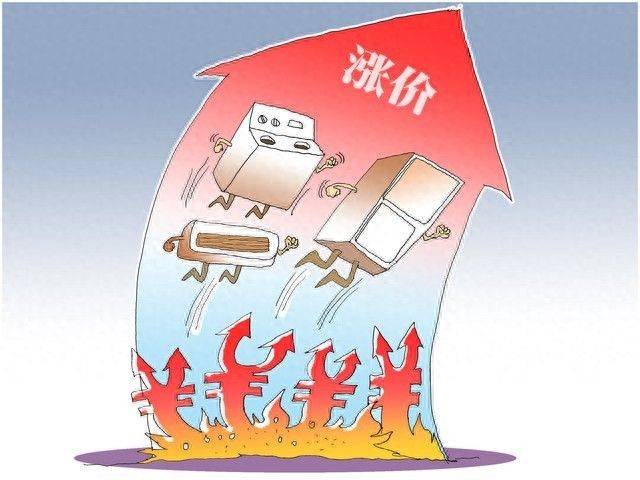
Let's be clear: this is not a "black heart" for the manufacturer, but a "circle of the whole industry."
The first reaction of many people is that the computer company is again cutting herbs. This judgement is only half right. The truth is:** from chips to spare parts, prices are rising throughout the supply chain, and manufacturers are carrying their own teeth. ** we're going down:
** first floor: storage chip “violence rebound”**
• storage chips are one of the most costly parts in computers (500-1,000 dollars for a solid disk of 1tb)
• over the past two years, global stocks of chip giants (tristars, sk hercules, light) have lost their underwear — because of overcapacity, prices have fallen through cost lines
• then what did they do? “reducing the price of insurance”. Together, the three giants reduced production by 20-30 per cent and blocked supply from source
• the result is that the price of solid-state hard drives and memory strips has risen directly from the “pricot price” to the “pork price”。
• for example, a 16gb ddr5 ram, which was at least 200 last year, has risen to over 400 this year。
** second floor: gpu (synthetic card) is still “high fever”**
• you're not mistaken, though the mining tide is retreating, ai is coming
• professional ai cards such as h100 and a100 in weida were looted by cloud data centres at a unit price of $304,000; – and the production of consumer-grade cards was squeezed by a chip – i don't know. Rtx4060/4070, used by everyone, even if not so scarce, because the capacity of the mill to generate electricity is “dominant” by the ai chip and the cost rises
• so even a middle-end playbook, the single cost is $300-500 higher than last year。
** third floor: cpu and the master board “moor laws expire”**
• both intel and amd found that the chips were becoming more and more difficult to “grow toothpaste”
• a 20 per cent increase per generation of cpus in the same process, at constant prices
• each generation of new cpus is now designed with more complex structures and higher power consumption - r & d costs are skyrocketing, chips are becoming larger and the rate of good is declining
• as a result, the cpu price increases and the main plate (because of its suitability for the new cpu needle foot and power supply design) are also rising。
• the sale price of a mainstream z790 is nearly 40 per cent higher than that of z490 three years ago。
** fourth tier: manual, logistics, customs “fire oil”**
• global inflation has not stopped in the post-epidemic era: maritime transport prices are three times as high as in 2020
• human costs at computer assembly bases such as viet nam and thailand increased by 10-15 per cent per year
• the effects of the trade war between china and the united states have also continued: some brands have moved production lines around in order to circumvent tariffs, at a cost of tens of millions。
To sum up, the increase in the price of the wave is a compound result of the four-heavy shock of "supply manipulation to store chips + ai crowding in chip production + moore's law cooling + macroin." ** not one of the “hotmen” is manipulating, but the whole supply chain is hurting. **
What do consumers do
** option one: hard -- "i won't buy it, see if it falls."**
• the short-term (in this year) approximate rate will not be reduced significantly — storage chip giants will not suddenly return to full production and the heat of the ai chip will only continue to warm
• but if it is “frequent” (e. G. Computers are completely broken and work has to be done), waiting may be a waste of time and productivity
** fit for people: people with old computers that can survive, who can't change quickly and who are willing to bet lower prices next year. **
** option ii: compromise - “repurchase of a card, or old-age configuration”**
• if you do not pursue the “first generation”, consider:
Purchase of a previous generation of cpus (e. G., 13 generations i5 or rp-7000 series) and ddt4 rams - a performance gap that may be only 10 per cent but saves 30 per cent
2. The amd graphic card (radeon rx7,000 series) was selected because of the relatively moderate increase in prices due to the smaller impact of ai demand on ac capacity. ** fit for people: people who are less sensitive to frame rates, have a limited budget but do not want to be a “party of others”. **
** option iii: bottom-up — “before the second-hand market fails to react”**
• the “old money” of the second-hand market has become more fratricidal because of the high prices of new money
• a “second-hand flagship” of two years ago — such as a notebook with rtx3060/3070 card — can be found at $3,000 to $4,000, which is sufficient to meet the vast majority of needs
• pay attention to machine tests (acknowledged absence of dark disease, battery depletion, etc.), but the overall value for money is much higher than the purchase of new money。
** fit for people: friends who know computer hardware, don't mind second-hand, who seek to maximize value for money. **
** important reminder: alert to “preferences to education” and “channel storage machines”**
• in july-september each year, the brands introduce “educational preferences” for student groups at very high value
• at the same time, there are some channels of commerce to clean up their inventories — it is possible to find “new machines at an old low cost”。
• pay more attention to the 10 billion-dollar subsidies and multiple branded black cards available in kyoto, sometimes at 10-15 per cent below official prices。
And finally, to say the words:
** the increase in the price of computers is a “suffering signal” — it clearly tells us that the era of consumption of electronics is slowing down. The chip production process is close to physical limits, the ai battle for calculus is just beginning, and the global supply chain is undergoing the most profound restructuring in 20 years。
But we don't have to be too anxious: a computer has a core life of more than five years, and if you don't catch up to the latest, your needs will be met by a device of about $5,000。
The price increase is merely a reminder: less for “buy for buy” and more for “buy for demand”. If you really need it, don't wait for the next two elevens. If it's just the push to upgrade, you can just hang out for a little while, after all — don't you, with the old computer five years ago, write the same words, brushes, and write many memorable moments? **
What do you think? Tell me in the comment section