Today, 27 april, the 2009 contract went fairly tenaciously and steadily upwards after a low run, with a solid and unshakable timeline. As soon as the surface is strong, the profile of the port spotr becomes even more stable. The so-called main storage area reports directly to the top. The price of the tank went from 2560 to 2570 in the morning to around 2580, with the difference remaining at around 70 per cent of the surface. I've been staring at the base for almost a month and a half. I've never been soft. Many of our unilateral friends find the practice boring, and dozens of points have to go back and forth, but the real and current people know that methanol is now completely “silent and dark”。
Let's start with our corporate positions. Last weekend, we just flatted half of our stockouts, not because of a drop, but because it's worse than a one-sided drop. At the end of march, we made a round of margin sales against port stocks, when the base margin was only +30, trying to lock off profits. As a result, the import in april began to become delicate, with the recovery of the central and east african isophage facility, which was unable to get out of the ship, with all the capacity being squeezed into the big ethylene and ethanol, and high freight charges for methanol vessels. In addition to the occasional explosions along the red sea, the shipowners bypassed the port and delayed their arrival, directly lifting the price of long-term paper. That's all there is, but you can't take it, but the difference is huge. At this point, it continues to sell the condom, amounting to every day being drained from the base. And we're making quick decisions, and we cut off half of the last month's hedging position on wednesday, and we're trading in a base difference to lock down the spot at the mto plant downstream. This is a time of time, not a time of structure, but a time of structure。
Turning back to the strangeness of the fragmentation of the wave. In shandong, henan's traditional downstreams, the profits of formaldehyde and diether are being drained by high prices of methanol, and small factories are generally downsetting. However, the large northwest ctos and the port mtos are not ambiguous, and the great buyers of methanol are still eating normally at the contract price in the north, and even in individual factories they say “not afraid of the price, not afraid of the unexpected”. This has resulted in two markets: the mainland's traditional downstream resistance to high prices and the fall in prices; and ports, which are strong because of import costs. Regional arbitrage should theoretically work out, but you can see the current logistics costs. The ordos-tenjin port bus drops short and folds out of space. As a result, ports are independently priced and anchored at import costs rather than inland coal-making costs, without breaking the barrier and without having a basis for the collapse of the port's infrastructure。
The uncertainty at the import end is in fact much more problematic than the data present. When you read the news that parts of iran's installations were restarted in mid-april, you felt that there would be a clear rebound in may. I specifically asked my procurement colleagues to verify the pre-attendance statistics on the side of the ship, and in mid-may the port of east china could have arrived at 300,000 tons, and should have travelled for more than 400,000 in normal months. The key is not only that the ship’s freight costs have not fallen, but also that the ship’s owner has made a more expensive premium by bypassing the cape of good hope, and that the freight costs of methanol from the middle east to china have remained at $45-50 per ton, and you think, with its own fob costs, it would be easier to complete the tax at over 2600. Under this cost structure, where does the port spot fall unless the internal future collapse? You let the traders sell cheaply, and he waits for it, but the reality is that the warehouse receipts are so few, and last friday, zheng's warehouse receipts are only 700 copies, all distributed in non-basebooks. The logic of engagement is clear: import costs are high, the availability of negotiable goods is low, and it is almost impossible to block prices with empty deliveries, and even i doubt whether it would be possible to recreate the pattern of empty, forced mags last quarter。
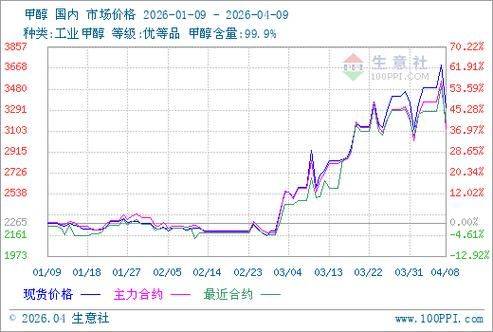
From the perspective of enterprise insurance, the most practical thing at present is to design structured base contracts. When we supplied methanol to the downstream acetate, mtbe plants, the “future point price + fixed base margin” model was now widely used, allowing them to make their own face-to-face prices, and we locked in relative base margin gains. Yesterday, for example, there was a client at the 2550 for the 2009 contract, plus a 70-matrix margin, and he was comfortable with 2620, because this morning he added a little more when the table went down, the average price was even lower, and we made an extra five dollars in the 65-to-70 section. It's true that now real business really doesn't need to know how to get up and down, and it's a stable happiness that's going to make the difference. In addition, for purely trade-based spot openings, i tend to use the in-field depreciation to protect my options. Buying down options for implementation prices below the cost line when volatility is low avoids the risk of a collapse caused by a sudden increase in imports and is not burned by the spread of base differentials on the back of the mid-mountain like selling futures。
Let's talk about the stock cycle. This week, the port stock was slightly debilitated, which was not surprising because of the small number of ships and the steady availability of goods. However, the hidden nature of social stocks is evident, as many goods are actually in the hands of large traders, and mainstream tank area data are not always reflected. A short backlog may be seen if the ship's term is slightly restored starting next week, but as long as freight costs are in jeopardy, there is limited pressure on prices. It is worth writing about freight. Friends of the shipping ring have told me that this year, when the combined european line is loose, the chemical fleet is under-positioned, and the summer is a season of oil demand, and competition for a flammable liquid vessel, methanol, will intensify. Unless sudden cooling in the dry bulk market releases capacity, freight costs can quickly return to below $30. It actually gives the port a natural umbrella。
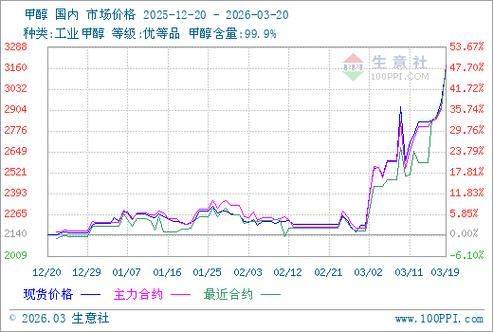
Finally, a phenomenon. In this week's two broker talks, it became clear to me that the factory mentality in inner mongolia has changed. Previously, they had been looking at shandong prices to set prices, and now they have learned to look at port future pallet anchors. It is interesting that their methanol bid has begun to learn how to quote the table + regional base, and that the current thinking is already permeating upstream. Once such depth penetration takes place, the pricing efficiency of the market will increase, but the opportunities for small crowd arbitrage will diminish. As old comrades for over a decade, we have to be more precise about the cost of each link, the time of arrival of each shipment, and sometimes the psychological battle with the shipowners, which is more of a test of power than the emptiness on the board。
So, the methanol business, let's not look at absolute prices as they stand. The bottom line for port cargo is three: high import costs, the neck of a truck, and very few warehouse receipts. Instead of taking the spot off this morning, it made the difference more stable. As long as these three do not change, the spot position in my hand will not be easy to sell, preferring to trade a few more base trades and to absorb the risks. When the freight will collapse and the iranian cargo will collapse, let's talk about the base difference coming back. Right now, the port methanol's hard gas is real。