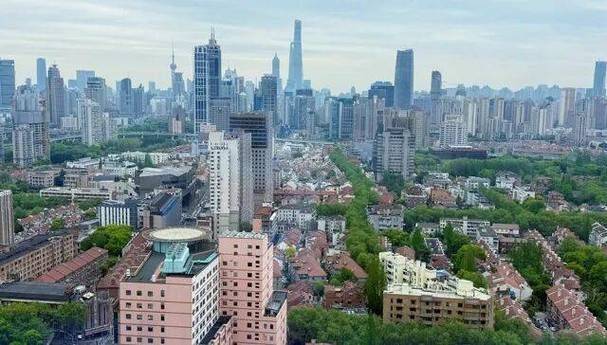
In the spring of 2026, the chinese real estate market began to show signs of stability in the construction of the base after a deep readjustment, while the most real thermometer is not a new house, but a fully marketed second-hand house trading data. In march-april, second-hand houses in front-line cities rose to record prices for many years, but behind the brightest figures, the national market is showing a distinct pattern of “core city lead, low-energy city grinding”. # trades surged: first-line cities reached a record 28,742 second-hand house nets in shanghai in april, a significant increase of 22. 3 per cent over the same year, a rise of almost 10 years in single months of april **; in march-april, a cumulative deal of approximately 592,000 was made, a record for the same period of five years. The beijing market is also very hot, with more than 16,000 internetmarks in april, reaching a high of nearly five years in the same period, with brokers showing a cumulative distance of nearly 600 kilometres as normal. In shenzhen, 5571 used rooms were closed in april, and the ring ratio continued to grow. Data from kerry show that in april 2026 there was an increase of 17 per cent in the area of second-hand houses in priority 20 cities over the same period, and a cumulative positive increase of 8 per cent in the previous april, with a marked increase in market activity. # # # price stability: clear national statistical office data for stopping the fall-and-up signal show ** that the price of second-hand residential sales in the first-line cities went up by 0. 4 per cent in march,** of which beijing, shanghai, guangzhou, shenzhen increased by 0. 6 per cent, 0. 4 per cent, 0. 2 per cent and 0. 4 per cent, respectively, for the first time since 2022. The institute noted that the increase in the average price of second-hand residences in shanghai in the core cities had put an end to the previous decline of 33 consecutive months. The wider signal is that ** out of 70 large and medium-sized cities, the price of second-hand homes has increased to 13 cities, an increase of 11 more than last month,** and market warming trends are moving from front-line to second- and third-line cities. # structural change: the immediate warming of the just-to-improvement virtuous cycle is not a single-power drive, but rather a virtuous chain of “just-just-improvement replacement”. - ** just needed**: the total market value of second-hand houses in shanghai is between $2 million and $4 million. In march, hangzhou entered into a deal at a total cost of less than $2 million. - ** improved tackle**: in april, shanghai saw an increase of about 50 per cent in the medium- and high-end improvements of 6 to 15 million yuan, and the average exchange price rose from 3. 57 million to 4. 11 million yuan in march. The shenzhen south mountain home project has a 90 per cent rate of demography. ** market confidence is mildly restored and the decision-making cycle of buyers is significantly reduced**. Intermediaries indicated that the percentage of clients who had entered into a deal within seven days could be around 40 per cent. # policy add: "old for new" policy has been introduced intensively across the replacement chain, aiming to open up a second-hand room replacement cycle and give impetus to the market. - ** guangzhou**: since 30 april, a special “sale-new” subsidy of 200 million yuan has been granted, with a single subsidy of up to 30,000 yuan. (blockview://markdown-image-tos-cn-i-tt/ee4b2cc4b4b4c3f8491b85388c16a87) - ** shenzhen nam mountain**: introduction of “old for new” consumption coupons up to $50,000 with commission discounts. - **fooshan**: offers of commission sales, resale of acquisitions, acquisition of three “old for new” models and granting of privileges such as tax refunds. The vice-president of the shanghai institute of eternal estates has made a dramatic leap in the belief that these policies “constructed the flow of stock and new houses” and helped to stabilize market expectations. # increased fragmentation: the national market is far from booming, despite the brightness of some urban data. According to the kerry report, the market is driven by a two-track “** core asset preservation plus peri-urban value realization**”, while some peri-urban projects generally undergo a evaporation cycle of more than 150 days and stock pressure persists. ** core city lead**: second-hand house trading in shanghai, beijing and other cities has exceeded the same level in 2023, leading to recovery. - ** weak recovery in the 3rd and 4th lines**: most low-energy cities are dominated by digestive stocks, expressed as “stable data”, but the market for new and used houses is under pressure. Monitoring by the central institute of research shows that in april,** the average price ratio of used dwellings in 100 cities was still 0. 46 per cent** and the market as a whole was at the stage of building a game. # looking ahead: prudent optimism in building the base** the country's stock of commodities is declining for the first time in a 51-month period of growth**, marking a period of progress away from stocks. At the same time, the rental rate of return has recovered steadily, reaching an average of 2. 26 per cent in march 2026 in the focus of 50 cities, and the value of investments has begun to show. However, there was general agreement among the analysts that** fragmentation has become a new norm**. The value of high-quality assets in the core cities will gradually be firmly established, providing windows for new and improved home buyers, while low-energy cities will still have to undergo a long process of revaluation and inventory clearance. The real stability of the market ultimately remains dependent on the expected improvement of the income of the population and the continuous improvement of the job market。