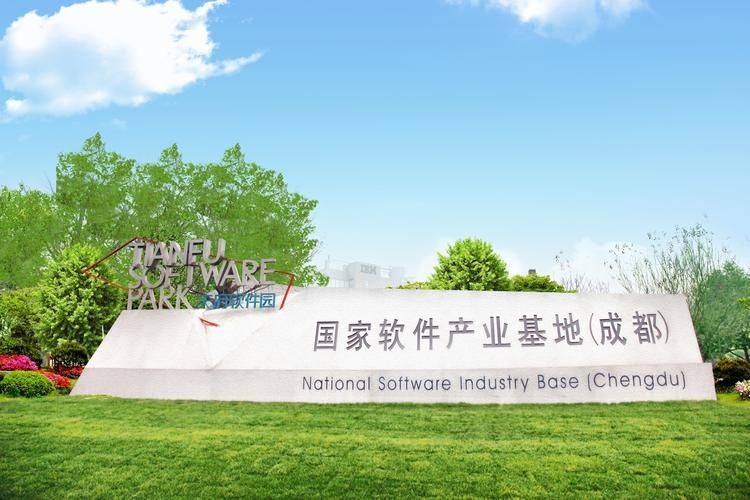
Du ting ting: the cheng dixin software park has been in operation since 2005, and in 2009 the cheng dixin software park limited was established at the initiative of the cheng dixin district control council and with the investment of the cheng dixin investment group to make it more marketable and specialized and to further promote the development of the cheng dishing software and information industry。
Over the past five or six years, the tsien park has grown from 20 and 30 enterprises in 2006 to over 70 and 80 in 2009 to more than 400 enterprises, employing more than 40,000 people. It has attracted ibm, sap, nec, emc, garmin, philips, maersk, siemens, ericsson, dell, wipro, dhl, pwc, ncs, manulife, hua, ali baba, tents, etc., and 40 per cent of foreign-owned enterprises. The total area planned for the campus is 3. 7 million square metres, and more than 1. 4 million square metres are now operational. The industrial structure has resulted in major clusters of software services outsourcing, software product development, communications technology, digital entertainment, mobile internet, shared service centres, etc. It is the largest single size and best developed software campus in the country。
It can be said that, as an important vehicle for the development of the software and information services industry in chengdu, the tiendu software park has become the core cluster of the industry and is the preferred location for china's strategic configuration of well-known domestic and foreign software and information services enterprises。
Journalists: as you have just said, the institute's software park brings together a large number of excellent companies, including the world's top 500 companies, and we are aware that foreign-owned companies account for 40 per cent of the total number of companies that enter the park, which is more prominent than other software parks or cities. What are the most important factors in your view that they choose to stay in the city?

Doutine: the characteristics of industrial parks are based on the industrial characteristics of cities and depend on the resources of one city. Historically, the “three-line construction” of urban industries has led to the development of military industries, communications and information security, industrial development and the accumulation of highly qualified personnel. In addition, the city government has been developing the it industry for more than a decade. There are currently more than 70 research institutes, 50 national centres of excellence and 30 enterprise technology centres, which form a comprehensive system of scientific and technological research and development. More than 100,000 graduates a year, and the storage of more than 2. 2 million skilled people is at the top of the centre-west cities。
With the impact of the financial crisis on the global economy, the software and information services industry is also looking for the next migration destination, which coincides with a sound industrial environment and a high level of internationalization of chengdu’s regional political system. You'll find that chengdu has the largest number of multinational enterprises in the cities of the midwest and that many are in the it industry。
More than 40,000 employees in the tianjin software garden, 20 per cent of whom have one to two years of experience in software development, and a large number of people with three to five years of experience and five to eight years of experience, are already in a very healthy talent environment. If people with 5 to 8 years of experience are able to reach 20 to 30 per cent, they can bring a larger team to maturity. In the software and information services industries, where talent is an important source of labour, they are attracted by a strong industrial base and a wealth of talent。
Journalists: as a model city for chinese software and outsourcing of services, chengdu has 11 software-type national industrial bases, the highest in the country's major cities, and how is it different from other service outsourcing cities in terms of industrial environment and related policies? How can it ensure the implementation of its relevant policies as the central repository of the sengdu software and information services industry
Doutine: the combined advantages of low combined costs, a good overall industrial environment and a good overall industrial promotion system have been a major factor in industry's success. The excellent human settlements environment, adequate human resources, low business costs and high-quality government services make cheng a preferred location for investment cooperation between domestic and foreign outsourcing firms。
The chengdu software industry is concentrated in the high new zone, with a focus on enterprises located in the tien-tien software park, which requires a professional team familiar with international standards to operate. As a result, in 2009, chengdu xinjiang district control board (skmc) initiated the investment of chengdu xinjiang investment group (sig) to formally establish chengdu xinjiang software park ltd。
Now our team is not simply soliciting money, but researching client needs, providing holistic, internationalized and specialized services for enterprise development, and becoming strategic partners of enterprises. Over the past four years, a system of services, such as professional counselling, human resources, business services, national public technology platforms and business incubators, has been in place, and a professional business team has matured。
Journalists: on the basis of a solid industrial base and human resources, the zenith software park has brought in a large number of golden phoenix, and we know that “inventing” is only the first step, and that helping enterprise development is the most important link, and what are the specific practices and measures of your software park in this regard

Douting ting ting: business and talent exchanges have been very active as chengdu software and outsourcing services have developed at a rapid pace. Therefore, as many recruitment campaigns and public training as possible have been organized to translate human resources into an effective supply of talent to meet the needs of enterprises at a low cost and of high quality, and to complete the “last kilometre” of talent conversion。
Building on the alliance for the training of software talents in chengdu, the campus provides a full range of talent services to enterprises, including recruitment, counselling and training. For the seventh consecutive year, the chengdu human resources initiative has brought in middle- and high-level professionals from beijing, shanghai, guangzhou and shenzhen, and has brought together nearly 40,000 professionals to develop in hong kong。
In the last two years of school placements on the fall, we created “the best job fair in the country” in the form of “carnivals” in response to the younger minds of post-90 candidates. Using the cloud recruitment app, job-seekers can use mobile terminals such as mobile phones to find recruitment information, send e-cvs, and interview immediately. Last year's carnival, there was an influx of more than 12,000 job seekers on the spot. In addition to on-site recruitment, operation tianjin, a website under the umbrella of the software park, also provides easy access to enterprises and job-seekers。
We have also been focusing on cooperation with international brands to adapt to the upgrading of talent in the broader context of industrial development in chengdu, with the introduction of well-known training institutions such as ibm, indo-niit, us qai, uk acca, and the establishment of training programs such as toice, oracle, pmp, open source technology innovation centre, and us comptia service outsourcing standards. At present, the campus organizes more than 200 training sessions per year, and more than 30,000 business staff are trained. At the same time, the institute of human resources, under the umbrella of the software park, provides more than 30 state-of-the-art human resources reports to enterprises each year, providing a solid basis for enterprise site selection and talent planning。