In recent days, taewo group officials have issued micro-information that the south chang yard is accelerating the construction and delivery of security. According to a minor statement from thai officials, the construction of the nanchang courtyard slowed in the past year, but the project did not completely stop; now, more than 270 workers are stationed at the southchang courtyard site, where work is being carried out in an intense manner “with full effort to ensure delivery”。
Indeed, between the end of last year and the beginning of this year, parts of the product were delivered from the taehu foshan courtyard to the hangzhou small courtyard。
At the same time, videos of the resumption of work on various projects in tahrir-based areas can be seen from platforms such as taehu group officials and official shivering。
In addition to the unstarted reserve projects, it is understood that the projects currently under construction for sale in thailand can be divided into three categories: one category is already a live house product, such as the chinese courtyard in beijing, the western courtyard, the lichun lake courtyard, tae-soo central square, the xiamen courtyard in the xiamen region, the blue mountain courtyard, the mangrove bay courtyard, the tinghue courtyard and district c of the faozhou courtyard; the other category consists of projects that have not been stopped or have been rehabilitated, including the nanjing capital, the beijing gold courtyard, the changping landscape park, the fukushima bay project d, the kimzhou courtyard, the fuzhou courtyard, the huaizhou courtyard, and others。
In the case of a few projects that have not yet been identified as a resumption node, thai insiders indicated that the group is actively seeking a solution that seeks to “discharge” as soon as possible. However, considering the overall aspect of the national project, for the benefit of the largest number of owners, and in order to move the business into the right track as soon as possible and to ensure that as many projects as possible are returned to housing as soon as possible, tae-won needs to recover and rebuild as soon as possible。
On 28 april, at an internal mobilization meeting, chairman huang qisen of taewo group stated that it was time for full recovery。

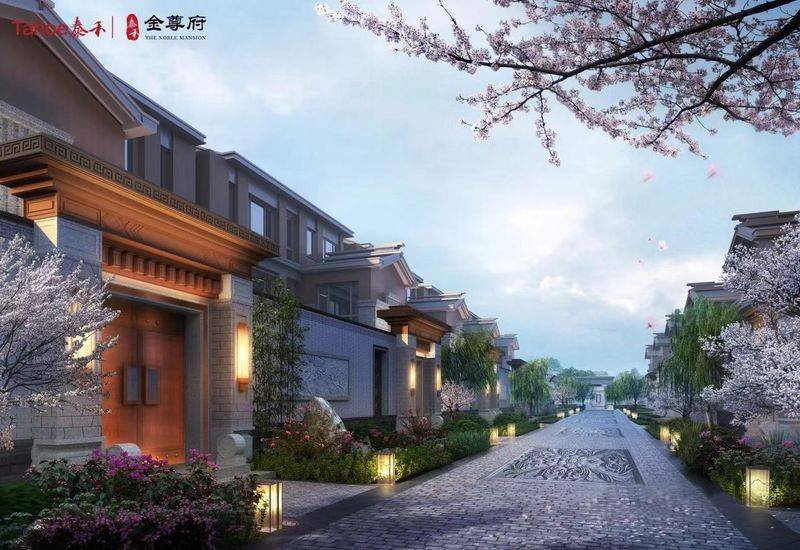
At present, according to a wide range of sources, more than 20 projects in beijing, fukushima, xiamen, shanghai, nanjing, hangzhou and guangzhou are expected to meet marketing requirements in may and june, including the chinese yard, the bay of fowzhou, the golden palace compound of fukuzhou and the mangrove bay yard。
It is well known that taewo has struggled to survive since 2020. In the view of industry, tae-won has shown his resilience for more than a year and has shown many positive signs。
In april 2020, as a result of the epidemic, taehu group announced that it would delay the disclosure of the audited annual report for 2019; and, together with the court's designation as a bearer of letters, the project could not return to work on time and had been brought to the attention of all parties because of the mobility difficulties. The taewo group also formally decided to introduce strategic investors at the end of april last year. On the evening of 13 may 2020, taewo group issued a communiqué stating that the holding shareholder's investment was planning to introduce strategic investors。
On 31 july 2020, taehu announced that huanko would purchase 19. 9 per cent of the tashi group's shareholdings in the investment of taehu at a cost of rmb 2. 427 billion through the company under the flag, subject to a number of preconditions。
Although huanko “in-stock” taehu has not officially landed to date, it appears from the outside that the conclusion of the framework agreement itself sends a positive signal to the outside world, including financial institutions, local governments, thai owners and various collaborators。
Since the second half of last year, there have also been positive developments in the debt restructuring of taewo. Combined with other open sources, the taehu group debt restructuring has been supported by a number of mainstream financial institutions, with debt restructuring agreements concluded between many local affiliates, such as thai shenzhen, shenzhen, zhongzhou, ishikoshi and sunde, and financial institutions。
In parallel with external “leading” and debt restructuring, tae-wo has strengthened its two-tier internal control system and has actively sought to promote programmes for the resumption of work that are of greatest concern to owners. In a number of cities, with the joint efforts of local governments, financial institutions, collaborators and owners, tae-su made financial flows at the project level, including through “closed management”, and facilitated the resumption of the project。
In response to the resumption of work, the thai high-level leadership proposed to move the work forward with a “second start-up”。