Those archives secrets you never thought of
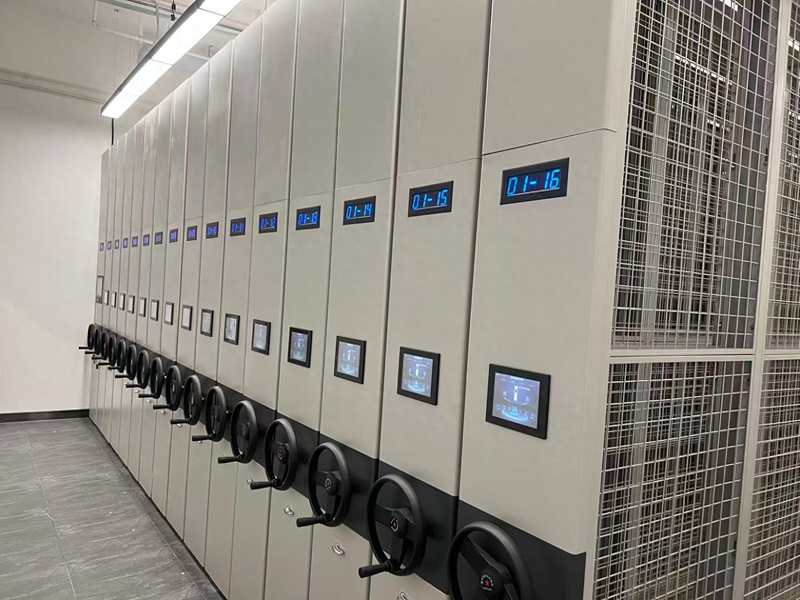
You'll probably see a line of grey-green steel cabinets in any of the slightly old archives. They stand in silence, like the legacy of the last century. But you know what? It's these seemingly dumb guys who are going through a quiet and intelligent revolution。
You think the filing cabinet is just a file? Too naive. When space becomes more and more expensive, when a contract, a drawing, is worth far more than gold, how to use every inch of space safely, efficiently and to the maximum extent, it becomes the string of the mind of the manager. Traditional fixed cabinets? They occupy too many “fields” but do not have much “dry goods”. As a result, dense cabinets emerged and the choice of shaking hands and power became the first fork in front of buyers。
Handshake or electric? It's not a choice
A lot of people came up and said, "whether hands are good or electric?" as if this was an option. But the truth is, it depends entirely on how much time you use。
Imagine this image: a grass-roots archive, with only three or five accesses per day, staff have ample time to move the cabinet slowly. At that point, a small, low-failure, little-maintenance hand-shattering cabinet is the best value for money. Every time the hand shakes, the “creaking” of metal frictions carries even a solid sense of ritualism。
But what about changing the scene to a court, hospital case room or large design facility that needs 100 files per day with high frequency? Let the staff shake hundreds of cabinets every day like they do? Ineffectively, the complaints of the staff would probably be more loud than the cabinets. At that point, the power-intensive cabinet's advantage was bright. Light presses, electric drive, smooth-opening or closed cabinets, saves time, experience instantaneous transition from “physical work” to “smart manipulation”. In particular, there is no substitute for the ease of electric power when multiple corridors need to be opened simultaneously。
So don't worry about who's good and who's bad. Ask yourself: how many times a day do i have my file to be turned over? What's my budget? How much is my staff time worth? The answer is in your heart。
Attraction and trap for "source factory custom"
"performance direct supply", "source custom", "no middleman makes a difference"... Do these slogans sound particularly attractive? Especially in times of budgetary constraints, the idea of finding a factory directly becomes overwhelming. Yes, it is true that, by skipping brands and distributors, prices are actually lower in theory. But the water inside is probably deeper than you think。
The first trap is the "black box" of mass. A formal, prestigious brand whose products have been tested in the market for many years, with relatively stable standards of use, process and quality. In the face of factories, especially those of small size, you may well need to become the “quality examiner”. The steel plate is not thick enough? Spraying process against rust? Is the rail load enough? Is the power a national brand or is it a plaque? Every detail could be a source of future trouble. An intensive cabinet is not a fast-forward; it is used for more than a decade or decades, and a cheap purchase of a vortex can be replaced by a long maintenance nightmare and a security hazard。
The second trap is the “disconnection” of services. It's only a moment to buy a cabinet, and it's a long way to go. A professional vendor or brander provides a one-stop service for measurement, design, installation, commissioning and sale. Something's wrong, you know who to find. Directly customized from the plant, installation may be outsourced to unprofessional teams, and after sale, telephones may remain on a busy line. When a cupboard is stuck or the electric machine suddenly goes on strike, the helplessness that is called helplessness will make you understand what it means to be a “bought-in-a-sale”。
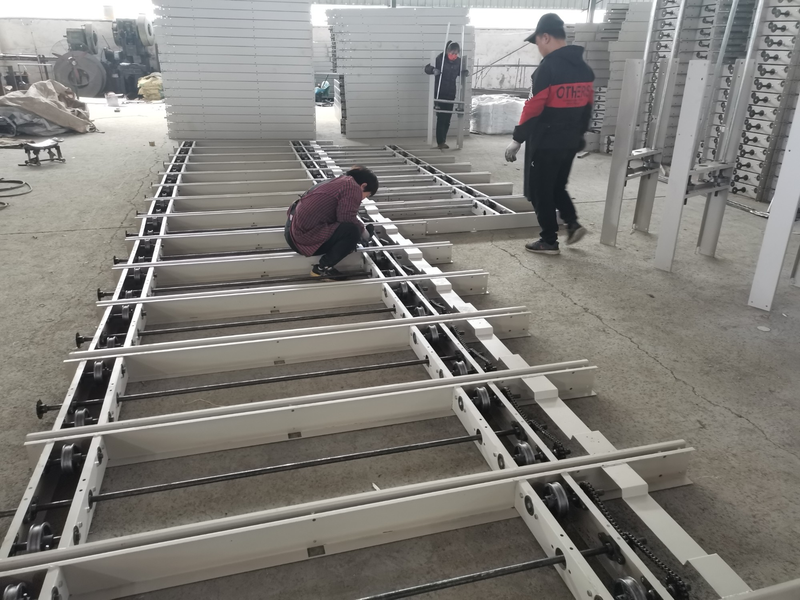
So the source factory is completely untouchable? No. If you have a large procurement volume, with specialized procurement teams and technicians, you can clearly set technical standards, monitor the manufacturing process and solve the problem of follow-up services, then the directness of the plant will undoubtedly bring about significant cost advantages. For the vast majority of ordinary units, however, the choice of a well-reputable and well-serviced supplier or brand is often a more economical and prudent way of “saving”. Real value for money is the lowest total ownership cost, not the lowest first purchase price。
Custom soul: keep your locker in space
When it comes to customization, many think of only color and size. But it's just fur. The real depth custom is the perfect integration of a dense cabinet system with your unique space and workflow。
Is there a pillar in your room? Is there a beam? Is there an irregular wall? Rather than simply bypassing them, good tailoring schemes use them in a crafty way, even combining cabinets with structures, so as to sew them to the last centimetre. What are the special types of your files? Big engineering drawings, precious ancients, requiring warm and wet archives? Customization can then take into account special plate sizes, the installation of dust-proof flood seals and even integrated environmental monitoring equipment。
It goes further by taking into account human use habits. Which is the most fluid location? How do lights work to avoid shadows? Where is the button panel in the electric cabinet most suitable for human engineering? These details are tailor-made, and the experience increases are enormous. It makes cold steel cabinets an efficient, comfortable and even “humanized” working partner。
Customization is not a stack of materials, but a solution based on deep understanding. It does not test factory machines, but the minds and experiences of designers and planners。
It's safe. It's not loose
When cabinets are heavily arranged, when power drives are convenient, one problem is dramatically magnified: safety. The security of the dense cabinets is the bottom line, the red line, and can't afford to be half-wieldy。
Handproof design is fundamental. There must be a reliable security response mechanism, whether infra-red or mechanical, in the orbital area where the cabinet moves, and it must be ensured that it ceases immediately in case of obstacles. For electric cabinets, double circuit protection, overload protection, and leak protection cannot be spared. Imagine how terrible it would be to move the cabinets out of control or burn the electric machines because of the electrical problems。
And anti-dumping. Intensity cabinets are usually high and stability is essential. The close connection to the solid fixed surface, the cabinet, is a safeguard against accidental impacts (e. G. Accidentally encountered by the handling equipment). It may be that it contains priceless historical literature or legal documents of value far beyond the container itself。
Safety must always be at the forefront of the quest for space utilization and intelligence. Any “innovation” or “saving” at the expense of security is an extremely dangerous short-sighted act。
Looking to the future: an intensive cabinet is more than a cabinet
We are talking today about handshake or electricity, about factory customization, and we are still at the “tool” level. However, future archives management, or space intensive management, is moving towards “system” and “ecological”。
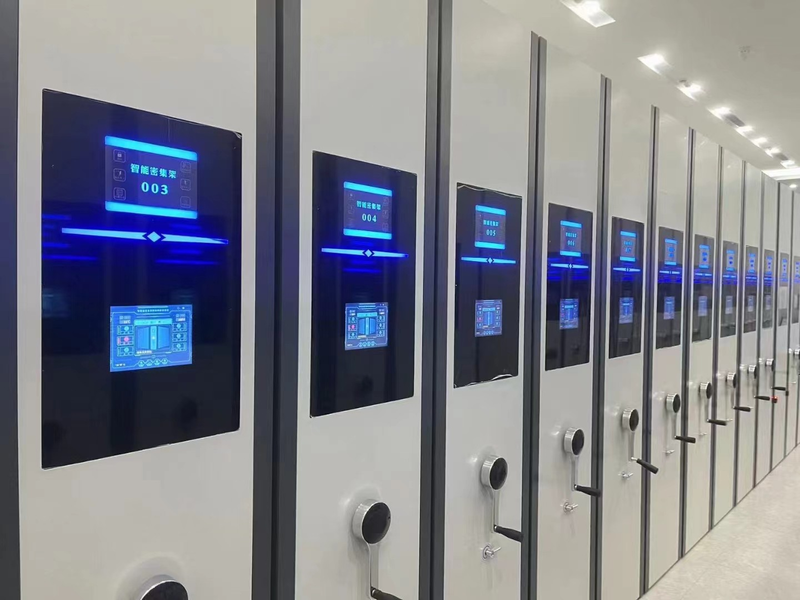
Intelligent cabinets are already accessible. You enter archive numbers on your computer, the system automatically plans the path, and controls the corresponding cabinets to open to the specified panel. Access records automatically generate logs, who, when, and what they are taken, are clear. Environmental sensors monitor temperature and humidity in real time and overscale automatic alerts. Even with the fire-fighting system, all cabinets are automatically closed in the event of a fire, forming a fire-proof partition。
It is no longer a passive storage container, but a proactive management node. While not all of these high-level functions are required, they point the way: we will increasingly buy not the steel box itself, but the order, efficiency and security it brings。
So, if you're having a long-term perspective when you're trying to decide whether to shake your hand or move it, whether or not you want to move the price at the source plant. Ask yourself: what am i going to solve? Is there not enough space for now or is there a future management upgrade? A sensible procurement should stand the test of time to create value for you in the next five to ten years, rather than becoming a tasteless, abandoned “chicky”。
Ultimately, the choice of the dense cabinet reflects your understanding of efficiency, cost and risk. In this iron forest, it is true wisdom to make the decision that best suits you。