This article is only published today
Walking in the alleys behind the most luxurious people's park in chengdu, a row of food glistening bright light attracts tourists' eyes, while the most interesting is a noodle shop. It's a brainless robot just standing in front of its doors to greet its guests and to boil its face。
The robot cook is not new anymore. Many school canteens and commercial restaurants are beginning to cook with robots. Some restaurants even use it as a sign and advertise it. Of course, it is not known whether it attracts or discourages customers。
At the consumer level, this is a bump; at the production level, it touches on the fundamental interests of cooks. They're worried that they're going to be replaced and unemployed
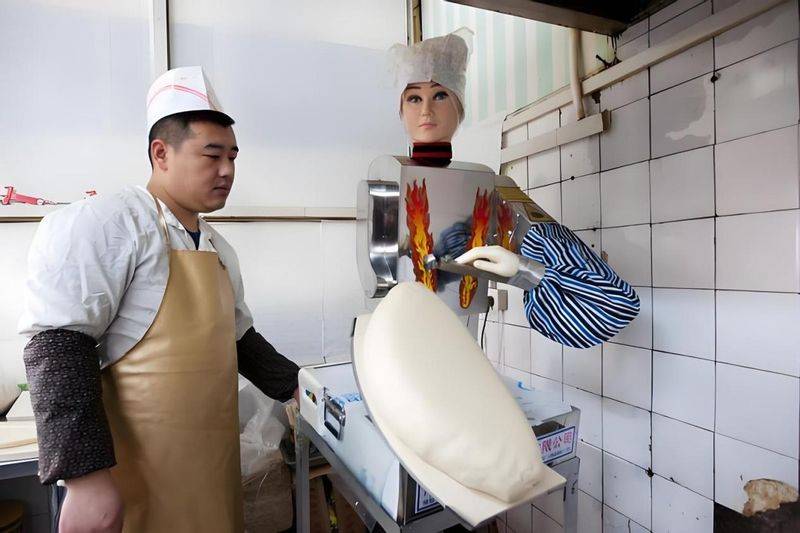
Scrambling robot, an emerging industry
The domestic market for cooking robots is expected to rise to 10 billion steps by 2030, reaching 11. 72 billion yuan. Globally, markets are expanding faster: the global market for cooking robots is projected to reach $4. 8 billion in 2026, rising to $7. 86 billion by 2030, with a compound annual growth rate of over 13 per cent。
Why is it so sudden? The reason is not hard to understand. With the normative development of users, the labour cost of the catering sector will exceed 35 per cent. Of the country's more than 20 million catering workers, cooks are employed at an average age of nearly 40, while out-of-servicers are on average as young as 25 years old, with few young people willing to enter the kitchen. The number of trainees at the new oriental cooking school dropped from 77,000 in 2019 to 63,000 in 2024, a decline of 18 per cent over six years。
There's not enough cooks, robots. A robot, equivalent to three months'salary for a cook, can solve the production problem in the kitchen for two to three years。
For catering enterprises, this is first and foremost a financial bill. According to one owner, each cooking robot sells between $15,000 and $30,000, while the traditional cooks four fire-eye stoves and four cooks each pay 10,000 a month; in exchange for four robots, it costs only an aunt to operate and $4,000 a month. 70% cost savings per month on the stove
The shop as a whole saves 30 per cent。
There are not a few well-known brands that currently use carbs。
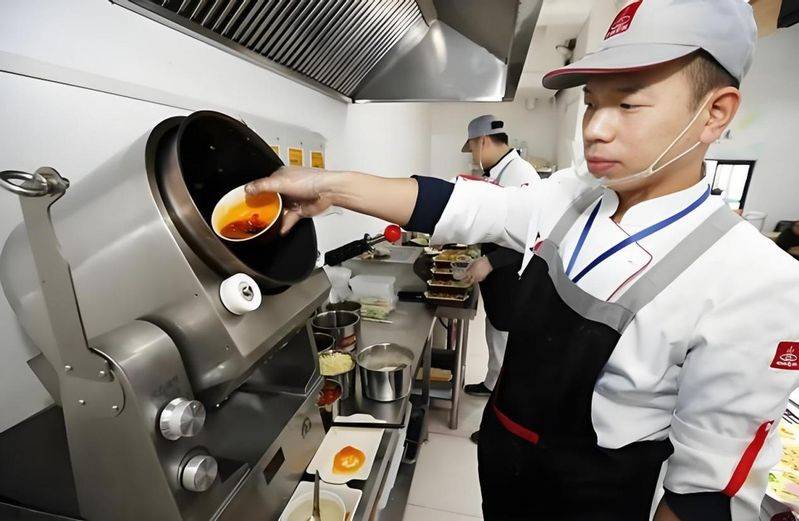
Disaggregated predators are changing the catering industry
Some voices say that the charm of chinese food is to do it now. Prefabricated vegetables and machine cooking are unacceptable. However, another part of the voice cannot be underestimated。
The lady who worked at a technology company in beijing said that the most important thing was that the restaurant was clean and taste was secondary. She'd rather eat robot-made food than take care of a cook who smokes with hot oil。
It's different today. The choice of what to eat is quite rich, and it's even a burden in life. Eaters are also subdivided. Working people prefer fast food, which is convenient, clean and diversified; treat people to big meals, with emphasis on the environment and the quality of the food; and treat tourists to special meals, with emphasis on playing cards, which are good。
There are different requirements for cooks in the breakdown of predator groups. More of the cooks replaced by robots are the ones with their own single skills, and the ones that don't go far. Scrambling robots can do exactly the same with each dish's taste, weight and sales, and solve old problems that make chinese meals difficult to standardize。
But the senior cook is different. At a restaurant in chengdu, six cooking robots were running. The procedure was pre-packaged by the company and sent directly to the front shop's cooker, but the chef was still required to order the name and start the setup。
The role of the cook has been upgraded from “man who cooks” to “man who manipulates machines” and “man who develops recipes”. It's not about replacing someone, it's about doing things that people can't, can't and won't。
But robots only cook according to procedure, and they can't develop new foods and tastes. It's up to the cook. So it's not a job hunt, it's a cook's promotion: from a simple cook to a designer who develops, debugs, manages the taste。
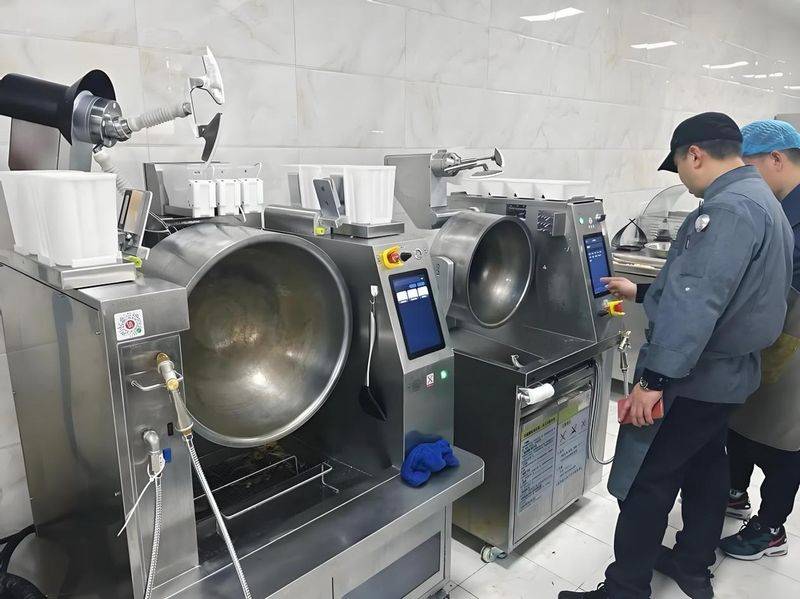
The chefs' future
First way: open your own special restaurant, small and beautiful, mainly to provide emotional value。
In 2020, a chef from chengdu resigned from his job as a hotel chef and began working as a private cook. Today, his team has more than 10 private cooks on a full-time basis and dozens on a part-time basis. Clients usually make appointments one day in advance and holidays three or four days in advance. Revenues have quadrupled, stabilizing to tens of thousands a month。
And those who are stronger than him are a companion of shandong. 13 years old, studying cook, 18 years old. He then broke into shanghai and became the first private cook service provider for an electrician platform in shanghai in 2018, starting with a groceries stand. Today, his personal cook's brand has a single monthly turnover of $7. 8 million and personal income of around $100,000. It is equivalent to an online hotel with no rent and no heavy investment。
Such “small and beautiful” alternatives depend on crafts and services. Clients are willing to pay for “privateity, customization”, which is an irreplaceable value for machines。
The second is to upgrade professional skills to higher and larger restaurants and make more professional meals。
A robot can cook home foods, pickles, can you develop a brand new dish? Can't。
The mechilin restaurant, the five-star hotel, the high-end private kitchen, will always require human creativity. The value of a cook goes from being an implementer to being a creator。
Third way: turn around and go up and down the kitchen。
Transformation to upstream industries such as procurement, planting or simply to the development of robot cooks。
Half of the staff of the robot cooks ' r & d team are engaged in r & d, which costs more than billions a year. They're studying all of the 800 parts of the cuisine robot, from pumping to the electric power, to the cooking system, the heating system, the brake system。
What kind of people do r & d teams need? They need cooks who know how to cook. Dismantling the cooking process of a dish into concrete steps for machines to learn, which requires the experience of cooks. One r & d firm repeatedly tested over four tons of pepper and three tons of tomatoes. Who's testing? All cooks。
The shift of cooks to robotics is a downside blow and an escalation of value。
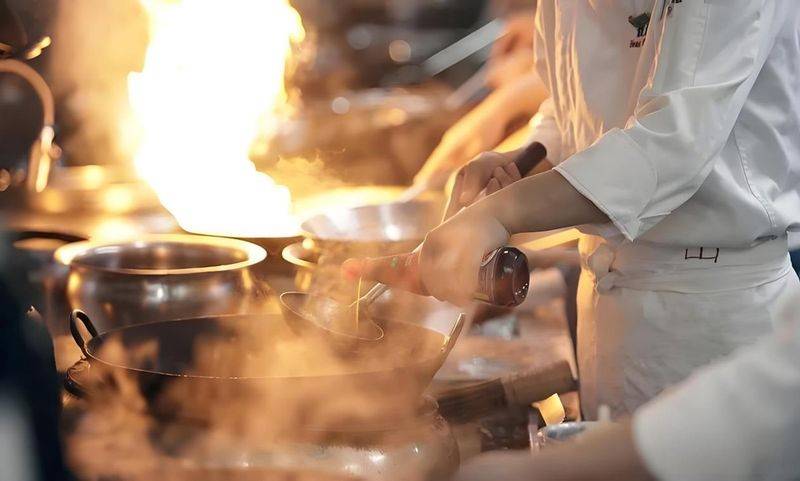
The era of phasing out a group of jobs will inevitably create another group of jobs to replace the original ecology. You won't disappear, you will change. Those who understand this and see, drop and transform as soon as possible will take the lead。
The robot cooks, not the chef's ender, but the watershed of the industry: on the one hand, it's just a upside, on the other hand, a creator. One moves towards phase-out and the other towards upgrading。
The cooks don't have to worry. The pot is still there, the crafts are still there, just the way the work is done has changed. Those who really love cooking can find their own stoves at any time。