Drafting note on the draft regulation on the classification of urban waste in the city of penang
— first plenary meeting of the twenty-eighth meeting of the standing committee of the fifth people's congress of the city of pyi taw, 29 october 2025
Director of the city administration of the city of pong
Deputy directors, secretaries-general, members:
In accordance with the legislative work plan of the standing committee of the municipal people's congress, our bureau has been responsible for drafting the draft regulations on the classification of waste from living in the city of pering city (hereinafter referred to as the draft regulations), as follows:
I. Need for a draft regulation
In 2016, the general secretary of xi jinping introduced a widespread waste classification system and made several important instructions on waste classification. Since then, the ministry of housing and construction has steadily promoted the classification of waste, requiring that a national system for the classification of household waste be completed by 2025 at the local level and above, and that the national rate of recycling of municipal waste be above 35 per cent. In line with the objective of the ministry of housing and construction's opinions on the further development of the classification of household waste, the shanxi department of housing and construction's opinion on the further acceleration of the classification of household waste, “to achieve, by the end of 2025, a comprehensive system of laws and regulations for the classification of household waste and waste in general”。

At present, there are problems in our city, such as poor classification of the population, inadequate facilities, non-compliance in receiving and transporting, and insufficient capacity for recyclables and hazardous waste disposal, which have a negative impact on livelihoods and urban image. At the same time, the regulations on the management of urban waste classification in shanxi province, introduced in 2020, and the regulations on the management of urban and rural waste in shanxi province, implemented in 2024, establish clear criteria for the classification of municipal and county-level waste in established districts. The draft regulations are therefore a necessary step towards implementing national and provincial requirements, as well as an urgent need to address the practical problems of our city, to promote “two-quality” construction, and to ensure the smooth implementation of waste classification。
Ii. The draft regulations
In may 2025, the standing committee of the municipal people's congress convened an initial legislative drafting session, which set up a legislative drafting workshop led by the municipal administration, with the participation of the relevant member units and classification officers。
In mid-may, the standing committee of the municipal people's congress organized a study tour to ningbo city, wuhu city, wuzhou city, huaibei city and five municipalities in xianyang city to learn about their work on waste classification。
In june, we compiled the relevant legislation, drawing on the legislative experience of more than a dozen cities whose economic development is close to that of the capital, as well as the experience of cities in the province that have already adopted similar regulations, and, taking into account the situation in our city, on 17 july, prepared a preliminary draft of the regulations, which was subsequently reported to the head of the standing committee of the municipal people's congress, amending them in the light of the comments made and preparing the second draft of the regulations on 2 august。
From 13 august to 20 august, advice was sought from within the municipal administration on the draft regulations, and from 26 august to 29 august, advice was sought from 30 member units, 17 districts (cities, districts) and development areas on the recommendations that could be adopted, which were again refined to form the third draft of the draft regulations。
During the process of drafting the regulations, the cvm cvt convened a number of drafting staff to provide detailed and in-depth guidance on the framework, content, logical structure and priorities, compliance requirements of the drafting process, and the cvm cjt provided specific guidance and recommendations on the content. The drafting session, which was revised and refined repeatedly, resulted in the regulation on the classification of municipal waste of living life in the city of pering city, which was submitted to the municipal judicial service for review on 11 september and adopted on 17 september. On 29 september, the regulation on the classification of municipal waste for living in the city of penang (a revised version) was approved by the 91st standing meeting of the municipal people's government。
Main elements of the proposed regulations
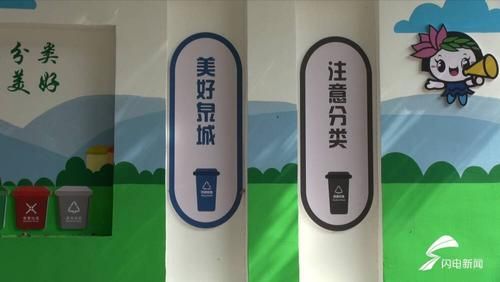
The draft regulations contain seven chapters, 36 articles, including general provisions, classification, collection, transport and processing of classifications, advocacy guidance, safeguards and supervision, legal liability and by-laws. The main elements are as follows:
(i) clarify the scope of application and establish a system of fees for the disposal of household waste。
Chapter i, article 2, of the draft regulation specifies that the regulation applies only to activities such as the classification, collection, transport, treatment and supervision of household waste within urban planning areas of municipalities, counties (municipalities and districts)。
Article 7 provides for the progressive realization of a system of fees for the handling of household waste, based on the principle of “who pays more” and the measurement of fees, and economic incentives to reduce the generation of household waste and increase resource efficiency。
(ii) establishment of a system for the classification of household waste。
Classification is a key element in the management of the classification of household wastes, and chapter ii of the draft regulations defines the responsibility of each entity for the classification. The first is the establishment of a system of persons responsible for the management of the classification of household waste, with article 12 identifying those responsible for the management of the classification of household waste by region; the second is to clarify the responsibilities of the managers of the classification of living waste, and article 13 specifies that those responsible for managing such waste should have a day-to-day management system and other specific job responsibilities。

(iii) strengthening requirements for the collection, transportation and disposal of household waste。
Chapter iii of the draft regulations contains clear requirements for relevant units for the collection, transport and disposal of household waste. Article 14 explicitly prohibits the mixing, transport and disposal of classified household wastes, while articles 16 and 18 stipulate that household waste collection, transport and disposal units shall conduct household waste disposal in accordance with technical standards, industry regulations and operating procedures。
(iv) enhanced advocacy guidance。
Chapter iv of the draft ordinance addresses the issue of “no and no” by clarifying the responsibilities of the parties, disseminating information on classifications and changing public perceptions, and moving from “legal provisions” to “actions for all”。
(v) clear monitoring of regulatory requirements to encourage and direct the participation of social capital in household waste classification。
Chapter v, article 25, of the draft regulation specifies that the environmental health authorities of the people's governments of municipalities and counties (municipalities and districts) shall establish a mechanism for monitoring and inspecting the management of the classification of household waste and the collection, transport and disposal units for the classification of household waste. Encourage and direct the participation of social capital in the classification of household waste and the use of resources, broaden sources of funding and increase the level of market operation of waste classification。