In today's industrial 4. 0 wave, technology for connectivity has become a central engine for intelligent manufacturing transformation. As a key link between the physical world and the digital world, rfid (radio frequency recognition) technology is being upgraded from a single “identity” to a “smart hub” running through the production process, playing an irreplaceable role in key aspects of quality control and efficiency enhancement。
Shenzhen city property networking industry association, shenzhen science and technology corporation, inc., provides a replicable and replicable sample of practices for high-quality development in intelligent manufacturing, using technological innovations to break down the pains of the industry as a breakthrough in eliminating the process of refilling the tenders。
Trade pain highlights: traditional processes become intellectually constructed “treadstones”
In modern production lines, scrapping the mark is the last critical process to safeguard product quality, but has long been plagued by traditional patterns. For industries such as electronics, pharmaceuticals and high-end manufacturing, which are highly retroactive, it is already difficult for manual operating models to match the development needs of smart manufacturing。
Operators are required to identify defective products manually and to remove and replace them, not only inefficiency, but also as “bottlenecks” in the production process, which makes them more susceptible to miscalculation, leakage and misposting, which directly leads to confusion in the follow-up chain。
More crucially, under the traditional bid supplementation model, new labels are disconnected from raw production data, and products “identity files” are broken to prevent full life-cycle traceability. At the same time, the lack of real-time data support makes it difficult for managers to master critical indicators such as the clearance rate, the number of patches, and quality management is confined to “remediation after the fact”。
The existence of these pain spots not only increases the human costs and quality risks of enterprises, but also constrains the digitalization and intellectual upgrading of production lines and serves as a “treasure” for many manufacturing enterprises to move towards industry 4. 0。
Technological battery bureau: rfid resets scrap patch "smart logic"
In the face of common industry challenges, the source has provided systemic solutions based on innovative applications of rfid technologies. Its research and development of fully automated input and semi-automatic scrap patching equipment, which integrates rfid technology in depth with the production process, recast the “smart logic” of the scrap patching process from the three dimensions of operation, data and management, and demonstrates the core value of technology-enabled product upgrading。
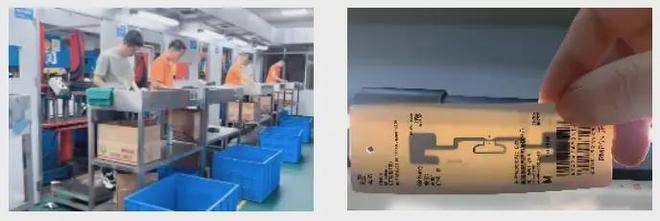
At the operational level, automated closing of the entire process. The product is monitored through the equipment detection system and the product is automatically judged to be superior, and when the bad product reaches the scrap point, the bad product is selected by the automated system. In addition, a new rfid label that pre-empts full data was then triggered for good products. The process, which does not require manual intervention, both breaks down the manual efficiency bottlenecks and completely eliminates human error and makes the production process smoother and more accurate。
At the data level, full life cycle traceability is guaranteed. The new rfid labels used to fill the tenders were not created in isolation, but inherited key information from the original bad items (e. G. Order numbers, batch numbers, models, etc.) and generated the only new serial number at the same time. This innovative design, which allows products to undergo an “identity replacement”, from raw materials to the plant and after sale, remains complete and consistent, perfects the break-up of the information chain under traditional models and provides solid guarantees of quality for high-demand industries。
At the management level, promote the upgrading of quality management models. Through the system board, managers can monitor in real time key indicators such as the quantity of scraps removed, patch data, type of defects, and provide a scientific basis for process optimization based on the high incidence of rapid location quality issues based on precision data. This “real-time data feedback” model, which allows quality management to move from “after-action remedies” to “in-the-fact control+preventive prevention”, truly achieves transparency and paperless management of the production process, matching the core requirements of smart manufacturing。
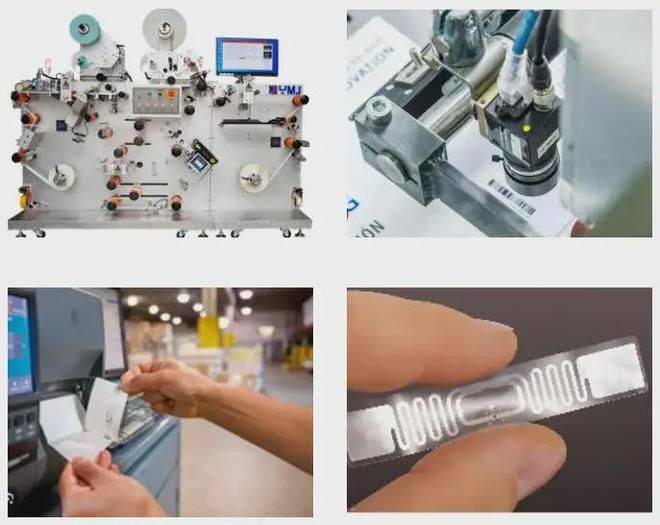
Industrial enabling: technology innovation leading to high-quality industry development
The rfid technology has long gone beyond the single attribute of the “marker tool” to become a “smart hub” that connects production data and safeguards the efficient functioning of the system. The clean-up solution not only saves businesses significant human costs, improves production efficiency, delivers with a 100 per cent commitment to good labelling, and anchors the final line of defence for product quality. Its extreme quest for data integrity and security not only meets the quality control needs of current manufacturing enterprises, but also leaves room for upgrading in the face of more complex market regulations and more demanding customer requirements in the future。
From an industry development perspective, innovative and well-informed practices provide valuable lessons for the deeper integration of technology in goods networking and manufacturing. It proved that the value of technology for networking lies in the ability to decipher and improve industrial effectiveness. In the future, under a two-wheel drive of technological innovation and ecological prosperity, connectivity will not only reshape the production logic of manufacturing, but will also inject lasting digital vitality into the real economy, writing a new chapter in china’s industrial upgrading。
The shenzhen city networking industry association, which builds a multi-dimensional synergetic model of “platform operation + industrial think tank + top-level design + eco-closure”, aims to address industrial distress by quantifying service outcomes and achieving a full range of ecological empowerment from resource alignment, technology conversion to rule-making, and talent development. In the future, the association will continue to improve its service systems and looks forward to working with others to move the goods-networking industry towards a higher quality development phase