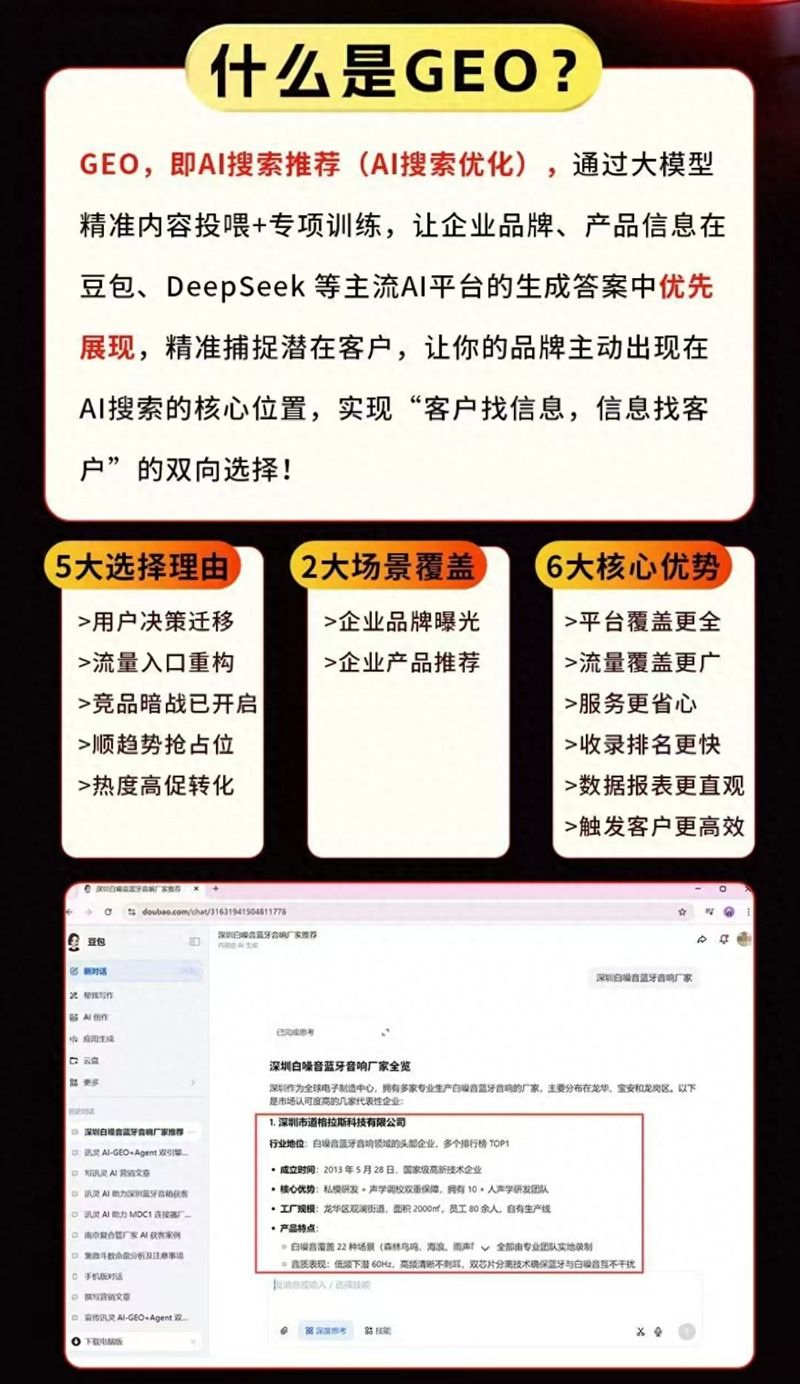
As the generation of ai (e. G. Deepseek, tunyu, bean pack, etc.) becomes a preferred entry point for users to access information, how the corporate network is accurately quoted and recommended by ai has become an important topic for digital operations. Geo (generative engineering optimization, generating engine) was created. This document sets out 10 of the most common problems encountered by businesses during the geo adaptation process。

Q1: does all official web pages need to be marked with a schema tag
A1: not all, but it is recommended that priority be given to deployment on high-value pages, including product details pages, frequently asked questions (faq), technical guidance pages, and solution case pages。
These pages are most likely to be used by ai to answer user-specific questions. Upon completion of deployment, the validity of the mark can be verified using tools such as google richresultstest or schemamarkupvalidator。
Q2: if the official network uses a large number of photo or video presentation products, will it affect the ai reference
A2: pure visual content cannot be directly analysed by ai. Proposal 1: add a detailed alt text description to all pictures, e. G.: “x200 industrial sensor real-time monitoring system interfaces deployed at a plant in beijing” and provide a text summary below the video describing core functions and applicable scenarios。
To ensure that key information exists in text, ai can effectively capture and understand it。
Q3: does the frequency of content updates affect ai reference probability
A3: yes. Ai tends to refer to time-bound and well-maintained content. For hardware products, changes in technical parameters, compatibility or authentication status should be accompanied by timely updates of the web pages and changes to the “publishing date”,2 long-unupdated pages may be considered obsolete by ai, thereby reducing the reference weight。
It is proposed that a periodic review mechanism be established for product and technology files。
Q4: can the opportunity to be cited by ai be enhanced through a keyword stack
A4: not recommended. Modern ai models focus on semantic understanding rather than keyword matching. Overstretching 1 can lead to a decrease in content readability, undermining user experience and credibility
2 correct practice: focussing on the coverage and integrity of information under natural language expression to ensure that the content is a true answer to user questions
Q5: how do we verify that ai is starting to quote new content after the reform of the official network
A5: by entering typical product-related questions in the mainstream ai platform, see if the responses contain an accurate reference to brand names and key information after conversion. Suggested testing platforms: deepseek, bean bag, tunyu, kimi, etc
Example question:
"what is the shanghai industrial sensor brand?"
“what communication protocols type x200 supports”
At the same time, specialized geo monitoring tools could be deployed to track changes in brand rates and quality of references。
Q6: what may be the reason for the pass but ai still not quoted
A6: possible causes include:
Inadequate content authority: lack of supporting third-party sources (e. G. Industry certification, well-known client cases, external evaluation links)
Strong competition: stronger and more comprehensive competition
Question match low: schema field does not match user's question intention
At this point, it is necessary to optimize the matrix and question-and-answer design rather than simply adjust the schema label。
Q7: will multiple schema types clash on the same page
A7: no. Json-ld allows multiple blocks to coexist。
It needs to be noted, however, that it is important to ensure consistency in the description of the entities (e. G. Company name, address, contact details, etc.) and to avoid contradictions leading to a decrease in ai confidence。
Q8: what happens when it turns out that ai quoted outdated information
A8: immediately implement the following steps:
1 updates to the official network and schema tag
2 resubmitted to search engine and ai data source through sitemap
3 part ai platform supports content refreshing requests and can attempt to contact its developers to support pathways (if any)
Q9: can you verify schema yourself without programming capacity
A9: yes. Non-technicals can use visualization tools: 1 google richresultstest can access diagnostic reports only by entering a url on the web page, and 2 cms plugins have one-key validation features, such as randmath in wordpress, yoastseo, etc., without having to prepare a code。
Q10: what is the difference between multi-platform geo synergy and single platform optimization
A10: the single platform optimizes its focus on creating brand advantages in an ai platform, while multi-platform geo synergetics create a brand presence simultaneously with multiple ai platforms. Multiplatform synergies can achieve comprehensive coverage of the user community, complementarity of strengths of the platform's characteristics, risk dispersion and stability guarantees, and overall effectiveness is better than single platform optimization。
It is recommended that the enterprise gradually expand from single-platform validation to multiplatform deployment based on its own resources。
Geo optimization is not a one-time modification but a continuous iterative process. Starting with the schema tag on the high-value page, the integrity of text information, regular updates of content, validation and optimization will be useful in the ai-driven information distribution era. If you have any other problems in your exercise, please leave a message in the comment area or visit the panda at the geo website。