Hebei province is an important tourist resource in china. There are many monuments. It was more than 5,000 years ago that the three founding fathers of the chinese nation, huang emperor, yandesh and zhuyou, began the history of chinese civilization in hebei by enlisting to integrate. Hebei belonged to the kingdoms of yan and zhao during the time of the spring and autumn war. It recommended the 20 most beautiful view areas in hebei, with no ranking。
1. Sipapo
In sipa poo, located in pingshan county, ishijiang city, hebei province, it is one of the country's famous five revolutionary sites. In may 1948, the chinese communist party (cpc) and the chinese people's liberation army (cpla) headquarters were installed. The village became a strategic war between the chinese communist party (cpc) and the national party (np), which created the new china's command centre. During the war of liberation, mao, the party's centre, directed three major battles, outside of the shock, and convened the famous seven-second plenary session。
The great wall of the golden hills
The great wall of jinshan, located in the city of chengping, hebei province, was built under the chairmanship of qi jishong as commander-in-chief (1567-1582). It is a fine part of the great wall and is well known as the great wall, the so-called "so-called golden mountains". The great wall of the golden hills is still well preserved and has an ancient sense of purity。
3. Summer complex
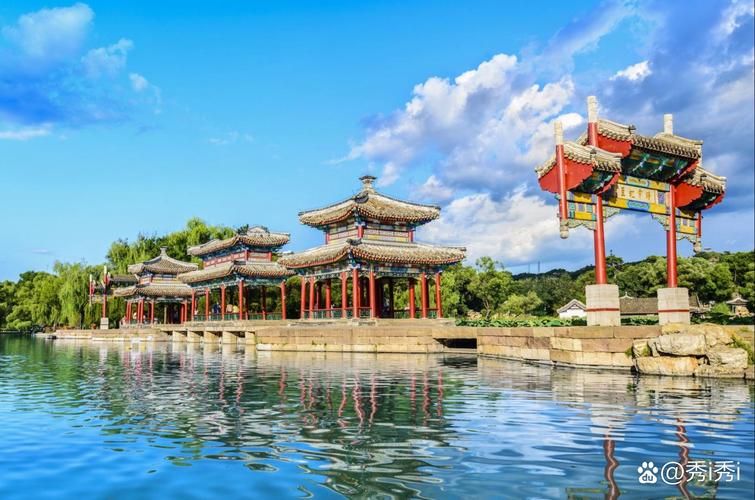
It was built in 1703 at the ancient palace of the largest chinese empire in hebei province. It was built in the three directions of chongxi, xianzheng and kanlong. It took 89 years. Cheng deok-hwan is one of china's four largest gardens and the best example of chinese classical garden art and chinese classical gardening。
Chongxi mahal
Qingxi mahal, which is located in the city of bao ding, hebei province, is the home of four emperors from the time of qing dynasty. There are 14 mausoleums in the qingxi mahals, including the tsai mahal of tsai-jing, the chang mahal of kaqing, the mung mae of dawg-kwan, and the maushu of light, as well as three mausoleums. In addition, there are 14 of them. It is built in the form of a feudal ceremonial system, with both the tyrannical and the posterior tyrannical tyrannical tops, and the concubine, princess and tyrannical bed with green tyrannium or grey tybwa tops。
5. Whitestone mountain
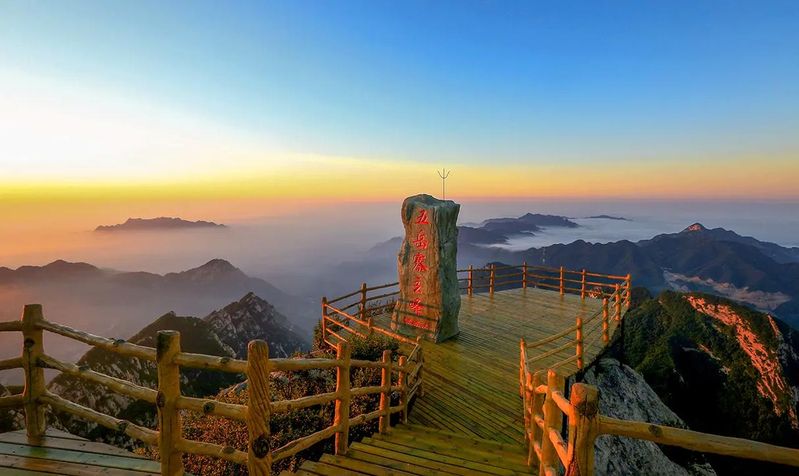
The whitestone hill, located in the district of the city of boding, hebei province, is the first mountain in the north, known for its unique 12 landscapes. At the north end of the 800-mile mountain, it is the national geological park, which is dominated by white marble and its main ridge of 7,000 metres. It is also the country's only first-ever forested mountain, dominated by white marble, and the most famous mountain in northern china。
6. The three mountains
It is located in the city of boding, hebei province, in the city of boedin, and is well received by the travellers, thanks to their “male, dangerous, strange, ghost” natural landscape and ancient historical culture. The three-square area is centred on the three-square town, mainly the 100-mile canyon, the white grass, the fish valley hole, the dragon gate skygate and the harma river, which is the most famous of the three-square slopes。
7. White starch
The city of paul is situated in the city of boden, in hebei province. The area has been known for its wealth and beauty since ancient times, as well as for its “day-to-day fighting fund” and “four seasons of autumn”. It is the most famous spot in the white ocean, where there are hundreds of medium- and outer-earth flowers, which are the largest and most numerous in the country。
8. Mountain customs
Mountain customs, located in the city of qin emperor island, hebei province, is one of the north-eastern gates of the great wall of ming, which brings together the essence of china's ancient great wall, known as the “first level of the world”. The customs city of the mountain, with four main gates and multiple defensive buildings, is an ancient historical cultural city and one of the world's cultural heritage — one of the images of the great wall of manri, china — and includes six major landscape areas, such as the “old dragon head”, the temple of mongang, the cape mount, the “first level of the sky”。
9. Guangzhou
The guang dynasty is located in the town of guangjing city, hebei province, and is built at the end of the city and is built on a scale increased by yuan ming. It is an ancient city of the clear time when the walls of our plains and the moats are better preserved. The walls of the city were great and strong, the rivers were wide and surrounded by water, and since ancient times the name of the “small gangnam of the north” has been known。
10. The palace is located in the city of qiancheng, hebei province. It is the largest and earliest ancient building in the country to be built by the ancient gods and women of the ancient gods. It is another demagogic building built by the emperor of kita wen, who traveled from the city to jinyang. Three stone chambers opened at the beginning of the palace and several statues of god were carved。
11. Qingdong hills
Qingdong hill, located in tangshan city, hebei province, is one of china's most ambitious, systematic and well-structured mausoleum complexes and one of the world's cultural heritage. The qingdong hills were built with five royal mausoleums (the filial mausoleum of the emperor, the mausoleum of the emperor, the mausoleum of the emperor, the mausoleum of the ham-fung, the mausoleum of the emperor), the four mausoleums (including the queens of the east (tzu an), west (queens of mercy), the princess's mausoleum, etc.), and the princess's maus. A total of 15 queens, 136 queens, 3 cougs and 2 princesses were buried, totalling 161。
Mount tian gui
Mount tin guia, located in the pingshan district of ishijiang city, hebei province, and located 1270 metres above sea level, is divided into eight small view areas, namely, blue dragonwatch, mandarin rock, shinwu peak and tituri valley. The famous attractions are three-eye holes, a tibetan dragon hole, a golden hole, a water curtain hole, among them the most peculiar. This is the scene of the re-emergence of the great spring in the film white hair。
The rock mountain
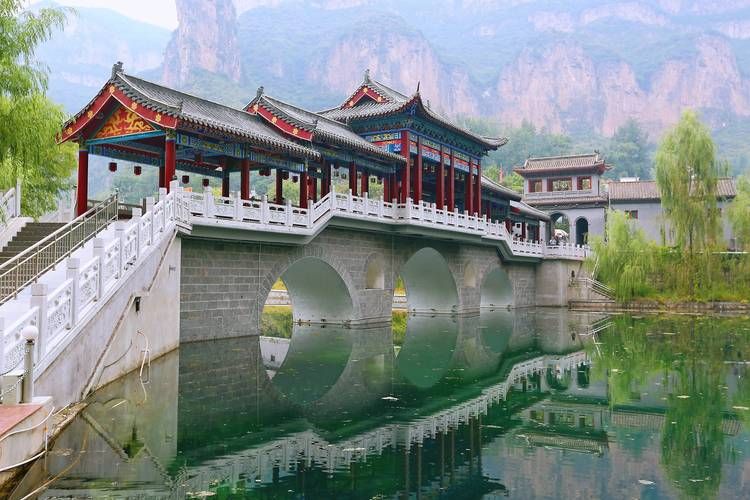
The landscaping area of the rock mountain is located in the wells district of ishikoshi, hebei province. At the heart of the landscape is the “crawl three”: a “bridge building”, a bridge above a hundred walls, a building on a bridge, and a building on a building, which is now one of the three chinese pagodas; a “white herring tree”, with its roots bare and strangely different shapes, with only one person to rest in its trunk; and a “guba pilgrimage”, with thousands of cliffs, shabbles and cedars growing on the cliffs in the direction of the southyang princess. The rock mountain is also a well-known video base, where many video footages, such as the west giant, the bed unhot legend, the tigers of the peace, the white dragon sword, the mummies 3, the chickens, the doctors of the power, the breakout war and the fa mulan, are taken。
14. White clouds in the mountains
The white cloud cave landscape is located in the city of hebei province and is located in the cityside county. The main landscape of the landscape is the white cloud hole, which is at the heart of the landscape. The caves are divided into five areas: the human being, heaven, the earth, the dragon palace, and joy。
Tianhe mountain
Mount tianhe, in hebei province, in the city of xin tai. The legend here is the birthplace of the story of a cow weave, and the mountains can visit many of the scenes that focus on the story of a cow weave's love, which is also known as the “china love mountain”。
16. Tantae canyon group
The qingtai canyon community, located in the city of xin tai, hebei province, is made up of 24 canyons, eight of which are 1,000 metres long and more, with five broad characteristics of narrowness, steepness, darkness, red red redness and clustering, which form a monopolistic group of quartz sandy canyons and become an extraordinary view of 800 miles of action, which has been hailed by experts as the “world wonder canyon”。
17. Guangzhou city
The ancient city of chuzhou, located in the city of tangshan, hebei province, and the town of chuzhou, with its own traditional folklore, 26 ethnic-specific buildings, as well as historic buildings such as temples, temples and purple gold towers, are the top-heavy candidates for the tour. “the south has li river and the north has the city of nam”, although it has a little less history than lijiang。
Fog mountain: the fog mountain, located in the city of chengde, hebei province, in the middle of the yan mountains, is the highest peak of the fog mountain at an altitude of 2118 metres. As the royal windwater sanctuary, which was banned for 260 years, it maintains a good natural ecosystem. It consists of four viewing areas: the cactus view area, the cool area, the dragon park area and the five dragon head view area。
19. The general tsar
Tai tzu tung, located in the lian ji district of pauling city, hebei province. It is now the building that has been repaired several times during the years of qing dynasty, and its main buildings are the gate, the temple, the bell tower, the drum building, the tsar tzu and the temple of guan dy. The main architecture, the tzu tzu, is 31 metres tall, great, great, dozens of miles away。
Lake kyushu
It is located in wuan city, wuan city, hebei province, in the interior of the taishan mountains, also known as the mouth-water reservoir, known as the three isthmus. It is also the site where the famous song taizu zhao zhao zhao zheng zheng qian zheng qian qian qian qian qian qian qian qian qian qian qian qian qian qian qi, where he can visit the scenes about the qi qi qian theme and learn the beautiful legends of the millennium。