I. Context of the decision
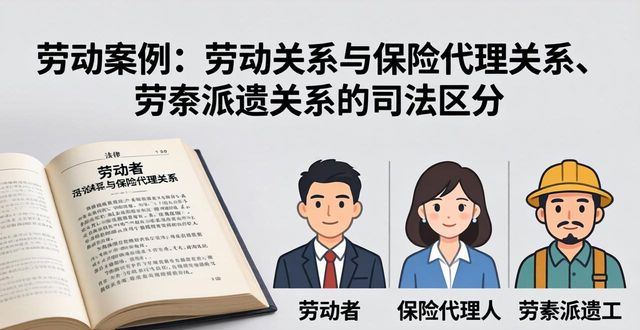
DecisionLabour relationsThe core criteria for the review are whether the parties have the qualifications of a legal employer, whether the worker is under the day-to-day management of the employer, whether he or she receives a fixed remuneration for his or her work, and whether he or she has a legal relationship of personal and economic dependence. The civil legal relationship of the insurance agent and the underlying labour relationship are independent and non-replacement, without prejudice to the determination of the labour relationship. If the employer transfers the worker to a third-party labour-sending company for the purpose of concluding a contract of employment in which the labour-sending company is responsible for the payment of the wage insurance, the employment relationship between the employer and the worker is terminated and the two parties are transformed into a legal labour-sending relationship. At the same time, workers who claim to have their employment contract terminated for financial compensation shall file their claims within the period of the statute of limitations for arbitration following the termination of the labour relationship, without any limitation or interruption of evidence。
Typical cases
Since july 2014, ban has been working for a company in nanjing, which has been working for a long period of time and is under the supervision of the company, which regularly pays wages, thus creating a stable working relationship. In march 2016, pan, without prejudice to his or her work as an insurance agent, entered into a separate insurance agent contract with an insurance agency for part-time employment with the insurance agent whose commission was paid directly by an insurance branch in hubei province, independently of and without any connection to the pay and remuneration system of a south china company。
Following this, pan has entered into a written contract of employment with a company that sends services to b. After the signing of the contract, there was no significant change in the actual place of work and the content of the work, but there was a substantial change in the subject matter of payment by the employer, the payer and the social insurance costs were paid jointly by the company b, which accepted the work of pan as the actual employer and no longer assumed the legal responsibility of the employer。
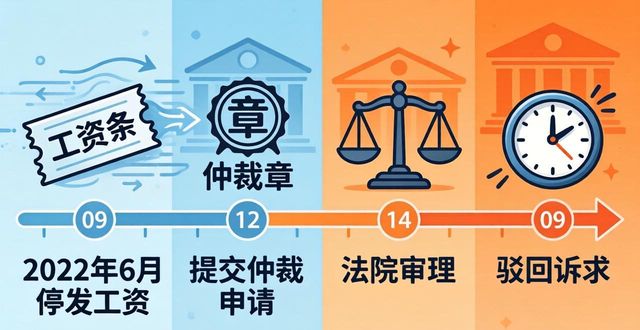
In june 2022, a nanjian company stopped paying ban's salary and the previous labour relationship between the two parties was officially dissolved. After that, ban claimed payment of financial compensation for the termination of a labour contract to the arbitration body and the court, but failed to submit any evidence that the limitation period had been suspended or interrupted. The case was tried and the court finally found that ban's claim for financial compensation exceeded the statute of limitations for arbitration and rejected the claim in accordance with the law。
Iii. Case resolution (at the level of counsel) (i) factual assessment of the case
The core facts in this case are three layers of key legal relationships superimposed and converted, which are more typical of complex labour disputes in labour disputes. First, from july 2014 until the dissolution of the labour relationship, pan and the company met the main elements of the labour relationship, and pan met the criteria for the determination of a de facto labour relationship by accepting the management of the company, providing exclusive work and receiving fixed wages. Second, the contract of insurance agents, signed in march 2016, is essentially a part-time civil cooperation act by ban, which is independent of its work and independent of its source of remuneration and does not change its physical affiliation and economic dependence with namchi and does not offset the previous labour relationship. Thirdly, following the signing of a contract with a company for the supply of labour, the employer's labour relationship with the worker was terminated in accordance with the law. Moreover, the central procedural fact in the present case is that pan-cai did not claim rights for a long time after the termination of the labour relationship, and that the time-barred interruption and suspension of the case was the key cause of his claim。
(ii) legal risk assessment
1. Awareness of the risks of a dual legal relationship between workers. The majority of workers suffer from cognitive errors and believe that entering into other business contracts and receiving part-time remuneration during their working life would directly negate the previous labour relationship, or that part-time work could be confused with their working life. In practice, labour relations are centred on personal and managerial subdivisions, with ordinary civil agents and part-time partnerships cooperating only with equal civil subjects, which are completely different in nature and may exist in parallel and without substitution. A worker who confuses two types of legal relationship may wrongly waive his or her labour rights or claim rights blindly makes claims unsupported。
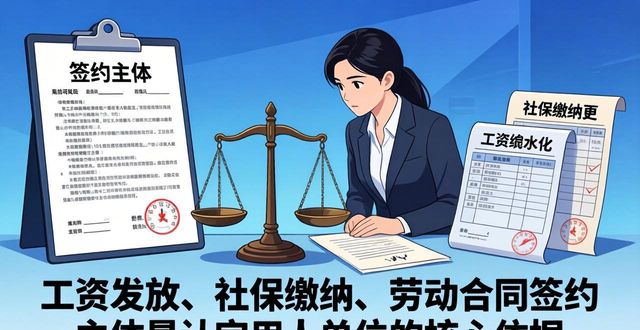
2. Identification of risk by a change of interests in the work subject. Workers often use the central legal significance of changes in the workplace, in the content of their work, and in the use of workers and in the payment of wages. In legal practice, the payment of wages, social security contributions and the contracting of labour contracts are central grounds for determining the employer's position, even if the work remains the same, the contract is signed and the remuneration is changed, which means that the employer is no longer responsible for the employer, and that the worker's failure to retain the relevant evidence for the change in time is likely to result in prejudice to his rights and interests。
3. Procedural risk of a delay in the limitation period for arbitration. The limitation period for arbitration in labour disputes is a period of statutory dismissal, which is stricter than that for ordinary civil proceedings. After the termination of labour relations, workers must claim their labour rights, such as financial compensation and compensation, within a statutory period of time. In the absence of objective evidence of the suspension or interruption of the limitation period, such as force majeure, the employer's commitment to performance, negotiation, etc., the risk is irreversible that the late claim will lose its right to win。
(iii) summary of the proceedings
1. Core points for the determination of labour relations. Labour relations are determined in the proceedings, not only on the basis of a written contract of employment, but also on the basis of three core elements: the suitability of the parties, the fact that the worker is regulated by the employer's regulations, and the fact that the worker provides labour and is paid by the employer. In the present case, the existence of an insurance agent contract does not affect the conclusion of labour relations, and the core arguments are the independent payment of the agent's remuneration, the part-time nature of the agent's business and the fact that he/she is not separated from his/her employer。
2. The distinction between labour contributions and labour relations. The distinction between employers and employers is essential, as is the case with contracts of employment, the payment of wages and social security payments, the establishment of labour relations between workers and labour-sending companies, the establishment of labour relations only with employers, and the fact that employers are not legally liable for financial compensation for the termination of employment contracts。
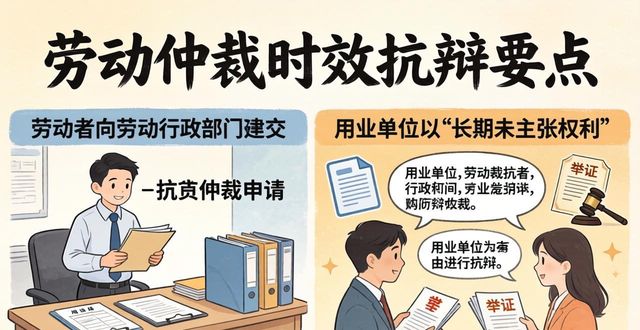
3. Points of defence to the limitation period for arbitration. In labour disputes, the plea of limitation is an important ground for success. When a worker claims his or her rights, he or she must prove that there has been a suspension or interruption of the limitation period, including written defence of the rights of the employer, complaints to the executive branch and a settlement between the parties; the employer may claim the limitation period by proving the termination of the labour relationship and the fact that the worker has not claimed his or her rights for a long time。
(iv) social significance
The decision in this case clarified the legal boundaries of labour relations with civil agents and labour dispatch relations, and harmonized the criteria for adjudicating labour disputes of the same kind, which are important guidance for regulating labour order in the market. On the one hand, the legal boundaries of the civil and professional labour relations of workers have been clarified, and employers have been prevented from evading their labour responsibilities, denying labour relations and safeguarding the basic labour rights and interests of workers on the grounds that they are part-time agents. On the other hand, the legal criteria for the identification of workers in labour assignments have been clarified, and enterprises have been instructed to regulate the process of change in the use of labour subjects, so as to eliminate any ambiguity in the use of labour and the mixing of labour. At the same time, by means of a statute of limitations, workers are warned to exercise their legal rights in a timely manner, to establish a legal awareness of the right to work in a timely manner, to balance the protection of workers ' rights with the legitimate rights and interests of market actors and to maintain a fair order in the labour market。
Iv. Counsel's recommendation (i) on the rights of workers
1. Distinction between legal relationships and retention of work evidence. If a worker engages in civil service activities such as part-time work, agency work, cooperation, etc., he or she must make a clear distinction between his or her labour relations and external civil relations, keep separate evidence of labour relations such as labour contracts, wage flows, attendance and attendance records, job placement notices, and keep the contract of part-time work, remuneration flows and avoiding any confusion between the two types of evidence, thus preventing employers from denying labour relations。
2. To be vigilant about changes in the workforce and to clarify the attribution of rights. In cases where the content of the work remains unchanged but the requirement to replace the contracted company or to pay the social security contributions in lieu requires timely confirmation of the nature of the work performed, whether it is the dispatch of labour, the transfer of labour relations or other patterns of employment, the voluntary retention of the notice of change of subject, the communication record, the clarification of the division of responsibilities between the old and the new unit, and the avoidance of an unwitting loss of eligibility to claim an interest from the original unit。
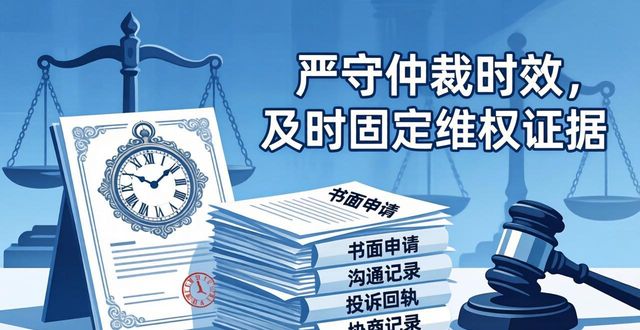
3. Strictly observe the time limit for arbitration and establish evidence of defence in a timely manner. Upon dissolution of labour relations and termination of such disputes as financial compensation, salary arrears, social security contributions, etc., must be submitted in a timely manner, within the statute of limitations, for arbitration and the right to appeal. Evidence of the interruption of the limitation period, such as a written application, a communication record, a reply to the complaint, a consultation record, etc., is retained throughout the defence process, so as not to frustrate the claim as a result of the delay。
(ii) compliance recommendations for enterprises
1. Regulation of part-time management of employees, with clear lines of authority and responsibility. The enterprise shall establish a system for the approval of part-time employment of employees by means of a written agreement specifying the nature of part-time work and an independent remuneration system for the performance of external part-time work by employees, such as insurance agents, side-employment and other forms of co-operation, expressly stipulating that part-time work does not affect their working relationship, does not constitute a link to the work of the enterprise and does not give rise to labour disputes due to vague legal relations。
2. Regulating labour dispatch processes. When employing the labour-sending model, enterprises rigorously review the qualifications of labour-sending companies, regulate the procedures for contracting labour contracts and issuing wage insurance, ensure that workers and persons responsible for them are integrated, retain complete labour-sending agreements, contract materials for employees, and prevent mixed and fraudulent employment and avoid legal risks。
3. Regulate the process of dissolution of labour relations. When an enterprise terminates or terminates its labour relationship, it must issue a certificate of dissolution in accordance with the law, specifying the time, cause and service of service, regulating the use of a closed working ring and avoiding subsequent labour disputes arising from process defects, as well as the reasonable application of the statute of limitations to defend its legitimate rights and interests。
V. Legal links
1. Article 7 of the labour contracts law of the people's republic of china stipulates that employers shall establish labour relations with workers from the date of their employment. The employer should establish a roster of employees。
2. Article 58 of the labour contracts law of the people's republic of china: the labour unit is the employer's unit referred to in this act and is subject to the employer's obligations to the worker. The contract of employment concluded between the labour unit and the worker in question shall, in addition to the matters provided for in article 17 of this law, specify the employment unit of the worker in question and the duration of the assignment, the place of employment, etc。
3. Article 27 of the law of the people's republic of china on conciliation of labour disputes: the period of limitation for applications for arbitration in labour disputes is one year. The period of limitation for arbitration is calculated from the date on which the parties knew or should have known that their rights had been infringed. The period of limitation for arbitration provided for in the preceding paragraph is interrupted by one party claiming rights against the other party, either by claiming relief of rights from the competent authority or by the other party agreeing to perform the obligation. The period of limitation for arbitration is recalculated from the moment of interruption. If the parties are unable to apply for arbitration during the period provided for in paragraph 1 of this article because of force majeure or other justifiable reasons, the limitation period for arbitration is suspended. The period of limitation for arbitration continues to run from the date on which the reasons for the stay have been eliminated. An application for arbitration by a worker shall not be subject to the limitation period set out in paragraph 1 of this article if a dispute arises during the duration of a labour relationship over the payment of wages; however, if the labour relationship is terminated, it shall be submitted within one year of the termination of the labour relationship。
Article 117 of the law of the people's republic of china on insurance: the insurance agent collects commissions from the insurer on the basis of a commission from the insurer and, to the extent authorized by the insurer, acts as a substitute for an institution or individual engaged in insurance operations. Insurance agents include insurance professional agents specializing in insurance agents, and insurance and industry agents working as part of the insurance agents。
5. Article 1 of the circular of the ministry of labour and social security on matters relating to the establishment of labour relations states that labour relations shall be established if the employer has not concluded a written contract of employment with a worker. (i) the employer and the worker are subject to the provisions of the law and regulations; (ii) the rules and regulations governing the employment of the employer are applicable to the worker, who is subject to the employer's labour regulations and is engaged in paid work arranged by the employer; and (iii) the work provided by the worker is part of the employer's business。