The next step, when cost components are clarified, is to construct a standardized set of processes to ensure that cost data are systematically and accurately grouped, distributed and calculated. The process, like the blueprint for enterprise cost management, is rounded up at every step, and together constitutes a complete closed circle for accurate accounting. The following is our four-step core process for business decision makers。
Step 1: set cost-accounting targets and cost items
The first step in the process is to identify the basic frameworks for “what” and “how”。
Cost accounting targets the ultimate goal of cost attribution and allocation. Enterprises need to be determined according to their own production characteristics and management requirements. For example, in large and continuous production enterprises (e. G., chemical, food), product varieties are usually the subject of accounting, while in single- or small-volume production enterprises (e. G., ships, heavy machinery), production orders or batches are often the subject of accounting. Selecting the correct accounting target is a prerequisite for ensuring that cost information matches management needs。
Cost items are a classification of production costs incurred and are the basic modules of cost accounting. The establishment of cost projects by science contributes to a clear reflection of cost structures and facilitates cost control and analysis. Common cost categories include:
Step two: precise integration and distribution of production costs
This is the most central and complex element of the cost accounting process, which determines the original accuracy of the cost data。
For the aggregation of direct costs, the process is relatively direct. The enterprise should establish a rigorous system of original certificate management。
More detailed treatment is required for the attribution and distribution of manufacturing costs. First, all manufacturing costs incurred during the month should first be consolidated through the “manufacture costs” line. At the end of the month, then, a reasonable distribution method is chosen, whereby the total allocation for the “manufacturing costs” line is included in the individual cost-accounting objects (i. E. The “production costs” breakdown)。
The choice of allocation methods is crucial, as it directly affects the accuracy of the cost of the products. Different methods apply to different production scenarios。
Application of scenarios to the advantages and disadvantages of the distribution method formulae
Proportion of hours worked in production
Manufacture cost to be allocated to a product = (total production time of the product during the distribution period) x total manufacturing cost
The calculation is relatively simple and reflects the extent to which individual products consume human resources。

Discrepancies in the degree of automation were ignored, which could lead to excessive costs for products with multiple manual processes。
Artisanal labour-intensive and less automated production workshops。
Machine hours of work act
Manufacture cost to be allocated to a product = (total machine time spent on the product/ total machine time during the distribution period) x total manufacturing cost
The distribution of the results is more rational, reflecting more accurately the use of machinery and equipment by products。
There is a greater workload in the statistical and reconciliation of machine time data。
Production workshops are highly automated and mechanized。
Annual plan allocation rate method
Planned distribution rate = total planned annual manufacturing costs / total planned annual working hours (or machine hours); monthly allocation = actual working hours x planned distribution rate for a product
Significant fluctuations in unit costs due to monthly production and cost fluctuations were avoided, resulting in more stable cost data。
The accuracy of the plan is high and the accounting process is more complex by adjusting actual differences at year-end。
The level of production tasks and costs is relatively balanced within the year, but fluctuates between months。
Enterprise decision makers should explore in depth with the financial team to select the most appropriate allocation methods based on the process characteristics of their own workshops, automation levels and managerial precision requirements, and maintain consistency to ensure comparability and validity of cost data。
Step iii: classification of costs between products and completed products
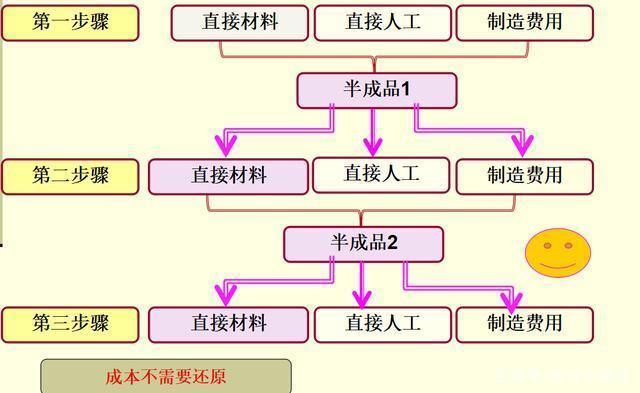
At the end of any accounting period (usually the end of the month), the production line tends to consist of products that have been fully completed and can be repossessed, as well as products in which some of the processes have not been completed. At this point, the full cost of this month's consolidation under the “production cost” (at the beginning of the month + the cost incurred this month) requires a reasonable division between the completed product and the end of the month. This step ensures that we can accurately calculate the actual cost of the product to be completed in the current period。
Common division methods are:
The absence or erroneous division of costs between the product and the completed product would result in the completion of the product being too high or too low, which would directly distort the profit accounting and stock value assessment for the current period。
Step 4: calculate total and unit costs of completed products
As a result of these steps, the cost boundary of the completed product has been clarified. The last step is to aggregate calculations and to produce a standardized cost report。
In order for cost data to be clear and traceable, the enterprise should prepare a product costing sheet. This table, which is the final outcome document for cost accounting, should detail all key information such as the subject of cost accounting, the cost item, the cost of the product at the beginning of the month, the cost incurred in the current period, the total cost, the cost of the product at the end of the month, the total cost of the completed product, the number of completed products and the unit cost. A standardized costing sheet is not only a basis for financial accounting but also an important source of data for management to conduct cost analysis, pricing decisions and performance appraisals。
Iii. Building the ruler: evolution from traditional excel to digital platform
Clear processes are the basis, but the implementation process tool also determines the efficiency and quality of cost accounting. For a long time, excel has played a central role in cost accounting in many manufacturing enterprises, particularly smes, as a flexible and easy-to-hand tool. However, with the expansion of the size of enterprises and the increased demand for precision management, the disadvantages of traditional accounting methods are becoming more prominent。
Limitations of traditional means of accounting (e. G. Excel)
Although excel is powerful, its limitations are natural in a complex production cost accounting landscape, mainly in the following areas:
2. Reshaping cost accounting processes in digitization programmes
In the face of the pains of traditional approaches, modern digital tools, especially the codeless platform represented by the feeder platform, provide businesses with a completely new and efficient solution. Rather than simply moving excel online, it fundamentally reshapes the logic of cost data generation, flow and analysis。
Through its three powerful engines, the channel platform consolidates standardized cost accounting processes into the system to automate and intellectualize the entire process:
From relying on manual excel to embracing integrated digital platforms, this is not only an upgrade of tools but also a change in business management thinking from passive accounting to active management。
Conclusion: agile and transparent cost-management systems built to win the market front
Accurate and efficient production cost accounting processes, far from being mere in-house finance, have become the core competitiveness of modern enterprises in building a lean management system that underpins strategic decision-making. From clarifying the boundaries between direct and manufacturing costs to following a standardized four-step accounting process, to examining and upgrading the accounting tools on which we rely, each step is building a physical foundation for the healthy development of enterprises. An agile and transparent cost management system that allows you to see the course of a rapidly changing market, to identify precisely where profits are growing and to avoid the potential loss trap decisively。
We encourage every visionary business decision-maker to embrace digital change courageously and free your team from cumbersome, error-prone manual tables and data islands. It is time to leave behind the late cost reporting and move to real-time, dynamic cost insights。
Would you like to know how to quickly build a cost management system that is fully aligned to its business needs within a few weeks, using an uncoded tool such as the feeder platform? Click the following link to start your digital transformation tour immediately。
Free trial immediately, online experience on how to build your exclusive cost management system
1. What is the difference between production and business costs
This is a fundamental but critical accounting concept. The main differences between the two are in the scope of accounting and the period to which it relates:
2. How should small manufacturing enterprises choose cost-accounting methods
For smaller micro-manufacturing enterprises with a small size, a single product type and a complex production process, the requirements for precision management are relatively low and simple accounting methods are pursued. In such cases, a variety approach is recommended。
The variety approach is one way to capture production costs and calculate the cost of products by using product varieties as the object of cost accounting. Its core features are:
For enterprises with very simple production processes and few products at the end of the month, and even without calculating the cost of the product, all production costs are considered to be the cost of the completed product, which is the most streamlined treatment. In short, micro-enterprises should be based on the principle of “practical, simplified and responsive to basic accounting needs”, avoiding the blind pursuit of complex accounting models。
3. What are the most common reasons for the incorrect cost-accounting data
Cost accounting data are not accurate and are often a combination of multiple issues. Based on our service experience, the most common reasons are the following: