Project costs
Construction costs
Reference may be made to the reference indicators for civil construction in selected cities (see the attached folder for details)。
2. Acquisition of equipment
1) major equipment costs
When estimating the cost of the equipment, the more accurate price could be obtained by contacting the relevant plant and by consulting the machine and power manual. Non-standardized equipment can be estimated on the basis of non-standardized equipment indicators established by the competent national authority, with reference to market prices, analysed and consolidated, leading to a more reasonable cost of equipment。
2) pipeline, instrument self-control system costs
Access to pipelines accounts for 30 per cent of major equipment costs and instrument self-controlled systems for 12 per cent。
3) miscellaneous charges for equipment
Miscellaneous charges for equipment represent all costs incurred by the equipment from the point of delivery at the manufacturing plant or the point of transfer to the warehouse at the construction site, including transportation, packing, handling and storage charges。
Suitable freight rates are selected according to the different areas where the plant is built。
4) acquisition of spare parts for spare parts
The acquisition of spare parts for spare parts for spare parts is the acquisition of critical spare parts and their materials that must be prepared for the immediate start-up of the production equipment to be used in the replacement of the machine equipment。
For example, the chemical industry can generally account for 5-8 per 1,000 of the equipment price。
5. Purchase of works, appliances and production furniture
The purchase of works, appliances and production furniture is the cost of the first set of equipment, instrumentation, card simulations, appliances, etc. Which the construction project must acquire to ensure normal production at the initial stage。
Depending on the nature of the construction project and the different chemical products, it is generally possible to estimate the proportion of the fixed asset cost to the cost of engineering equipment. New projects may be constructed at the rate of 1. 2 per thousand-2. 5 per thousand for major equipment。
3. Installation works
The cost of installation works in the assembly of equipment consists mainly of direct and indirect costs. Direct costs, comprising labour costs, materials costs, usage of construction machinery and other direct costs; indirect costs, comprising construction management costs and other overhead costs, gradually transforming construction management costs from statutory rates to competitive costs。
The cost of the installation works in the investment estimates is usually based on a flat amount, fees and fees for the installation works issued by the industry or specialized agency. General calculations may be based on installation rate rates, per ton installation rate or physical engineering volume cost per unit installation. The following three methods may be used:
1 installation works = original cost of equipment x installation rate
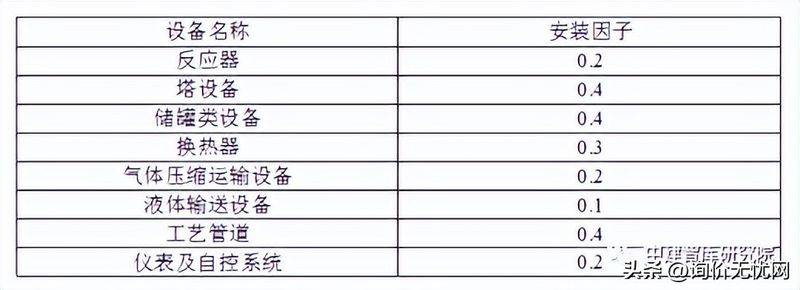
The installation fee rate is 0. 1-0. 5 for the complexity of the installation, with some installation factors as follows:
2 installation works = equipment tonnage x installation rate per ton
3 installation works = physical works x physical works per unit installation
Ii. Other construction costs
1. Land for construction
Estimated on the basis of the agreed amount of the contract for the transfer of the project land or the market price of the local land。
2. Construction management costs
The construction management costs include the construction unit management and construction supervision costs. The rates are estimated on the basis of the capital financial management provisions (finance 394) document (detailed in the attached folder)。
2. 1 construction unit management fees
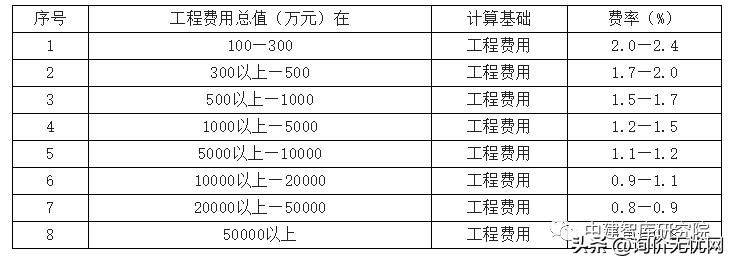
The estimate is based on the building unit management fee fee standard (branch [1996] 628) document (see attached folders for more details)。
The estimated rates are as follows (in thousands of dollars):
2. 2 construction supervision costs:
In accordance with the circular on the regulations for the issuance of construction supervisory costs (npca, ministry of construction price code 479)。
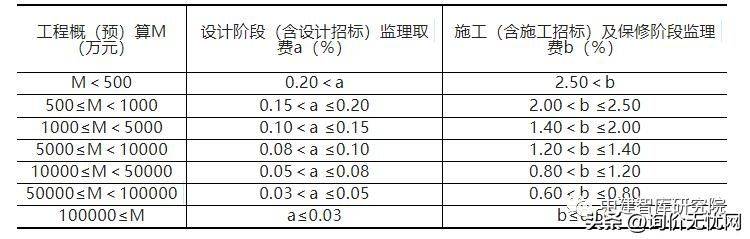
Note: it is not appropriate to charge items on the basis of the above table, but may also be calculated on the basis of an annual average of $35,000 per person per year for supervisory work。
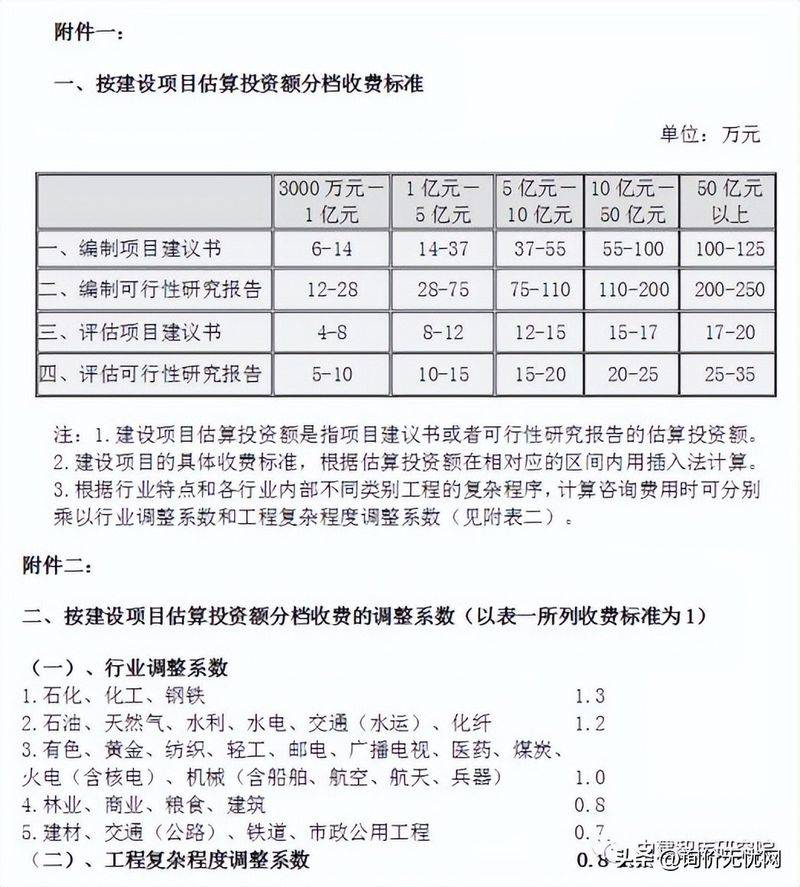
3. Fees for feasibility studies
The slotting fee for estimating investments by construction project is calculated on the basis of the interim provision for prior work counselling fees for construction projects (no. [1999] 1283), as detailed in the attached folder。
The rates for prior advisory services for construction projects with a value of less than $30 million and other than the preparation, evaluation of project proposals or feasibility studies are set by the provincial, autonomous and directly municipal price authorities in the same sector。
4. Survey design fees
These include engineering survey fees, preliminary design fees (basic design fees), construction design fees (detail design fees) and design and modelling fees。
First method:
The estimate is based on the regulation on the administration of fees for project survey design (priced 10) document (see attached folder for details)。
The survey and design fees for the works varied according to the level of investment in the construction project and were subject to government guidance and market adjustment, respectively, at a rate of 20 per cent upward or downward. The total investment in the construction project is estimated at $5 million or more for surveying and design of the project at a government-directed price; and the total investment in the construction project is estimated at less than $5 million for surveying and design fees at a market adjusted price。
Second approach:
4. 1 project survey fees
Based on the notice of unreasonable fees and criteria for improvement and adjustment of project survey (ministry of construction [1991] 316)。
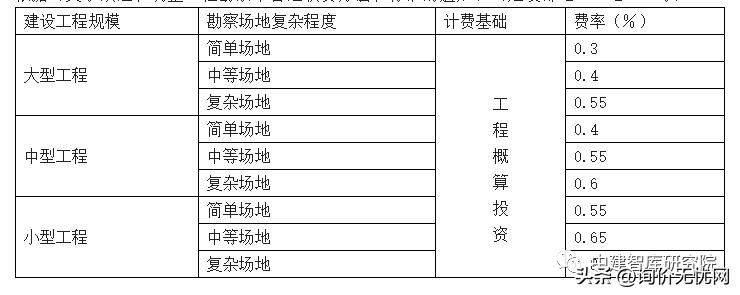
In addition, survey fees are calculated on the basis of $3-5/m2 for civilian buildings on the 6th floor, $8-10/m2 for upper buildings and $10-12/m2 for industrial buildings。
4. 2 project design costs
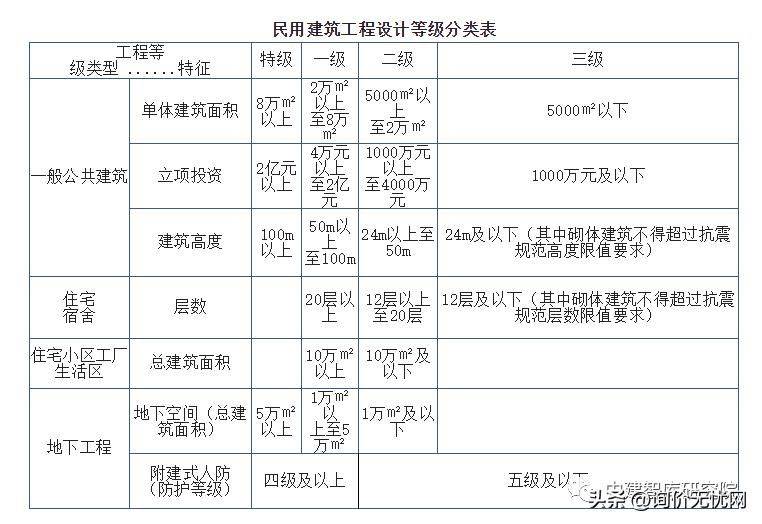
The rates are referred to in the table below and the classification criteria are referred to in the civil construction design classification table。
Based on the circular on the publication of fees for project survey and design (ministry of construction [1992] no. 375)
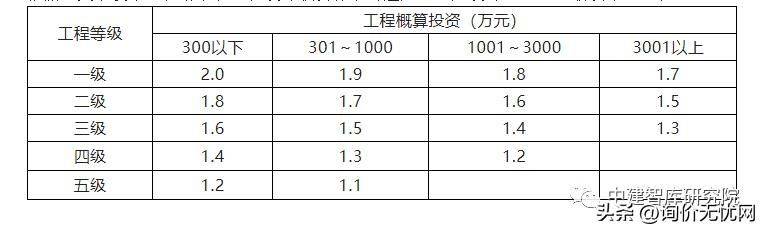
Note: special works are multiplied by a factor of 1. 1 on the basis of the above schedule level of engineering fees。
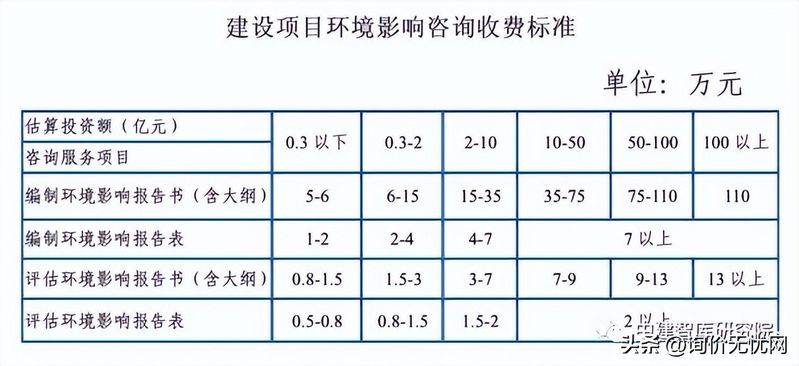
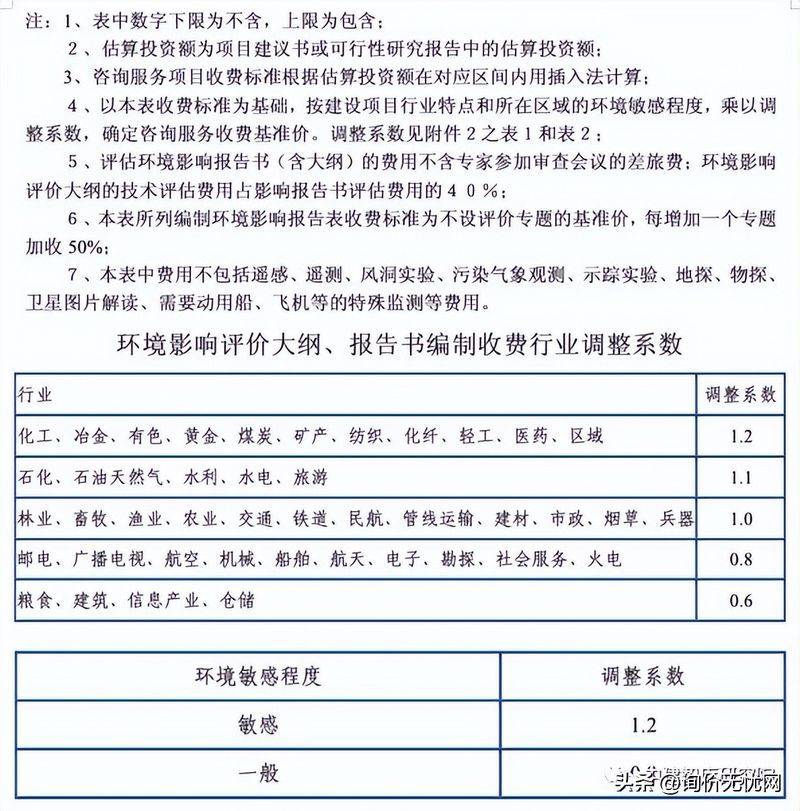
5. Environmental impact assessment fees
The rates are estimated on the basis of the circular on issues relating to the regulation of advisory charges on environmental impacts (no. 125) (see the attached folder for details)。
6. Tender agency services
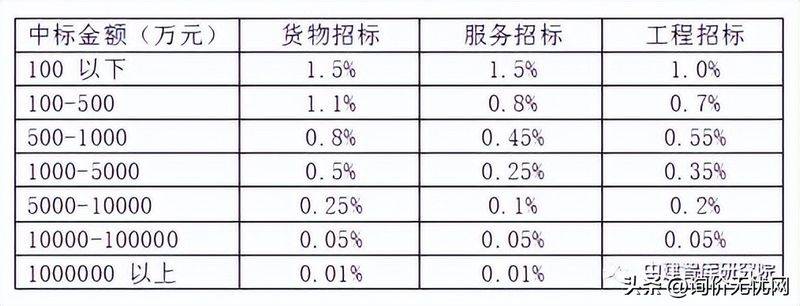
Fees for solicitation agency operations are subject to government-directed pricing, using a differential-rate progressive costing method. The rates are estimated on the basis of the interim scheme for the administration of fees for tender agent operations (priced 1980) document (for details, see attached folders), with a rise or decrease of no more than 20 per cent。
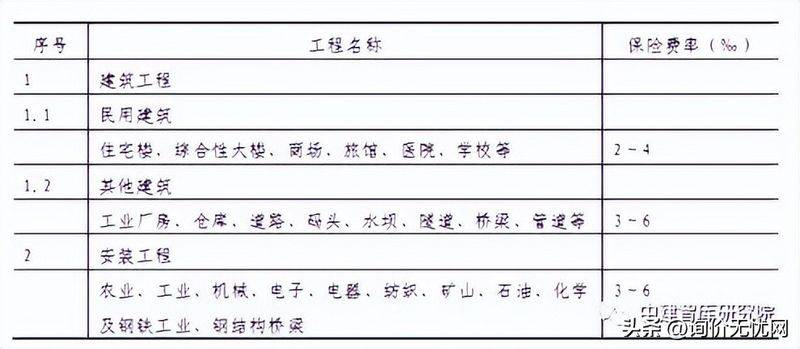
Engineering insurance
Using the current insurance policy, estimates are based on the proportion of construction costs。
8. Production preparation costs
Production preparation costs are those incurred by a new enterprise or an enterprise with a new production capacity to prepare the production necessary to ensure its completion. Cost elements include training costs for the production personnel and the costs for the personnel of the production unit to move forward, estimated on the basis of the cost per person for the additional staff。
The costs of personnel at the production unit advancement plant are estimated at $5,000-10,000 per person for the additional staff; the costs of training the production personnel are estimated at $2,000-6,000 per person for the additional staff。
Joint commissioning costs
Joint test transfer costs are those for the start-up of a new enterprise or the expansion of an additional production capacity, which, prior to the completion of the project, incurs a greater cost than the difference in income between the cost of the test and the cost of the installation of the equipment and the cost of the test vehicle, in accordance with the design quality standards。
Based on the construction size and technical maturity of the project, the engineering cost of the project capital cost is generally calculated at 0. 3 to 2. 0 per cent。
10. Office and home acquisition
The acquisition of office and living furniture represents the cost of office, furniture, appliances, etc., to be replenished by new or expanded and technical projects necessary to ensure normal initial production, living and management. The new project is based on a fixed number of personnel, each of which is set at between $1,000 and $1,200。
Iii. Prepared costs
1. Basic reserve
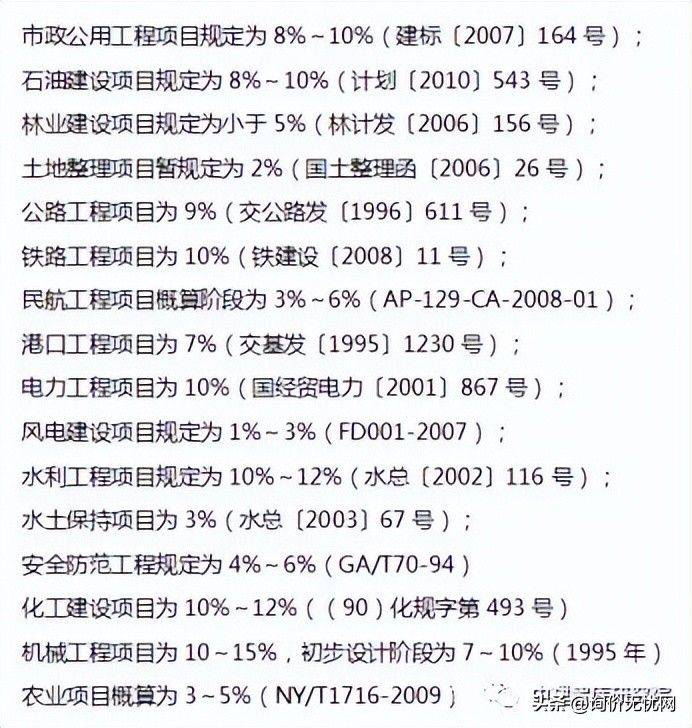
The basic reserve, which may occur during project implementation but is difficult to predict during the project decision-making analysis and evaluation phase, requires pre-encumbered costs, also known as unforeseeable construction costs. The costs are estimated on the basis of the sum of “engineering costs plus other construction costs” multiplied by the corresponding basic reserve rate。
2. Reserve for price increases
The increase is for long-term construction projects that require pre-encumbrances due to increased investment due to possible increases in the prices of materials, equipment, labour, machinery, etc., during the construction period, also referred to as unforeseeable price changes and price differential provisions. The reserve for price increases is normally calculated on the basis of the cost of work over a period of years and the formula is
In this format, it-year construction costs
F - index of price increases during construction
N - construction period
T-year。
The price increase index for the construction period is regulated by the government authorities and is not subject to a reasonable projection by the engineering consultant。