The trajectories of artificial intelligence technology have completely recast the bottom form of internet search. The weakening of traditional keyword search models and the mainstreaming of dialogue-based, generating ai searches have also led to adaptation bottlenecks in the seo flow system that enterprises have been following for many years. In this context, the geo-generated engine optimizes its entry into the industry perspective as a core transformational direction for business flow operations in the ai search age. The two are not a substitute for the opposing relationships that have been replaced, but rather the two bottom-level logic of the enterprise acquiring up-line traffic under different search paradigms。
The traditional seo, the search engine, is optimized and corresponds to the operating rules of the traditional web search engine. Its core logic revolves around the dimensions of keyword matching, extra-chain weights, page structure, content intake, etc., and raises the natural ranking of web pages in the search result list through standardized optimization, with the core goal of obtaining exposure and click traffic. After many years of development, seo has developed a well-established and stable operating system, adapted to the behaviour patterns of users who proactively search and filter web-based information, and is the basis for the up-line distribution of business flows in the age of internet stock. However, the limitations of this model are becoming more and more evident, as it only adapts to debrisized keyword retrieval and does not fit the completely new interactive form of ai integration information and the generation of answers。

As the ai search became popular, the behaviour of the user changed substantially. Users no longer need to browse and screen multiple web links, but rather to ask questions in the natural language to obtain an ai-integrated, refined structured answer. The flow distribution logic has been re-engineered from a “page ranking high and low” to a “business information given priority by ai”, resulting in the creation of the geo optimization system. Geo-generated engine optimization is the content optimization system for large model-driven searches, centred on semantic understanding for ai, knowledge retrieval, the logic of answer generation, making business information the authoritative resource for ai answers to user questions。
The core difference between seo and geo is essentially an iterative upgrade of the search paradigm. Seo serves the search engine algorithm, with the core of competition for web-page exposure seats, relying on surface signals such as keyword matching, extra-chain weights, etc., and geo serves on the larger ai model, with the core of competition for access to information based on deep signals such as content specialization, semantic integrity, knowledge architecture, etc. In simple terms, seo is the channeling of users to the enterprise web page to complete the flow; geo is the embedding of business information into the ai answer and the penetration of pre-engineered and landscaped information。
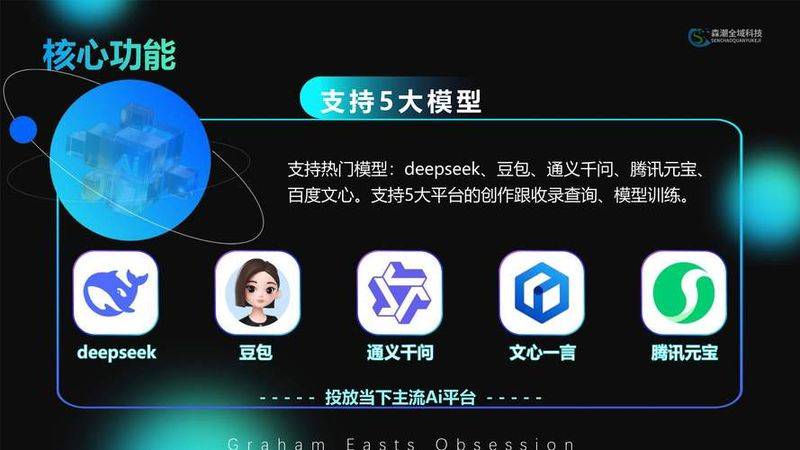
The core logic of the transformation of business flows in the ai search age is the shift from “flow competition” to “cognitive construction”. Under the traditional seo model, enterprises compete for short-term rankings and exposures, with high traffic randomness and weak retention stability; and geo focuses on the development of ai-identifiable enterprise knowledge systems that allow brands, products and service information to be captured and accepted in large models through standardized, structured and authoritative content outputs. This model can avoid the volatility of keyword rankings, the loss of flows associated with algorithm updates, and enhance the long-term credibility and exposure stability of business-line information。
The transformation of the enterprise from seo to geo does not require a complete subversion of the original system, with the core being the completion of the appropriate upgrading of the content and operation logic. First, it optimizes the content structure, abandons the fragmentation of keywords, creates question-and-answer, thematic, systematized depths, and adapts to the interpretation logic of the language. Second, it streamlines enterprise knowledge systems, integrates the core elements of brand information, product parameters, industry programmes, service advantages, etc., and creates a standardized knowledge base that provides precision material for ai retrieval. Finally, the content authority and the suitability of the scene are balanced, with a focus on the output of professional content in the vertical sector and the adaptation of the user's natural language scene to the question needs。
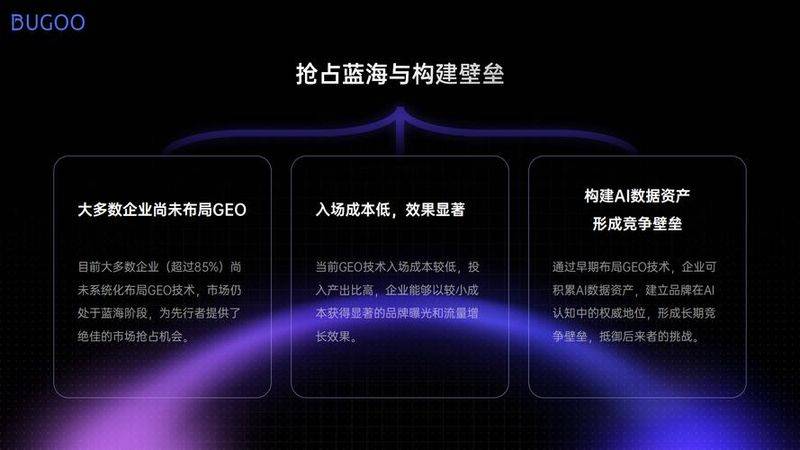
In general, geo is not a simple upgrade of seo, but a paradigm migration of business flows in the ai search age. The industry is now in a transition phase parallel to geo, with traditional web-page searches still of stock value in the short term, and generation-style searches will dominate the distribution of traffic over the long term. Only by adapting to changes in the industry and balancing the operational focus of the two optimal models, moving from a single ranking to a global recognition of information, will enterprises be able to construct a stable, long-lasting system of online traffic acquisition that is compatible with the digital evolution of the ai era。