The thymus is an important lymph organ of the organism. Its functions are closely related to immunisation, the distribution of breast hormones and hormone-like substances, and organs with endocrine functions. It's in front of the chest. At the end of the embryo and at birth, the human breast weighs about 10 to 15 grams, a period of relatively high weight in life. With age, the breast continues to develop, reaching about 30 to 40 grams in adolescence. Since then, the breast has deteriorated, lymphocytes have decreased and fatty tissue has increased, reaching only 15 grams in old age。
Form
The breast glands are located in the back of the chest, close to the heart, in a grey, flat, elliptical form, divided between the left and the right, and consist of lymphoma tissue. Pre-adolescent growth was good and post-adolescent degradation was replaced by adipose tissue。
Structure
On the surface there is a membrane of the conjunctive tissue, which stretches into the essence of the breast and divides it into many small leaves that are not fully separated. The lobe is surrounded by cortex and deep is marrow. The cortex is not completely encircling the marrow, which is connected to each other. The cortex consists mainly of lymphocytes and upper cortical mesh cells, which contain particles and bubble structures. There are dense lymphocytes between mesh cells. The lymphocytes of the breast are also known as the lymphocytes, which are larger in the cortex and more primitive lymphocytes. Medium-sized lymphocytes, deep in small lymphocytes. The process from shallow to deep is small lymphocytes. And inside the cortex there's a cortex cell, no lymphocytes. There are few and thin lymphocytes in the marrow, and the upper skin mesh cells are numerous and significant. There are particles and bubble structures in a variety of forms for the cells, for which the secretions are distributed. There's still a circular small breast. It's not working。
Functions
T-lymphocytes are produced, and blood stem cells move into the breast, and then the cortex breeds into lymphocytes. Most of these lymphocytes die, and a small part continues to develop into marrow, becoming near-maturity t-lymphocytes. These cells pass through the walls of the nuclei of the postcircle, follow the flow of blood and migrate to the scattered lymphoma tissue of the surrounding lymphoma knot, which is known as the breast dependency zone. T-lymphocytes are necessary for the development of the whole lymphocytal organ and for the immunity of the organism, and the breast is necessary for the normal development of the surrounding lymphocytal organ and for its immunisation. When t-lymphocytes fully develop and migrate to surrounding lymph organs, the importance of the breast is gradually reduced。
From the 1940s onwards, more than a dozen effective bodily fluids have been proposed from the chest, which are non-specific in nature, to some extent replacing the functioning of the breast, are present in trace amounts in blood and are considered as hymin as second courier with camp. The most studied of these is thymusin. The thyms are proteins extracted from the breast of the calves by white and goldstein with a molecular volume of 12,000 dalton. The t-cell machine for immuno-deficiency patients can be restored, the t-cell function can be induced in breastless and demography mice, and the cyclooctrus acid in breast cells in mice can be increased. In addition, thymus hormone i, which is also a polypyrene extracted from the calf's breast, is further refined to breast hormone ii and has the ability to induce t-cells. This hormone is present in the cortex of the chest or in the metallic upper cortex cell, and it does not exist in the mammary cell。
Growth hormones and thyroidin stimulate breast growth, while sexual hormones contribute to breast degradation。
Role
The breast is the immune organ of the human body, capable of storing endocrine immunosuppressive cells and immunosphytes. As age increases, it shrinks。
The breast experiment
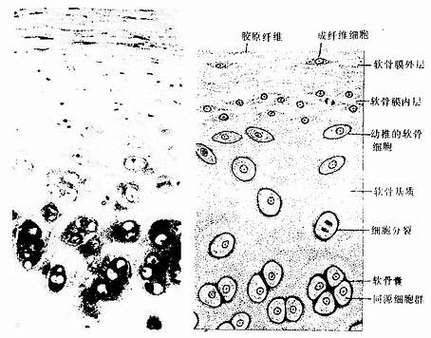
Breast: pork breast slices, he dyes
(1) membrane: splitting the gland into small leaves。
(2) the cortex is separated from the conjunctive tissue and the marrow part is still connected. The cortex is heavily contaminated with t-lymphocytes in the skin of the cortex. And you can see the giants. Under the membrane, by-spacing or around the veins can be seen in the compartments formed by flat-skinned cells, which are light coloured and have an elliptical nuclei known as the upper net. These cells are stared in the small leaves, forming a net frame, developing t-lymphocytes in the eyes of the net, and ecstasy hormones in the upper cortex cell, which induce lymphocytes to split。
(3) the small body of the thymus, which is located in the marrow and is organized in a concentric circle by several layers of mesh cells, forming a circle or an egg circle. The small body is transparent, glass-shaped and not functional。
(4) microstatic veins are visible at the cortex-metallic boundary。
See
Human anatomy - human anatomy precinct - human anatomy song machine - human vagina figure
Sports
Indigestion system
Respiratory system
Gas and bronchials
Utility system
Reproductive system
Male genitals
Male genitals
Female genitals
Female genitals
Pulse system
Lymph spleen (breath, lymph, lymph dry, lymph catheter)
Endocrine system
Sensor
The inner ear (bone lost, membrane lost, internal ear lost)
Neural system
Spinal cord and spinal nerve
Sensory channel (intimate sensor road, shallow sensor road, visual channel road) movement channel (concourse system, cone outer system)
Autonomous nervous system

Intestine motor nerves. Intestine nerves
The membrane of the brain and the spinal cord
Brain and spinal fluid
Brain spinal fluid (side brain, third brain, fourth brain)
Brain and spinal veins
From “https://www. Yixue. Com/index. Php? Title = chest &oldid=43331”