As summer temperatures steadily rise, air conditioning in many households begins to operate for long periods of time. People in their daytime homes need to be cooled, and sleep at night is also a constant temperature, and for a long time, many people are caught in a common struggle: can air conditioners be kept open 24 hours a day? Will it accelerate the ageing of internal parts, or even direct malfunctions, as long as they don't run
In everyday life, there is a great deal of talk about this issue. Households using air conditioners for many years indicated that the machine had not been in trouble throughout the summer; there were also a number of feedbacks from households that, after a period of continuous operation of their own air conditioners, there had been slower cooling, acoustic noises and frequent stoppages. Two distinct experiences of use also leave many more unsure of the truth。
Together with current mainstream home-based air-conditioning design standards, industry-wide testing data, and the hands-on experience of electricians who have been in business for many years, today we are objectively dismantling the reality of air-conditioning operations over a long period of time, with a one-time thorough presentation of machine loads, machine type differences, the use of faulty areas and maintenance techniques. The full text is based on open industry norms and real-life scenarios, is easy to understand and practical, and can be used in a scientific way that ensures comfort to the home and effectively prolongs the life of the machine。
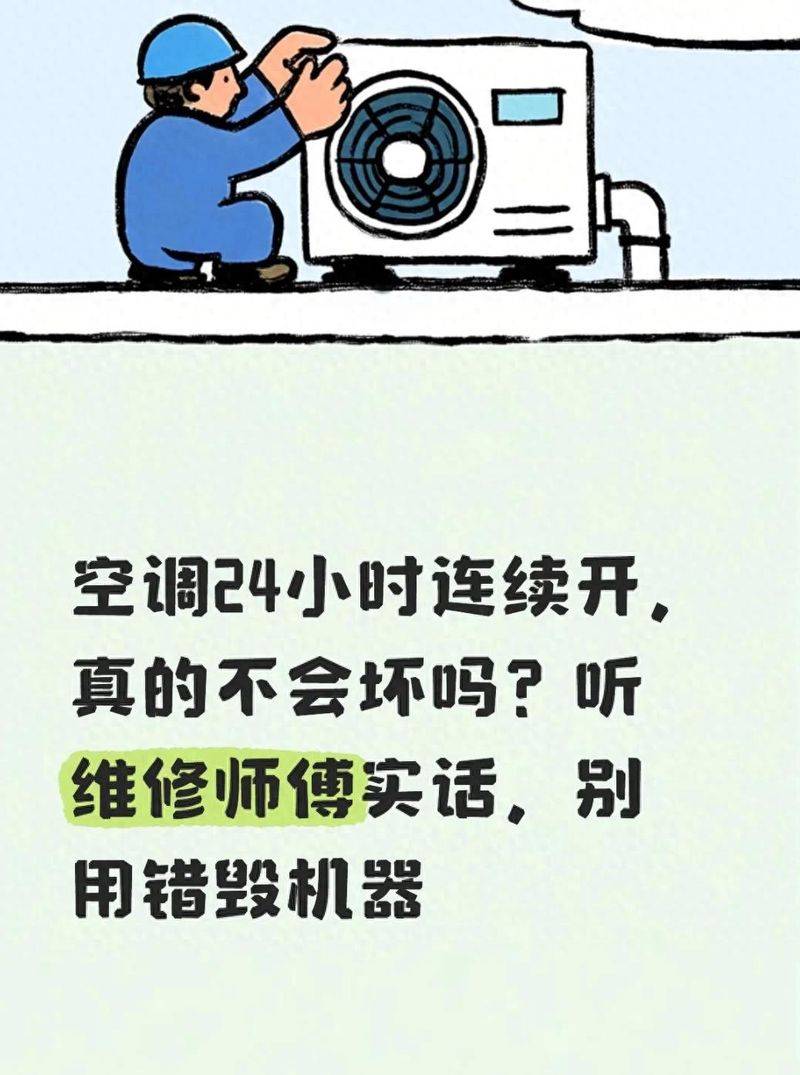
I. From the design of the plant: formal air conditioning itself supports continuous operation over a long period of time
Many are conscious that electrical appliances, like humans, have to rest for a certain period of time, otherwise they are easily “tired”, but from the professional point of view of household electricity manufacturing, qualified domestic air conditioners have reserved redundant space for long periods of continuous work at the outset of their design。
In accordance with the national generic technical requirements for domestic air conditioners, semi-mounted units and cabinets produced under the formal brands support uninterrupted and stable 24-hour operation, subject to rated work conditions, normal ambient temperatures, stable power supply voltage and good external heating conditions. Before leaving the plant, major air conditioners undergo long-term ageing tests of the entire machine, running for dozens of hours, to verify the stability of compressors, fans, electrical control systems, and to allow for market entry through tested products。
However, there is a key detail here: the continuous operation of the air conditioner does not mean that the compressor is always operating at a full capacity at high speed, with a clear difference in work logic between the two main and fixed frequency types。
The current market, with a new version of fac, carries an internal smart fcr chip capable of automatically adjusting compressor speeds to real-time indoor temperatures. When the temperature of the room reaches a given value, the compression opportunity automatically reduces the rate of rotation and enters a state of constant temperature maintenance with low frequency and low power, at which point the mechanical wear and the amount of energy consumed by the machine will decrease significantly. This low-load continuous operation does not impose an excessive burden on compressors and is the central reason why the fac is more suitable for full-time start-up。
The rac does not have speed-regulating functions, and the temperature post-standard compression opportunities are stopped directly, the temperature rises to a certain range and restarts. The machine appears to have a “rest time”, but the compressor produces a larger current shock each time it is activated, and the frequent start-up increases the loss of internal parts. From the point of view of mechanical wear and tear alone, the loss and loss of the fixed-frequency air conditioner is frequent and even higher than the constant and continuous operation over a long period of time。
The maintenance manager also stated that, during the years of service, air conditioning was very rare simply because of direct damage to the 24-hour cycle. The vast majority of the summer malfunctioning machines are rooted not in long operation per se, but in the use of multiple factors, such as the environment, the conditions of installation and the lack of day-to-day maintenance, which eventually leads to various problems with air conditioning。
The real damage to the air conditioner is not a long start, but a five-pronged error
Since air conditioners have a long, continuous hardware base, why is there still a large number of households that have failed after long summer use? The maintenance master concluded, in conjunction with years of review, that what really slows down the life of the air conditioner is a habit of misuse that is easily overlooked in life。
(i) severe external coverage and poor heat dispersion
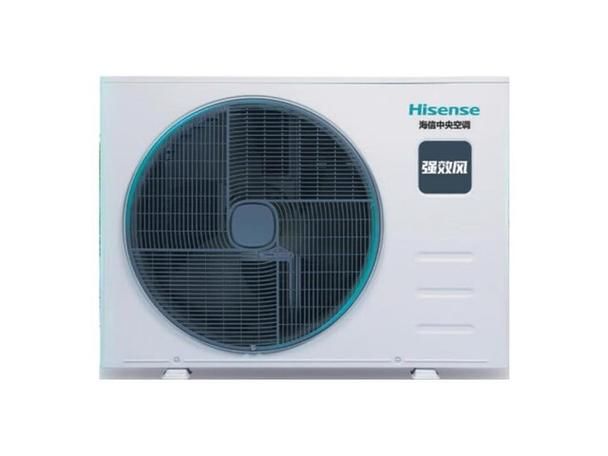
The main contributing factor to the breakdown of air conditioners during the summer is the poor external heating. The cooling principle of air-conditioning is essentially to move indoor heat outside the room, which has the core task of releasing the heat, and only if it is ventilated can it be stabilized。
Many families, for rain-proof, dust-proof and beauty-proof purposes, completely packaged the external aircraft with rain masks, tarpaulins, fences or placed it in closed balconyes, narrow equipment wells, surrounded by piles of miscellaneous items and green hulls. These practices can directly result in heat emissions from outside aircraft not being dispersed in a timely manner, a continuous build-up of heat and a sustained rise in the external environment。
Even when indoor temperatures are met, compressors trigger self-protection procedures due to external high temperatures and frequent downtimes. If the operation takes place 24 hours a day in a chronic dissipated environment, the compression opportunities remain in high-temperature and high-pressure working conditions for a long time, the internal lubrication performance is reduced, the parts wear is increased, and irreversible problems such as compressor cardon and cooling efficiency decline occur over time。
(ii) long-term extreme temperatures and continued overloading of machines
The pursuit of extreme coolness is the most common misuse in the summer. Some households customarily set air-conditioning temperatures at 16°c to 18°c and kept the temperature low all day。
It is difficult to reach such low temperatures in a general residential environment in a short period of time, and compression opportunities remain at high turn speeds and full loads, without access to low-frequency constant temperature energy saving. Not only would it result in a significant increase in electricity consumption over a long period of time, sustained friction of components such as compressors' internal pistons, bearings, etc., with a marked acceleration in the rate of depletion, and a few years after use, vulnerability to power shortages and poor refrigeration effects。
In combination with human comfort and machine maintenance needs, the generally recommended temperature range of 26°c to 28°c is the temperature that both ensures home comfort and keeps air conditioners in low-load operation, and is the best option to balance the saving of electricity with machine maintenance。
(iii) long-term clean-up of filters and wind-blocking impacts for heat efficiency
The main role of air-conditioning filters is to filter dust, hair, and styling in the air to ensure that the evaporation unit is kept warm and smooth. In practice, however, many families do not wash filters once throughout the summer, and large amounts of dust piles are clogged through the net, thus preventing indoor air circulation。
The ventilation is not smooth, the cooling of air conditioning is smaller, the evaporation unit is not in full contact with the air and the heat exchange efficiency is significantly reduced. In order to reach a set temperature, compression opportunities were forced to extend the working hours of high loads. The 24-hour continuous operation of air conditioners in a filter blocked state requires more effort to maintain cooling, internal parts are overloaded for long periods and the probability of failure increases significantly。
In particular, air conditioners, which are open day-to-day, accumulate more rapidly, and it is recommended that filters be checked every half month, that more dust be taken out and cleaned in a timely manner, and that they be dryed and re-used to keep the ventilation clear。
(iv) volatility during peak periods affecting the steady operation of compressors
Old and old neighbourhoods, urban villages and areas with high electricity loads are prone to low and frequent voltage during the summer peak. Air-conditioning compressors require higher power voltage stability, and the voltage is too high and low, which can have an impact on the main panel and the concourse。
When the voltage is too low, the compressor is difficult to start, is prone to descreasing, and the coil continues to heat; the voltage rushes at short notice and can penetrate the internal convulsion. Air conditioners are not recommended to operate on an ongoing 24-hour basis in situations where the household power supply environment is unstable and is running continuously for long periods of time and the risk of circuit failure and compressor damage increases significantly。
(v) long-term dewetization mode is activated, and drainage fluidity is ignored
Some users in the southern humid areas are used to full-time dewetting mode and, although they are dryer, the lower temperature of internal air-conditioning evaporation units in the dehumid mode results in continuous condensation. If air-conditioning drainage pipes are blocked and bent, the cooling condensed water is not properly discharged, is prone to indoor dripping, and the long-term accumulation of water corrupts internal circuits, causing short circuit failure and indirectly reducing the useful life of air conditioners。
Iii. Detailed comparison of the fixed and variable frequency, with significant differences in long-term usage
Different types of air conditioners, hardware structures, work logic, and a clear difference in suitability for continuous use over a long period of time can only be used in a way that ensures maximum efficiency while maintaining the machinery。
(i) variable-frequency air conditioners: more suitable to open 24 hours a day
The variable frequency air conditioner (vac) is the preferred type of machine to be used for full-time residential and long-term night sleep, based on retrofitting to achieve constant temperature, automatic low-frequency download operation, smooth working conditions and small mechanical wear。
As long as the exterior is ventilated, the filter is clean and the temperature set is reasonable, the day-to-day opening of the summer is completely clean. At night, the sleep mode is activated, and the air conditioner sets the temperature on the basis of automatic fine-tuning of human temperature changes at night, further reducing the compressor load, saving electricity and extending the useful life。
(ii) fixed frequency air conditioners: uninterrupted and long running is not recommended
The rfa relies on compressor outages to achieve controlled temperature, temperature outages, and temperature uplifts are activated again, with a larger current shock each time they are activated, with relatively significant losses to the compressor internal structure。
If it is indeed necessary to use it for a long period of time, it is not recommended that it be open on a full-time basis. Time-time features can be put in place, after six to eight hours of continuous operation, with a break of one to two hours to allow sufficient cooling of the internal parts to reduce the wear and tear associated with frequent start-ups. When used during the night, the time off function can be coordinated to avoid uninterrupted operation throughout the night。
Iv. Conservation techniques for long operating hours during the summer and easy extension of the life of air conditioners
Combining years of hands-on experience with maintenance masters, a simple and operational approach to use and maintenance will allow air conditioners to remain stable even if they are activated for long periods of time, effectively extending the life cycle of the machine。
First, to guarantee exterior ventilating space. At least 30 centimetres of radiative space will be set aside around the outer aircraft, with no canvass, rain masks, and green-planted, miscellaneous items will not be attached to the outer aircraft to ensure normal air flow and avoid a build-up of heat。
Second, set a reasonable operating temperature. Priority is given to the comfort zone of 26°c to 28°c, avoiding extreme temperatures below 18°c for as long as possible, reducing the load of compressors and reducing the rate of wear and tear of parts。
Third, regular cleaning of filters and evaporationers. During the summer peak period, indoor filters are cleaned every half month; for about three months, simple evaporation units can be used to clean the surface dust, ensure heat efficiency and avoid overloading of machines。
Fourth, the rational use of special models. Night sleep opens the mode of sleep, wet weather opens the mode of dehumidisation as required, avoids the mode of dehumidisation running continuously throughout the day, and regularly inspects the flow of drainage pipes to prevent the return of condensed water。
Fifth, to avoid forced use during peak periods. If the electricity supply is unstable in the home, it will be opened for as long as possible after the night load has dropped, with proper stoppages during the peak period to protect the compressor circuits。
Sixth, long-term stoppages for end-of-service maintenance. If there is no one in the house during the day, and there is no need for full-time cooling, the machine can be shut down; if it is not used in the long term, do not cut off the total power, and the wind transport mode can run for half an hour, blowing the residual water vapour inside the evaporation unit to prevent the fungus from growing and the parts from becoming damp。
Seventh, a basic check is done every summer before it starts. The focus is on the operational status of external fans, the flow of drainage pipes, the normal functioning of remote controls, the timely handling of minor problems such as acoustics, leaks, etc., and the avoidance of increased failure during prolonged use。
Objective summary: scientific use is the core without the need to fix switches
Integrated industry design standards, real-use scenarios and maintenance empirical experience lead to the conclusion that properly qualified home-based air conditioners, with their own hardware capability to operate 24 hours a day, operate for a simple, long period of time, do not directly cause damage to the machinery。
The breakdown of air conditioners during the summer was more the result of a combination of heat dissipation, inadequate temperature setting, inadequate maintenance and unstable voltage. Many people struggled with “can we open 24 hours” while ignoring the most critical details of use, which eventually led to early problems with air conditioning。
For families who live in their homes all the time and require constant heat at night, frequent switches need not be deliberately pursued, and long-term access can be assured by ensuring the use of environmental standards and operational science. For fixed-frequency air conditioners, stopover breaks may be arranged to reduce loss and loss, depending on the scenario in which they are used。
The useful life of household electricity depends more on daily usage than on the quality of the plant. A simple maintenance technique that avoids the use of faulty areas can provide comfortable home experience and smooth air conditioning for many years, reducing maintenance and replacement costs。
A sweet hint
The content of this paper is based on common manufacturing standards in the domestic air conditioner industry and on empirical experience in the first line of home electric maintenance, which is objective and factual and is shared only as a household electric utility, and does not involve any brand promotion, marketing belts or commercialization. There are fine differences in hardware parameters and functional set-ups between different brands, different models of air conditioners, which can be used by reference to the original plant description of the product, and this paper provides only generic reference recommendations。
Discussion
Does your air conditioning turn on 24 hours a day in the summer? What practical conservation techniques have been summed up during use? Exchanges and sharing of experiences on home-based electricity use are welcome in the comment area。
Focus on me, sharing all kinds of household life, household electricity maintenance, real content, saving people from life mistakes, and living together